Morning Thanks

Garrison Keillor once said we'd all be better off if we all started the day by giving thanks for just one thing. I'll try.

Wednesday, July 13, 2016

Value-added carp


They are not good guests. Their enthusiasm all too regularly runs away with them. We get anywhere near, and they go bananas, come out of the water like fleshy demons, jump--totally uninvited--into people's boats, whack kids and grandmas who certainly hadn't figured on getting slapped up. They break up parties, simply take over pontoons.

They're Asian carp, whose name gets capitalized only because it's the name of a very real place. They don't deserve to be upper case because they're pernicious, downright dangerous--and, as long as we're at it, pestilential. That's right. Even right here on the Big Sioux, they've taken over healthy stretches of the river, and, what's worse is they're not small.

We're not talking panfish here--we're talking about a full rack of ribs coming at you thirty miles an hour out of nowhere. You've seen the videos. Incredible. Broke some poor girl's jaw down in Kentucky. She was in a fishing tournament and one of them took her home as a trophy.

They test our ability to work cross-culturally because they are foreigners, recent immigrants, brought to this country to keep down the vegetation in domestic fish ponds. Some people think a Mississippi flood offered them passage into the America's waterways, but experts say that's urban myth. However they got into our waters, they did, by the gadzillions.

Some claim they're an official infestation. You can't navigate some areas of the rivers throughout the Midwest without a hard hat, and they can reach 40 pounds--that's not a rack of ribs, that's a side of beef.

Just about everyone says the meat is as white and wonderful, firm and tasty as perch, as tilapia or cod. But for good reason Americans simply won't eat anything named "carp," except if it's cooked up traditionally: nail the fish to a board, lay the fish and the board out in the sun for two weeks, toss the fish and eat the board.

But go ahead and look for yourself: fine fish chefs will tell you--and show you--that Asian carp is as good as any five-star fish, as long as you look out for the bones.

And we're not about to run out of them: the average female will produce a million eggs per season, We've simply got too many.

So next tomorrow night, right here on the Big Sioux, some expert from the DNR will come by with a boat specially equipped to boom them out of the water, to kill them by the boat load, and thereby demonstrate how wildlife management is trying to keep down the Asian pestilence taking over the Big Sioux. What surfaces will be fed to eagles and other hungry raptors.

Here's an idea for some Sioux County entrepeneur. We already lead the state in pork, beef, and chicken production; and we're not far behind in dairy. If you want a great steak, come to Sioux County. If you want a pork chop that'll take your breath away, you can get the very best right here.

What you can't get is a deluxe serving of fresh fish. Gotta have water for that.

Hey, wait. There's a ton of great fish to be had here. A whole new market. Value added, just waiting for some Sioux County guy chasing a big-money dream, some guy with a hammer and a nail, and 160 acres of boards.

Tuesday, July 12, 2016

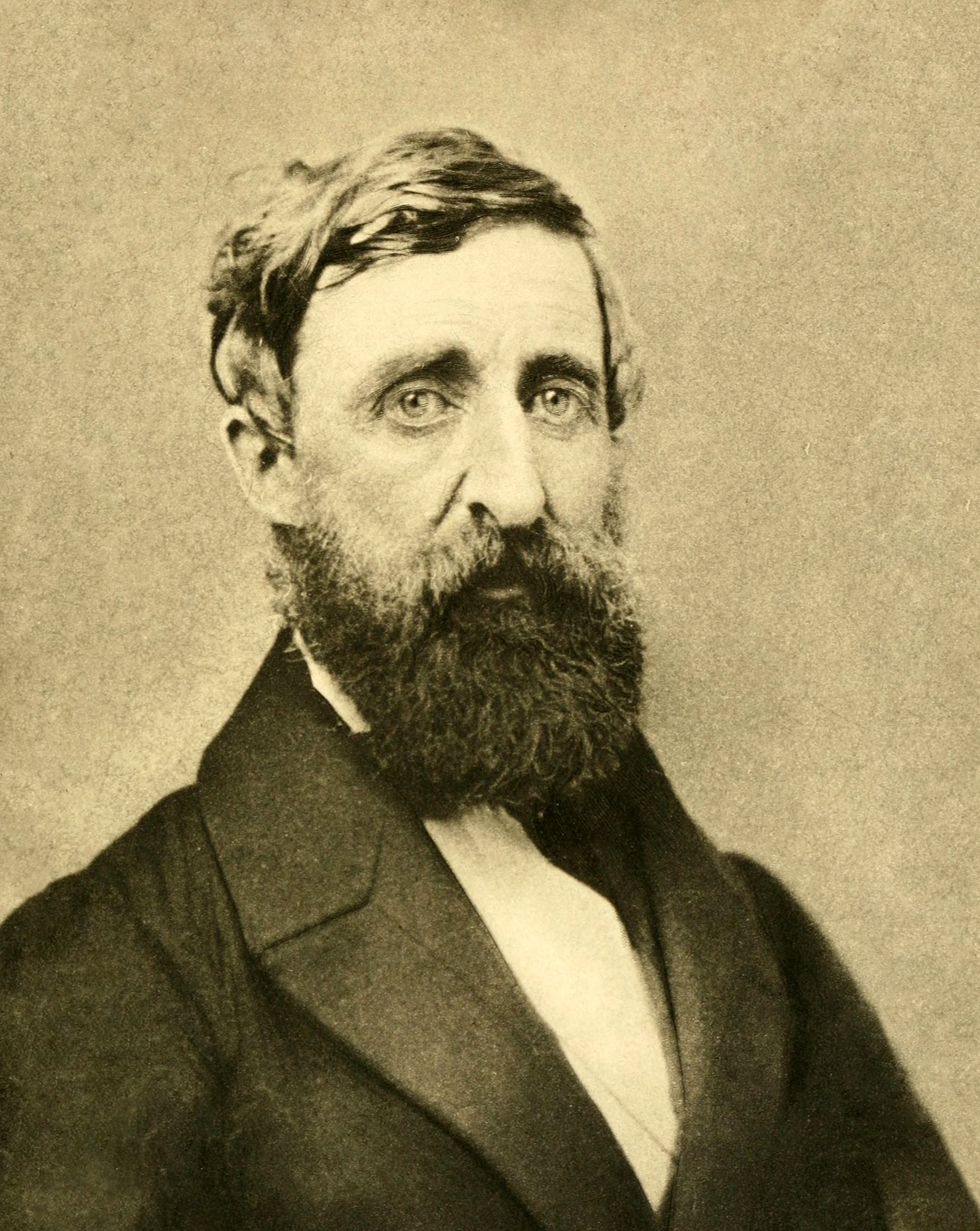
Morning Thanks--Happy birthday, H. D. Thoreau


It's hard to imagine just how radical he and his cohorts were back then, almost 200 years ago, how far off the path they walked, listening, as he would have said, to "a different drummer." New Englanders weren't the only white men and women in the world to oppose slavery, but abolition, almost anywhere in America, was a fringe notion when Emerson and Thoreau and the New England transcendentalists preached it. 

It's hard to imagine why today, but that abolition was so very radical is no less a fact. If you opposed the institution of slavery, that "peculiar institution," as people called it, you were suspect in most circles. 

My family's history in North America begins after the Civil War for the most part. What's more, clannish Dutch immigrants determined long before they left the Netherlands that they would live north of Mason-Dixen. The long history of Dutch slave trade notwithstanding, the orthodox Protestants I come from stayed away from slavery. 

All of which makes understanding how very radical the cause of abolition was even more difficult. Try to imagine a world in which city ordinances forbade more than five slaves from talking to one another on the street, where black people who didn't step off the sidewalk for whites would find themselves in the city jail, where slaves were, by law, commanded to leave town one year after being freed.

That white men and women like me live downriver from all of that is difficult to remember and a powerful advantage most of us don't consider. Even after the Civil War, most whites, North and South, didn't believe black people were fully and truly human. There's good evidence to show that Abraham Kuyper didn't. A century after John Brown's mad attack at Harper's Ferry, my pious Dutch Reformed grandpa didn't. More than a century after Appomattox, I'm not altogether sure my father did.

I'm not even sure about Henry David Thoreau. Just because you were an abolitionist didn't mean you believed in racial equality. More whites believed that slaves should be freed than believed they should be able to vote. 

But Thoreau himself "conducted" on the Underground Railroad, helped freed slaves, and was one of very few who defended John Brown after the raid that failed so miserably: "There are absolute moments in life," he once wrote, "when absolute action must be taken against absolute evil." 

It's Thoreau's birthday today. When I look outside the basement window at the gathering dawn what I think about is Thoreau's deep love for that world, the world of nature, which he watched religiously through the two years he spent at Walden Pond. 

But Thoreau was also an abolitionist, a radical. He believed no man or woman should own another, regardless of color, a belief that required a hundred years and more for some of his countrymen to share. 

Anyway, it's his birthday today, and, for me at least, that's cause to celebrate. 

What's more, after last week's toll of racial horrors, for so many reasons it's also a morning to give thanks.

Monday, July 11, 2016

The big move of Joshua Harris


It is a fascinating story, in part because it's such an odd religious story. Josh Harris, who (improbably) wrote THE evangelical book on dating (I Kissed Dating Goodbye) when he was 21 and unmarried (that's almost Trump-ian in naivite), determined more than a year ago already to quit his really successful mega-church ministry in Maryland, and go to seminary, something he'd neglected when he was a kid (who needs earthly wisdom when you've got the Holy Spirit?). 

Today he's actively questioning what became an evangelical handbook on dating when it was given to literally thousands of kids in the last couple of decades. Today, he says, "I think the problem when I wrote I Kissed Dating Goodbye is that I had not walked through that relationship yet myself. 

Well, duh.  

But the issues connected to his changing visions are probably bigger than just dating because Josh Harris, evangelical super-star, quit the 3000-member megachurch he led to become more (shudder) "mainline." You read that right. He willfully tossed in his evangelical credentials to become one of those his people most thoroughly disdain--something, at least, of a liberal (gasp). 

"One of the things that I'm changing in my own thinking is I just think people - myself included - it's so easy to latch on to a formula," he told a reporter from National Public Radio yesterday. "You know, you do these things and you'll be great. You'll be safe and you'll be protected and you'll be whatever. . . .And I just don't think that's the way life works." 

It wasn't simply a changing view of dating and marriage that de-commited him to the code of Christian moral imperatives he'd created, then preached, it was a larger issue. "When we try to overly control our own lives or overly control other people's lives, I think we end up harming people. And I'm - I think that that's part of the problem with my book."

It's gutsy of him to do an about-face, and I probably don't need to say that I sympathize greatly--with him and with what he's says he's learning:
It's really easy for Christians to take truths from God's word and principles and then in subtle and sometimes not so subtle ways add extra human regulation onto it. For example, there are clear things in statements in Scripture about our sexuality being expressed within the covenant of marriage. But that doesn't mean that dating is somehow wrong or a certain way of dating is the only way to do things.
I suppose I'm writing this because I like what he's done, where he's going, what he's discovered. And it is a rare story because Lord knows, for every Josh Harris, for every evangelical who walks away from the kind of prescriptive faith that Harris espoused, there are a dozen--maybe a hundred--who move toward the opposite pole, from "whatever" to "thus saith the Lord to me and you, brother."

Making Josh Harris's pilgrimage prescriptive, which I'd love to do, is being just as judgmental as he was when he was 21 years old. I'd love to suggest that millions of evangelicals should be similarly struck on the road to wherever they thought they were going, similarly about-faced when they discover that the way of Jesus is way more than a handful of commandments or that the most repeated biblical injunction of all is "fear not."

I'd like to say that, but I can't because Christianity has divine elasticity. It truly is one huge tent, despite our efforts to make it compartmentalize. There may well be room for Franklin Graham and Jim Wallis, even if our humanness would just as soon not admit it or either of them. 

And that's why the way of Jesus is so hard. The only real commandment is to love. And that's hard--well nigh impossible. 

All of that being said, and for reasons entirely my own, I suppose, let me just say that I think Josh Harris has seen the light. Forgive me!

 You can listen to the NPR interview here. 

Sunday, July 10, 2016

Sunday Morning Meds--Our dwelling place


“Lord, you have been our dwelling place 
throughout all generations.” Psalm 84:1

Today we start on a journey. We won’t be gone long—only two days—but it’s perilous, and the stakes are high. We’re trying to affect a change, again, in a battle we’ve been fighting for years. We’re hoping that this journey will change things, nudge aside the woeful indecision that so often accompanies depression.

My wife and I are both afraid it won’t change anything, that this new venture, like others, will be a sordid failure; but we’re confident that what we’re doing—or trying to do—is what we should be doing because it’s a step that has to be taken.

Right now—amid all the fear—both of us are blessed by this assurance: we know—scared as we are—that right now, right this moment, we’re doing the right thing.

The perilous nature of my thanks this morning is that as risky and futile as it might be, our short journey together is, doggone it, the best thing, if not the only thing we can do. We don’t have a choice, really. We’re hoping and praying, as always, for real blessing.

When you step into this first memorable verse of this wonderfully memorable psalm, it’s no wonder why Psalm 90 has brought the peace it has to so many for so many years. The affirmation of this first line sweeps along with such force that I feel as if I can ride on the eagle-winged glory of its affirmation, even today on our own perilous journey.

This is the truth, Lord, says Moses, the writer to whom the Word itself gives credit—this is plain and undeniable fact: you, God, have been our only comfort, you’ve been the place in which we’ve lived, throughout all generations.

When I stumble through this verse (it’s a humbling experience, I think), what comes to mind is generations of believers in my own family.  I lack the bouncy joy of a brand new convert to faith, but I am ever thankful to be the descendent of generations, literally, of faithful believers. As far back as I can trace my own family tree, faith, the Christian faith, has been an ever-present part of the character of my ancestry. Faith is always a gift, but never a given.

Today we start on a journey. We won’t be gone long—only two days—but this journey is perilous, and the stakes are high.

I know. I’ve said that before. But this morning—a Sunday morning—I am, as I’ve already said, deadly afraid of failure that is very, very real.

About an arm’s reach away from where I sit is a portrait of my great-grandfather, a preacher. Back behind me a wonderful South Dakota homestead portrait of my great-grandparents on yet another side, believers too, a family who came to this country for reasons of faith.

I can’t take those people along on this journey we’re taking this morning. Their pictures will do me—and us—no real good because those good folks are dead and gone. Perhaps they’re asking the Lord this morning for a blessing for us, great-grandchildren none of them ever knew nor could imagine. What do any of us really know about life after death?

What I do know is it’s great joy to read these words this Sunday morning. “Lord, you have been our dwelling place throughout all generations.” The psalmist’s words ae a joy because a great cloud of witnesses, in peril, has trusted, have believed, have invested their confidence and their joy, just as I am this morning, in the same Lord God, the same deliverer, the same eternal Father.


You’ve been there for generations, Lord—that’s the undeniable truth we’ll pack along.
______________________ 

This meditation was not written this morning. The trek we began the Sunday morning I wrote this is long over. That it is, is but another reason to say what Psalm 90:1 always does, even when the sky looks as dark as it does this morning. (I just took that picture at the top of the page.)

Friday, July 08, 2016

Morning Thanks--a story we need to tell


It's not that there aren't fascinating stories all around; it's just that where this Mormon monument stands is in the middle of what America judges as nowhere, just down the road from Niobrara, Nebraska, population about 379, fly-over country.

Wasn't always that way; like much of the Great Plains, there was, once upon a time, a heyday, probably the middle years of the 19th century, when the Poncas were here, the Santees were here, and other Sioux bands never far away. That meant cavalry too, and agents, and suppliers, and draymen, not to mention swells of population when someone somewhere out west claimed there was gold in them there hills. 

And the silence here wasn't that way in the winter of 1846, when Mormons, on their way to the Salt Lake, stopped here to winter. They'd determined to be farther than they could travel that year; they intended to be all the way to the Rockies, but such plans were not to be. Instead, once the cold set in, they found themselves shivering at the confluence of the Niobrara and Missouri Rivers, and they weren't alone.  

They were unprepared, however, and when a grassfire Native people started roared through their makeshift of village of shacks and dugouts, they were dangerously ill-prepared for the kind of brutality that winter on the Plains quite regularly stage for those who can live through them. 

Some died that winter, and this memorial, off the beaten path, memorializes those who did--a man named Newel Knight, a man who actually knew Joseph Smith, a man who was a leader of the ward that wintered at the Ponca camp, died here of pneumonia, dead of winter. 

The Mormons were refugees, people of a selective faith that wasn't the approved revelation or style of those in the majority. So they left Illinois on a trek that would lead them all the way to Utah. Newel Knight never made it past the mouth of the Niobrara River.

Nor did the pilgrim refugees listed on the other side of the monument. What's left of the memory is here memorialized in a plain and simple granite monument just off the highway to Ponca State Park, accessible to all, although not that many pass.

The Mormons long winter of 46-47, especially that ward of the people who lived here at the confluence of the Missouri and Niobrara rivers, is not simply a story of death and deprivation. It's also a story of cooperation and community, a story of open doors and open hearts, for those Ponca who lived in the area shared their lives and good fortunes with the strange, religious white men and women passing through the region. 

It took many years, but not so long ago the LDS church and its people thanked the Ponca tribe richly for what they did for the ancestors who wintered here, fearful and hungry and deeply anxious that all of this westward movement could be someone's pipe dream, which it was and wasn't.

This short version of the story is worth telling this morning, just 12 hours after some incensed madman murdered five Dallas policemen and wounded seven others in retaliation, he told police, for the never-ending deaths of African-American men at the hands of law-enforcement officials throughout the United States.

Last night, when the news broke, I felt something akin to a despair I haven't felt for fifty years, when America watched inner cities burn, the country of my birth and my devotion simply breaking apart like some long, tall ship in a storm. Not since then, at least to me, does it seem the population of this country and the culture it has created has this nation appeared so deeply and violently fractured.

And then, today we look at two candidates for the highest office in the land who are despised more deeply than any candidates for President ever have been. There is no center, no core, no heart. There is no moderate middle; there is only resentment against "the other."

Once upon a time, Mormon refugees by the thousands swarmed across the face of the largely uncharted Great Plains on their way to place I don't doubt most of them couldn't pronounce. Along the way, they sought shelter from the winter where two great rivers come together, a place few people visit these days. There, they were sustained--they were accepted and provided for--by a tribe of Native people who were themselves greatly besieged by aggressive neighbors all around. Why don't we know these stories?

Not all that far from here, two peoples helped each other. It happened. Out here where no one lives, it actually happened. 

It's a story we need to hear--and tell.

Thursday, July 07, 2016

Subduing the River


There are a thousand good reasons for the wonderful series of dams that stand up and down the Missouri River, from Sioux City to Fort Peck, literally thousands of good reasons. Foremost, of course, is simply water--water for agriculture, water for recreation, water for tourism. In a word, the best reason for all of that hard work is water, without which there can be no life.

But when the six Missouri River dams came they buried whole towns, ended whole histories. Those dams finished stories that would not have ended otherwise, and for the most part decimated the river itself, a force of nature that wouldn't otherwise have been tamed. For most of its 2300 miles today, the river is a lap dog. It flooded just a few years ago when the Army Corps of Engineers, who control the monster, failed to judge the size of the snowcap on the Rockies; but that flood was fluk-ish, an embarrassment that cost millions. 

Otherwise, the today's manicured Missouri knows its place and doesn't leave it, can't. It's bountiful lakes make its waters containable and capable of management so it bears little resemblance to the thoroughfare Lewis and Clark had to think about in order to navigate two centuries ago. 

If you want to see anything of the original character of things, the best place to look is upstream from Gavins Point at Yankton. Find a place like the space where I took the picture above, climb one of the river's magnificent bluffs and have a look. The Missouri is heavily silted in here, dangerously, in fact, as ecologists will be happy to tell you; but there's nothing quite like it anywhere else in its thousands of miles because it's so clearly "braided," the way it once was, when navigation was often a matter of choosing alternate routes. Once upon a time, the Missouri sprawled, determined its own course, it was unbroken, unmanageable, wild. Today, really, most of the time it's kept under control.

Only true tree-huggers would want the dams removed these days because those six dams have made life possible in regions where otherwise few could live or would want to. 

But when you stand up above this limited section of the old Missouri, when you stand there and look down at the magnificent creature, when you observe what this bad boy once was, a river given to frequent and wholesale flooding, you can't help but wonder whether whether the new Missouri River isn't a bad object lesson for explaining what it means to subdue the earth.

But I don't live there. I've little right to an opinion. 

Still, look at the Missouri in that picture. It's an amazing place; it's a riot, a mess, even a killer. No more.

But today, there's water. That's the real story.

Wednesday, July 06, 2016

Morning Thanks--Eternal promises

This morning's light
I will betroth you to me forever; I will betroth you in righteousness and justice, in love and compassion. I will betroth you in faithfulness. 
This is the word of the Lord to Hosea. 

I don't want to bring up his story, a man commanded by God to marry a whore and suffer the continuing heartbreak of her sleeping around, of children who are hers but not his. It's not flannel-board stuff. There is so much suffering, so much grief, so much obligation despite monstrous faithlessness that I just don't want to go there.

It's a parable and therefore to be taken far more seriously than if it were some scripted reality TV show about a misguided fool who hears voices and idiotically believes the abuse he suffers has some ultimate, eternal purpose.

I don't care to review Hosea's story because its thin comfort feels too much like the story of Job, who loses so much.

But that line up top comes from his book, Hosea, just about as good a line as the Bible contains. It's a promise the Lord himself gives Hosea after what must have seemed a lifetime of suffering. "I will betroth you to me forever," God tells him. "I will betroth you in righteousness and justice, in love and compassion," he says. "I will betroth you in faithfulness, and you will acknowledge the Lord."

"I will espouse you," say some translations, I will make you my loving spouse.

It's an incredibly homely metaphor for God almighty, especially in a day when marriages suffer so greatly. And yet it isn't. It's the best metaphor for love we know or desire.

Some students, for reasons unknown, make impressions that never fade.  But those impressions are frozen in time, fossils in the memory of every lifelong teacher, and not all of them darling. 

Some of those fossils now claim they'd like me to come back to Phoenix for their forty-year reunion; but I don't think I'd know them. Those I won't forget, like those I can't, are 58 years old. I wouldn't know what to say.

And I don't know what to say this morning either because right now there's this couple, former students I remember, who this very morning are suffering the death of their little boy, a precious two-year-old whose medical condition fell into such hopelessness that it was left for them to determine how and when life systems would no longer be given. I can't imagine that. 

I remember them as if they were twenty maybe, both of them in class, both of them kids, bright and engaged.  That's no longer true, and I'm an idiot for wanting still to be their teacher, now, this morning especially.  I want to be able to say something wise and fulfilling, something that will assuage their measureless grief, when maybe silence is the best we can offer. 

I want to give them these lines from God: "I will betroth you in righteousness and justice, in love and compassion." 

"I promise you my love. I will espouse you. I will love like none other will or can." 

Thus saith the Lord God almighty, creator or heaven and earth, the artist who painted the dawn just outside my window.

That's what this old teacher wants to tell them, blessed words from a story I don't want to tell, words for which I'm greatly thankful.

Tuesday, July 05, 2016

Elie Wiesel, 1928-2016


“Why do you pray?" he asked me, after a moment.

Why did I pray? A strange question. Why did I live? Why did I breathe? "I don't know why," I said, even more disturbed and ill at ease. "I don't know why."

After that day I saw him often. He explained to me with great insistence that every question possessed a power that did not lie in the answer. "Man raises himself toward God by the questions he asks Him," he was fond of repeating. "That is the true dialogue. Man questions God and God answers. But we don't understand His answers. We can't understand them. Because they come from the depths of the soul, and they stay there until death. You will find the true answers, Eliezer, only within yourself!"
 
"And why do you pray, Moshe?" I asked him.

"I pray to the God within me that He will give me the strength to ask Him the right questions.”

― Elie Wiesel, Night

I read Elie Wiesel's Night when I was far beyond the age of innocence. I don't know that the book would have had the effect it did had I been a kid. Night is Holocaust Literature 101, the gate into the genre. The Diary of Anne Frank may well be more human, more warm, more touching; but Ms. Frank didn't make it, as everyone knows. She died in Auschwitz and therefore didn't go on living after the fact; she didn't have to remember.

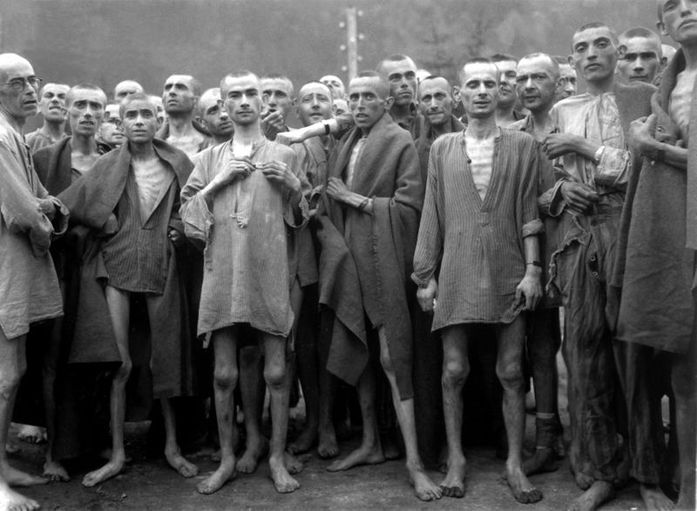
Wiesel did. He's one of those who was there when Allied troops walked into the camp at Buchenwald and put an end to terror and horror no one who wasn't there can imagine. When the SS beat his own father to death, Wiesel simply watched, not in horror but in fear that it would happen to him.  

His silence at that moment seems the very heart of Night, the silence, the emptiness he felt at his father's beating, when his own concern was only for his own life. That isolation robbed him of his humanity, every bit, even his faith.

I don't know that I'd ever read a testimony quite like Night. Wiesel, I thought, owned a faith that is secure--I don't think belief in God during that long year he spent in the camps, nor in the years following.

But the God of his pious Jewish childhood was absent without leave in the camps. He left them, took up residence elsewhere, because he certainly wasn't there loving the men and women he left behind to evil. I had never read someone who didn't abandon belief as much as feel total abandonment from a being he'd once believed loved him, loved us. That God, Wiesel discovered, was not to be found at Buchenwald. He had departed.

The path of his life after the war was created on the day of liberation. No survivor saw as pointedly his or her own calling; no one, it seems, felt the duty or determination to remember and not to forget, to tell the world what happened before his eyes and within his mind and heart. He determined to tell that story, not as if to gain thereby some relief from nightmares, but because such horrors should never happen again.

I didn't read the book years ago but I remember a review of some work of Holocaust fiction in which a survivor, as dedicated as Wiesel to telling the story, begins to feel senility creeping in. No pain, nothing the man could suffer could be worse to him than forgetting, than not testifying.

Elie Wiesel dedicated himself to the impossible task of cajoling the world, reminding them, time and time again, not to forget.  

He died last week, but Night, a very slim volume of Holocaust horror, will have a shelf life far longer than his own. His voice will continue to be heard.

Yesterday, a car bomb took the lives of 200 people in Baghdad. 

The real question is who will listen?

Monday, July 04, 2016

Liberty on Independence Day


She decided to leave for the Great White North, take a job in Edmonton, and announced it via Facebook, eliciting a ton of comments from friends. If Trump won, I wrote, she ought to keep her eye out for a place for us. In good humor. Sort of. 

She replied that if Trump wins she and her husband really ought to keep an eye out for a whole housing complex, maybe even a suburb. In jest. Sort of. 

We all hold some decided opinions. Most of our friends, maybe most of us, will find it difficult this Fourth of July to talk with their families about politics. It would be interesting to know how many families, today, will bring up Hillary and/or the Donald--and how many will avoid the entire subject as if it were mad cow disease.

Yesterday, in church, the final song was "My Country, 'Tis of Thee," an anthem I don't think I'd sung since fifth grade. It was a joy to go through that old patriotic hymn. Echoes of my childhood--sweet echoes--abound. The title itself puts me back in Oostburg Christian School, sitting right there in those old desks for early morning devotions and singing. Yesterday in church, I didn't need the book to know the words.

But it didn't take long to get to the word "liberty," and when we did I couldn't help think of the NRA fanatics who wave that battle flag as if the word was theirs alone. It isn't. Gay marriage advocates carry the very same banner. Most all of us do.

So who gets the right to that word when we honor this country as the "sweet land of liberty"? Who holds the copy-write? The right or the left? Donald or Hillary? Pro-life or pro-choice? Republicans or Democrats or socialists or Libertarians? Does anyone own the word liberty outright?  

The last verse of "My Country, 'Tis of Thee" uses the word again in a fashion that marries patriotism and faith:

Our fathers' God, to thee,
Author of liberty,
To thee we sing;
Long may our land be bright
With freedom's holy light.
Protect us by thy might,
Great God, our King!


It would be a gift to be able to return to fifth grade and feel my heart swell with the joy and pride those lines still evoke. But I can't go back. There's Dred Scott, "the Long Walk," Border Ruffians, the KKK, Manifest Destiny, wanton slaughter of the buffalo, long-haired hippies, "love it or leave it," "Burn, baby, burn," not to mention Black Liberation, Red Liberation, Women's Liberation. There's that word again, nominalized. 

In fifth grade, when I sang "Protect us by thy might," I was thinking of the Blitzkrieg or so many Chinese communists that GI machine guns couldn't kill them fast enough. Back then, I don't believe I ever thought of asking God to "protect us by thy might" from each other.

It's Independence Day, the day the Continental Congress, meeting in Philadelphia, released a manifesto titled "The Declaration of Independence," which includes what may be the most famous line in all of American history:  "We hold these truths to be self-evident, that all men are created equal, that they are endowed with certain inalienable rights, among them life, liberty, and the pursuit of happiness."

Those memorable lines are worth inscribing deeply within our minds and hearts; but Lord a'mighty, they're not simple, not at all. 

Eleven years after the first July Fourth, a woman asked Dr. Franklin what the Constitutional Convention had created when, in 1787, it met to determine what the form of government would be in this new land--"monarchy or republic?" she asked him. Franklin said, "A republic, ma'am, if you can keep it."

That answer is, 240 years later, wisdom we do well to keep in mind. 

Sunday, July 03, 2016

Sunday Morning Meds--Song of trust


“O LORD Almighty, blessed is the man who trusts in you.” Psalm 84:12

We first spotted the nest when a robin flew up so close to our window that it was startling.  Up high off the ground, that nest was in no danger from neighborhood cats, it seemed, securely constructed in the crotch of a substantial branch of an ornamental crab just off our deck.  When I pointed it out, my wife had the same thought I did—how great it would be to show our grandchildren. 

Soon enough there were babies. Before Memorial Day already you couldn’t miss them, rustling around whenever mom would alight, thrusting up those thin yellow beaks as if their only job was to eat—which it was. Soon enough, you could hear them, their chirp slightly higher, more unrestrained than their mother’s, often frantic.

On Memorial Day one fell.  A gray-brown smudge of feathers simply dropped out of the nest, bounced off a smaller branch on an untoward descent, then plopped to the ground. There she was—or he—the kid anyway or one of them, speckled and unkempt and quite unready for the terrors beneath, crying like a baby, which, of course, he was—or she. That song wasn’t lament, but sheer terror.  She’d lost her place.

It must be horrifying, traumatizing, for the rest of the whole bunch. With as many robins as there are in the neighborhood, some red-breasted shrink has to have set out a shingle, I thought. Calls for grief counseling for sure.

I wasn’t about to put her back. We were sitting on the deck, reading, and occasionally watching her helicopter mom, who wouldn’t let her alone.

Then, suddenly, a melee of frantic chirping. Had to be a cat around. I got out of my chair, stepped off the porch and into the evergreens, and sure enough, a mangy tailless tabby took off towards the garage.  That baby robin was safe. 

Tuesday, on my bike, right in front of the neighbor’s house, on my way to school, I had to swerve to avoid hitting a baby robin on the pavement, flat as a paper doll. Car got him—or her. No cat. 

I shrugged my shoulders. I’d watched that mother nurture her child for weeks just off our deck. That child had been her life, and now the cause of her life was no more.

But even now, as I type these words, a baby robin’s high-pitched trill is starting the morning just outside my window because although some mother’s baby didn’t make it, someone else’s has. Maybe it’s the one we watched grow.

Most of that story escaped my grandchildren, and that's fine because because they’re far too young for sadness. That flattened baby robin would have done my granddaughter in, I’m sure. She remembered last Memorial Day only because, on a bike trip, we saw a dead squirrel—“with blood on it”—on the road, she said. I’d forgotten completely until she mentioned it again because she hadn't.

Such is life. Our maples dump several hundred thousand whirlybird seeds every spring.  If I and my mower have anything to say about it, not one of them will make it.

Such is life. There are great stories, inside and outside the nest—how a tabby high-tailed it out of the neighborhood, how a hungry stomach got a meal, how a robin’s song delights the dawn. Such is life

But some dreams never become anything but and eventually fade. Of course, finally all babies die.


The heart of this beauty-of-a-psalm, Psalm 84, is this last verse--"blessed is the man who trusts in you." Through all the perils, all the dangers, all the grief, in those moments when we’re so blasted far from the nest that we nearly despair ever finding our way back or escaping danger sufficient to end it all, those who continue to trust, those who won’t forget God or let him forget them, those trusting, fallen children, even if they fall silent, can and will somehow keep on singing.

Friday, July 01, 2016

Stuff in the Buff


Rumor had it that the old guy, a lifelong batchelor, used to walk beans in his altogether. That's what people said. 

True or not, for some reason the image was a delight and even understandable to those of us subject to ordinary sexual anxieties, helped me at least understand how a batchelor deals with his own brand of those undeniable urges most all of us are subject to. Simple, he struts his stuff beneath the open sky. Makes better sense than straight-jacket denial.

Must be nice, in fact. I grew up with a bunch of boys who would head out to what seemed to us to be lakeshore wildernesses, where we'd mess around all day long, occasionally stopping to pee in chorus. One of those guys--it wasn't me--used to say at those moments, "So nice out, I think I'll keep it out." And we'd giggle, barndooring our apparatus only reluctantly.

I didn't say things like that because I never learned lines like that at home. I didn't have a big brother--and I was raised a Calvinist. Puritanical is too stark an adjective, really. My parents were not dour scolds. But the mere idea of Saturday night family baths in some kitchen tub, stories farm kids used to tell, seemed beyond belief. I don't remember much skin around the house.

Maybe that's why nudism still seems beyond me. There's the sexual thing, of course, but there's also the plain-and-simple matter of such sheer revelation. After all, I'm guessing most people's altogether isn't anything bound for a magazine cover real soon. The only time I come home from nights away and don't determine I'm going on a diet are those times I haven't stayed in a motel with a bathroom mirror big enough to capture half the town. Even with fig leaves, who'd really want to reveal all? Takes some guts. I'm at the age when wearing a swimming suit should be a private act. 

But then, maybe that very squeamishness makes me the Puritan I tell myself I'm not. Maybe I'm just envious of all those nudists and their blessed tennis rackets. Maybe I'm fascinated simply because it's something I can't imagine doing and being. Look at those old farts up there at the top of the page. They're happy as clams. What's wrong with me?

If someone out there has figured out this whole sexual thing, write me a note, okay? Still is a mystery to me, and I'm almost 70 years old.

But that's not the story. The story is that a gang of nudists in Bern, Switzerland--and why is it that I associate nudism with Europe anyway?--is it all those nude beaches? We have them too! 

Anyway, there's a whole company of men and women who rather like to appear Edenic. They find each other somehow, I guess. How come you never see ads? 

Anyway, there was a gathering, an ordinary gathering at a spa or something. Maybe they were roasting marshmellows--I don't know, browning something or other; and one of 'em looks up in the sky. That makes sense? Where do you put your eyes if you're a nudist? Do you look at others' apparatuses? Do you deliberately not look? If no one looks, what's the big deal?

Once upon a time my parents went to something akin to a Playboy Club, an amazing thing in itself. It was a business trip kind of thing, chasing clients and such. Mom claimed that Dad ordered a meal from a woman baring fulsome flesh running over from both cups. Nonetheless, she said, he proceeded to order his scampi as if those voluptuous breasts were an everyday thing. For some odd reason, Mom loved to tell that story.

Back to the Bern story. These sweet Swiss nudists, on exhibition, look up instead of sideways and someone notes this rather odd machine hovering. Did you read the story somewhere?

It had to happen. Drones are everywhere these days. Get 'em on Amazon, all kinds of them.

So some guy with a drone mounted with a video camera to become a spa spy. By the way, here's one for just $35:

Some guy with a drone thought he'd make a feature film from the nudists. Amazing no one else thought of that. Someone must have. Somewhere right now, I bet, there's some creepy guy (why is it always a male?) sitting in front of a screen like the one I'm looking into and reviewing footage from Altogether Beach or whatever. Had to happen.

Officials from the Bern spa where the geeky peeping happened warned whoever it was at the helm of that he (or she, but I doubt it) should prepare to be prosecuted.

I don't know why all of that's funny, but I think it is. Maybe it's just the whirling technology hovering over all that flesh. Did they, Adam and Eve-like, run for cover or just stomp off to the office and complain? Did they clutch towels? What did the pilot see? 

Maybe what he got out of it was ten minutes of golf, ten minutes like the shot up there at the top of the page. 

Boy, that was worth it.

Takes all kinds to make a world.

Thursday, June 30, 2016

Guns in the manse--an Iowa story


All of this happened just about the same time as Dominie Hendrick Scholte led 850 men, women, and children out of the Netherlands to central Iowa, an area (and a name--Pella) they'd chosen already before the left Holland. They weren't poor, thanks to Scholte's own personal fortune. In fact, they'd contracted to have log houses built before they got to the Iowa prairie--only to find they weren't. 

The Community of True Inspiration came to Iowa just a few years later and chose another name, Amana, for their society's colony of pietists. They'd settled near Buffalo, NY, about 1500 of them, a band of German folks, deeply religious, who grew so large they needed more land and found it, promisingly priced, in central Iowa, rich soils and abundant resources.

Religious visions were everywhere on the frontier in the wake of the Second Great Awakening. Boom towns may well have been hell holes--Deadwood was quite possibly exactly that. But the sagas we far more rarely hear stars men and women whose determination to live on the prairie was inspired by the unfailing belief that they were carrying out marching orders from on high.

Tabor, Iowa, is one of those places, one of those stories. It's sits on a bluff far above the Missouri river, the highest point of Fremont County, Iowa's southwestern-most corner. Whether or not the town will make it is a question locals need to answer, not someone like me, just driving through and looking around. My opinion?--barring some wildcat discovery of something as hot as natural gas, I'd be wary of putting any money whatsoever on Tabor. 

But it's a town with a past that's epic, created when a group of abolitionist Congregationalists determined that successive flooding at their original location, closer to the Missouri, was going to get them nowhere. They climbed to higher ground. They were visionaries too, like Scholte and the Amana colonists.

That picture up top is the Reverend John Ross House, in the 1850s a well-marked stop on the Underground Railroad, often the port of entry to runaway slaves who'd left their shackles behind when they left Missouri, but weren't free until they could be protected from vigilante slave-holders and northerners looking to make some quick cash by way of substantial bounties. Slaves were property. When they'd walk away from cotton fields, the economic effects on landowners were worse than what he might suffer losing horses or cattle. 

And there was a slippery slope--if Ben runs away, then why not Margaret and Seth and Samson and Billy? What people called "the peculiar institution," slavery, was under attack in America, and Southerners didn't take kindly to losing their fortunes or their rights. 

When he came up the Missouri River to found the town, Rev. Ross got into a discussion about slavery that soon became, well, heated. Once the other passengers on the river vessel detected an abolitionist in their midst, he wanted Ross's scalp. "Shoot him," someone yelled. "Kill him." One of them entered his cabin door and called Ross a "damned abolitionist" and said if had any right to him, he'd trade him for a dog, then shoot the dog. Ross says he learned later that the man was "a minister of the gospel from Missouri."

What separated Iowa Congregationalists from Iowa Quakers was not a deep-seeded hatred for "the peculiar institution"; both Quakers and Congregationalists despised slavery, thought it an abomination, a mortal sin, maybe even America's "original sin." What separated the two abolitionist believers was a commitment that included violence. The Quakers said no. Rev. John Ross and his Congregationalists said yes.

Behind this doorway is a stairway to the basement of the old house, a stairway made for a man like John Ross, who was just about five and a half feet tall and wore maybe size six shoes.The stairway is not for me. But I had to go downstairs.  

Because, as the sign out front of the house boldly witnesses, the Reverend John Moss had, once upon a time, a basement full of Sharpes rifles, not to mention a canon in his barn, armaments for war he thought about to begin in "Bleeding Kansas."

Both sides of the slavery question had mobilized support when the Congress had passed the Kansas-Nebraska Act, throwing the new state's decision about slavery into the hands of the voters. Hundreds--even thousands--of pro and anti-slavery people poured into eastern Kansas igniting violence that some historians claim marks the true beginning of the Civil War. 

Today, what's in the basement of the Reverend John Ross House in Tabor, Iowa? Nothing really. No cement floor, just piles of dirt, a humming dehumidifier, random stones, bricks. That basement was never meant wasn't to be lived in. It was a root cellar, maybe a place to hide when the prairie sky started to look fierce or foreboding. 

At the request of none other than John Brown, who stayed across the square in the home of Deacon George B. Gascon, a friend and member of Ross's church, a man who was also among the "Concert of Prayer for the Enslaved," the Reverend John Ross took on a house full of guns because he was a man of the cloth who could not abide that "peculiar institution," who argued that slaves had a more righteous reason for rebellion than did New England colonists a century before. 

If you look up in that basement mess, what you see is original timbers put there in 1853, when the Reverend John Ross built this home just west of the green in Tabor, Iowa. 


They're supported now, as you can see. All these years later, it's a wonder they're still there. 

But once upon a time, they looked down at instruments of war, lots of them. Once upon a time they were the ceiling of armory in a pastor's home. 

In his own memoir of that era, the Reverend John Ross, who became a prototype for an abolitionist preacher in Marilynne Robinson's Gilead, described himself and what happened back then in this way:
The parson had one brass canon on his hay mow, and another on wheels in his wagon shed. He had also boxes of clothing, boxes of ammunition, boxes of muskets, boxes of sabres, and twenty boxes of Sharps rifles stowed away in the cellar all winter. 
The Reverend John Ross was ready to fight in what he clearly envisioned as the War of the Lord. 

Was he righteous man or a sinner?  a madman or just pure of heart? a true patriot or a fundamentalist terrorist more than willing to die gloriously for a just cause? 

You'll have to get off the beaten track to find Tabor, Iowa, but it's still there. Call ahead. You can get into the Ross House only by appointment because not many Americans stop there anymore, if they ever did. 

But the Ross House is still there, the basement steps still beckon, and the memory of that time and place and the war it begat somehow seems more real when you stand there beneath those ancient beams on a dirt floor, where once a preacher readied himself for a war God meant to happen, a war to free the slaves.

Wednesday, June 29, 2016

Fancy Hairwork


Now should you think this piece of art decor is a hairpiece, you wouldn't be terribly wrong. Granted, someone who would wear such adornment might beckon deity from subterranean regions, one of those wild ones Young Goodman Brown stumbled on in the forest one fateful night. Then, maybe it could have crowned the head of footloose flapper from the Twenties.

It is neither, but it is hair, hard as that is to believe--or at least hard as it was to believe for me, never having heard of "hairwork," an art form now long gone but of great worth to ordinary, middle-class Americans of the 19th century. It is possible, even likely, that the hair in this monstrosity belonged to someone in the household of the Reverend John Todd, a firebrand Congregationalist preacher who picked up a lifelong dose of abolitionism from the years he spent at Oberlin College.

I'd never seen "hairwork" before, but ran into it first when walking through the modest bungalow built by the Reverend Todd, who talked politics frequently with none other than John Brown ("molderin'-in-the-grave" John Brown). This John Todd, whose beard could have decorated most of the walls of his family home in Tabor, Iowa, where he became, long after his death, the prototype of the firebrand abolitionist preacher in Marilynne Robinson's Gilead. 

We know this much: this piece of "hairwork" decorated the walls of Rev. Todd's bedroom, well, their bedroom, he and his wife's. The hair might well have been their own--some people did that. Giving up one's hair was sometimes held to be both an honor and a sacrifice. It's likely, however, that the hair in this wall-hanging (that's a difficult phrase to say, isn't it?) belonged to someone else, perhaps a friend or relative. Hairwork techniques, I guess, were sophisticated enough to make designs like this one from relatively short cuts of hair. In other words, you could donate even if you weren't a Nazarene.

Only the Todds likely know whose hair it is, and they're long gone.

Before you decide that such art was decidedly, even embarrassingly bourgeois, check this out:


This hanging still graces the truly aristocratic walls of General Crook House in old Fort Omaha, Nebraska. Major General George Crook was very definitely upper class, the Commander of the Army of the Platte, a  highly decorated military general. Visitors to his beautiful Italianate home included a number of Presidents, Crook being, even in his lifetime, one of the most celebrated Indian fighters of the era.

The different colors of this one do more than suggest different pates. Family? Friends? We'll never know.

Still, today, it only makes me shudder. Anything's possible, of course, so I wouldn't doubt that somewhere across the face of this great nation a man or woman is plotting out his or her own hairwork art. But my first reaction, in the Todd house and in the Crook House, was "eeooouuu."

American business enterprise killed "hairwork art," I guess, because as soon as its production became an enterprise rather than folk art, people began to suspect that its raw materials were harvested from cemeteries. When entrepreneurs determined there was a buck to be made, they started turning them out, dime a dozen. That's when grave suspicions arose.

Thus it ended, the coffin sealed forever by unknown sources for fancy hairwork art you could just pick up from Sears Roebuck.

Once upon a time they were both high fashion and low. Today, they evoke little more than a shudder.

There's a sermon there. Or four. Or five. Please feel free to choose your own.

And how about this? All this fancy hairwork is being touted from the keyboard of a bald man.

Monday, June 27, 2016

Morning Thanks--Reunion


At her 50th class reunion yesterday, it was nigh unto impossible for me to imagine what some of those people looked like a half century ago. There's a ton more thickness all the way around, and lots and lots less hair. What there is of it is fifty shades of gray.

That's us. I don't think I even look like me. Put a crown of silver on her head, and she's the same woman. Still can't help but close her eyes when she smiles. Our daughter, our firstborn, is forty years old.

Most everyone at the renion used the handrails on the long flights of stairs we used to get up and down to the celebration, and there weren't half as many freckles on those arms as there were liver spots. Here and there bones creaked, and I don't doubt that some errant gases escaped when they shouldn't have; but had there been something public, most would have giggled. Been there, done that. 

Judging from the outside (I'm an in-law in that alumni family) a good time was had by all. None of that fearful judging that goes on at class reunions early in the game--who's making money, who's making waves, who's making whoopee? No pseudo-sophistication. No pseudo anything that I could tell. When the whole room is full of people pushing seventy, everyone plays it straight. You're free to be what you are and nothing more. Or less.

My high school reunion is coming up soon. I'll need a directory. But so did my wife.

I went to a public high school, so there'll be drinks served. I don't expect any spectacles. At our age, people tend to nod off easily enough the way it is. Besides, there'll be just about as many plainly religious people at OHS, class of '66-night, come August, as there were singing hymns yesterday on Sunday morning. There may even be a prayer somewhere along the line. Wouldn't be illegal or ill-advised. Entirely apropos.

But Barb went to a Christian high school, so yesterday's reunion centerpiece was worship, a regular church service with a preacher who wasn't a preacher, but who held forth quite charmingly, I thought. But then, even if he hadn't done well, no one would have stopped smiling.

He read from Psalm 90. I don't know about others, but I will forever associate that great psalm with funerals, which the reunion wasn't at all, even though more than a half-dozen classmates didn't make through all those fifty years. 

Psalm 90 ends with one of the most solicitous lines in the Bible, or so it seems to me. There's no accounting for taste, so I don't expect other people to agree with that assessment, but I've always felt that asking the Lord to "establish the work of our hands" is just plain extraordinarily human, in the very best sense. It seems to me that what we all want is to somehow make a difference. I've prayed that line ten thousand times, I'm sure, in a variety of adaptations.

When you're a kid or a young person like I was in that picture above, a teacher at a high school in Arizona, "establish the work of our hands, Lord" means you're asking the Lord to make things stick in the classroom, to help me to say what needs to be said to kids who need someone to say it. And this child too, our first. Make me a better father than I ever guessed I needed to be or now understand I can be. Establish the work of our hands, Lord, establish the work of our hands. Help me build something, Lord.

So yesterday we all said it again, a host of men and women in their late sixties, a ton of Vietnam vets, a gathering of actual saints and sinners. We repeated that verse again, years and years away from images like the one at the top of the page: Lord God almighty, establish the work of our hands.

It's different now. It's the same words, the same prayer, but now it's all said toward a rearview mirror, most all the establishing well behind us. 

But we're still asking for the same thing, aren't we?--just looking backward is all. 

Establish the work of our hands.

And smiling. Yesterday, her class reunion was a very good time, for which I'm thankful this morning.