Morning Thanks

Garrison Keillor once said we'd all be better off if we all started the day by giving thanks for just one thing. I'll try.

Friday, October 16, 2015

Robinson and Obama: the President as Journalist


The decision, reached after what White House officials called an “extensive, lengthy review,” ensures that Mr. Obama will leave office in 15 months without making good on a seminal promise of his presidency: to responsibly end the military involvements started by his predecessor, George W. Bush, and withdraw all American troops from the battlefields of Iraq and Afghanistan.
That was the news yesterday, according to the NY Times. What was once a "seminal promise," that he would forthwith bring the troops home, a promise he made to insure his election to the Presidency, was reversed. Obama was wrong on Afghanistan. We're not going to be out during his eight years in office. It's going to take longer than he thought. John McCain was right: announcing our plans virtually aids-and-abets the Taliban. 

Some will say he lied, but everyone has to admit he was wrong.

I wish that weren't true, but it is. John McCain has good reason to crow.

There was more news yesterday, by the way. In case you missed it, you really should read Obama's interview with Marilynne Robinson in the newest New York Review of Books. It's dangerous to make generalizations, taste being as mysterious as it is, but among aficionados of novels in what we now call "the genre of literature," Ms. Robinson may well be the living master. She's written a series of three novels that began with Gilead, the story of a preacher from rural Iowa in the 1950s, and include Home and Lila. They are, trust me, profoundly Christian; yet, they've been published in Persian in Iran.

You read that right. Gilead is profoundly Christian but acceptable even to fundamentalist Muslims because her fiction doesn't preach--it sings.

Ms. Robinson is the nation's most read Calvinist, even if she's only a writer of stories. But she's also an essayist who almost single-handed retrieved John Calvin from the landfill by praising his wisdom in The Death of Adam: Essays on Modern Thought, which, as you might imagine, is not a page-turner--but then neither is Calvin.

What's amazing about this NY Review of Books interview is that President Barack Obama is the interviewer. He's the one asking questions. It soon becomes clear that their back-and-forth in this part of a longer interview isn't the first time they've chatted. Like a couple of old chess players, they seem to know each other's moves; and Obama is the optimist. Robinson the Calvinist sometimes can't help maintaining that the cup is half-empty when it comes to the human race. 

I think it would be interesting to ask Doris Kearns and Michael Beschloss, Presidential historians, whether any other American President has ever conducted an interview like the one Obama does in the NY Review of Books. Interviews of the President happen daily, but this is news, or so it seems to me: Obama is the journalist, the one asking questions.

Try to imagine Donald Trump caring about what Marilynne Robinson thinks. 

Yesterday's Obama news is soul food for Rush. John McCain was right about Afghanistan. It was dead wrong for the President to believe we could withdraw our forces out and not tip out hat to our enemies. We're staying in Afghanistan.

But what the NY Review of Books interview makes obvious is that Obama not only isn't a muslim, he's a believer. He is not Franklin Graham, but grant him this at least--he's a seeker like no other President before him. 

And a reader, a blessedly thoughtful man.

In 2008 the newly elected President of the United States asked to speak to the school children of America. Some Christian schools--including the one we've supported for many years--chose not to listen and everyone knew why. Had the school tuned in, the principal would have faced a firestorm, and still would today. Millions of pious Christians in this country--and a majority of Republicans--believe Obama is an out-and-out liar when it comes to faith.

It's somehow understandable. After all, back then, my own grandchild, 
a kindergartner, sat on my lap and told me in no uncertain terms that Obama kills babies. 

President Barack Obama was wrong about Afghanistan. But what his interview of Marilynne Robinson shows is that clearly he is not a Muslim. It show him being human, wondering about things, about the biggest things--about faith and those who practice it. 

It's amazing. It really is. 

Thursday, October 15, 2015

Preachers Hands


There was a guy down the alley on the other side of the street--I didn't know him--who put a new roof on his garage. He was up there for days in these last glorious warm fall afternoons.

The first day he was up there, he was lifting the old asphalt with a pitchfork, jimmying up those old snarly things and the nails that kept them there with a screeching and squawking that reminded me all too well of my few roofing adventures. Twice I did my own house--not by myself, of course, but under the direction of people who knew what they were doing. Twice I stood on my own deadly inclines, armed with a pitchfork, and ripped up asphalt and wood and dust and roofing nails--it's an awful job that most carpenters would much rather simply forego. If you want to start some kind of building business, you start with roofs because nobody else will do them, I'm told.

Once upon a time, I helped with a neighbor's house, an old couple who lived right next door. His roof was as steeply pitched as a barn roof, but I was young enough, acrobatic enough to stay up there without pinwheeling off the angle myself. What made the job memorable, however, was the pot-bellied farmer, my age, son of that neighbor, who came to help too.

I lived in a college town back then, and I'm was a prof. That made me, by rep, a lightweight, a dork, an egghead, a guy who doesn't get his hands dirty. I'm not sure why--who on earth would choose to stand up in front of tons of kids who'd rather be texting than taking notes?--but in a town like the one where I used to live, ordinary working men think profs an alien wuss species. They may be goons, but we're just plain goofy. I know.

Anyway, up there on the roof this paunchy farm guy made it very clear that he wanted it known far and wide that his testosterone ran deeper and richer than this prof guy, so we had ourselves an unspoken competition, as men will do. So as long as he worked, I did--I wasn't going to let him call me soft. As hard as he worked, I did--and, thanks to his rubber tire, I think I beat him.

At a cost. But, who cares? I beat his butt--is all I cared about back then. I went home proud and smug, then closed the door behind me and fell over in pain. At least he didn't beat me.

For years I've been haunted by a old story about Jesse James, who used to pull train heists, stroll onto passenger cars with his .45, examine men's hands, and then take wallets only from those men who had no callouses. Good night, I'd have lost everything.

But this week I didn't hazard a step toward that neighbor down the block, didn't lift a hand because the last time I was up on our roof I told myself, while forking old wood shingles, that it was going to be the last time. My balance, like other attributes, wasn't what it was and certainly isn't today, umpteen years later. I knew that back then, but wouldn't have admitted it to anyone.

So I watched that neighbor up on his garage, smiling all the while because age has some privileges. Nobody would have expected me to lend a hand--that old bald guy across the block.

Back then, as long as I avoided passenger trains, I figured I was safe. Jesse James was long gone.

Still, these fingers on the keys and the hands they belong to, are, I must admit, resemble preacher's hands.

But yesterday I built a garden box. So there.

Besides, I'm no more a prof. I'm retired. Just don't ask me to go up on a roof.

October Earth Tones

October Earth Tones

Wednesday, October 14, 2015

Hot news cooled


Lord knows there are bigger stories this morning. After all, the Cubs, the Chicago Cubs, are moving up in the playoffs. I'm not making this up. 

Seriously, there's always ISIS and global warming and the odd tangle the Middle East has created--Americans and Russians eyeing each other like feral cats on a some kind of leash. I didn't watch, but all the ink seems to spell out a series of Hillary knockouts last night that left the Las Vegas stage bloodied.

There's this too, if you're a disciple: one of the husbands of one of Kardashians passed out in a Nevada brothel.

But the really big news yesterday was Playboy, the mag--that's right, the famous one--has now determined (their circulation down from 5.6 million in 1975 to about 800,000 today) that there will be no more naked women. You heard that right. It's not altogether different than the city of Chicago dumping the Cubs, General Mills dropping Wheaties, or Nike walking away from the shoe market.

No naked women, you say? What's this world coming to?

In case you missed it, the market's saturated. If you want to oogle, you can do it all day long on the screen you're in front of right now and not part with a dime. Religion and sex, some researchers once determined, are the two biggest surfing attractions. Talk about odd bedfellows.

Playboy's not throwing in the towel, it's throwing on the towel. The girls will still be a centerpiece (nothing was said about centerfolds), they just won't be naked. Can you believe it? That's news.

Before Calvinists begin to celebrate the Fourth or Fifth Great Awakening, they need only to remember that today nudity is ubiquitous--think NYC body painters. You might even argue that Playboy is dressing up its girls because the magazine won--we've become a nation of Hugh Hefners. Its bunny logo is a world-wide phenomenon. In China, where nudity is banned except, I suppose, in dark corners, Playboy sweeps up forty percent of its loot with nary a nip slip. 

Besides, they're not going into this dress up blind. Not long ago, I guess (not having visited myself), Playboy's website dropped its own proud flesh and watched as its readership dropped in average age--get this!--from 47 to 30. It's the Millennial bucks everyone's after, and the 30-year-olds started showing up once the girls got dressed. Its web traffic increased in unique users by 12 million clicks a month without skin.

There's nothing moral about it. Nudity had become a loss leader that corporate just couldn't afford. The magazine was tanking at a rate of three million a year. 'Twas a straight-up business decision.

Don't be fooled. Sex still sells and likely always will--or at least into the foreseeable future. Still, if there was ever man bites dog story, this is it: Playboy covers up.

Once upon a time, my parents had dinner at a Playboy club. They're both gone now, so the story can be told. My father worked in sales for a light equipment industry, and one of the jobs he loved best was representing the company at hardware shows around the nation. Who knows how it happened? My parents would not have stumbled into a Playboy Club on their own nor willfully sought one out. It had to do with business. It was a trial, Young Goodman Brown having to venture deep into the forest.

My mother told me the story, trying to restrain herself. To her, it was a hoot. There they sat around a table, at dinner, when one a waitress walked up, busting out all over in little more than a bunny tail. You know. Go ahead and imagine--won't hurt you. 

Anyway, my mom couldn't stop giggling. "You should have seen your dad," she told me. "He was all business." And then she went into this act, as if holding a menu right there in her hands. "I think tonight I'll have the filet,' she mimicked, deepening her voice, acting something akin to the Rock of Gibraltar, as if the tray of breasts the waitress was delivering in his face was no big deal or deals.

Dad blushed when she told the story. Mom roared.

I was raised a Calvinist. 

Tuesday, October 13, 2015

Sioux County History--"the first great tragedy"


When the men got to the banks of the Rock River, what they found rose before their eyes like a nightmare. The oxen Gerrit Keuvers and Dirk Jan Wesselink had driven down to the river stood there grazing in a kind of reverent silence, the two of them still yoked to the front wheels of the wagon. 

But there were no back wheels and no men. It was early in the 1870s, and a couple hundred Sioux County pioneers lived in sod huts or dugouts cut from and in an immense field of grass slowly being opened for business and settlement. No great love songs were ever written about dugouts, no memorable poetry honored the memory of a sod house. People got out of them as quickly as they could because all kinds of creepy, crawling things found them far more homey than the humans who tried to live there.

All that thick sod kept temperatures from extremes, but the dirt floor turned to mud with every rain.  Snakes turned moms and kids "zero at the bone," as Emily Dickinson wrote, with entirely too much frequency. 

What's more, a homesteader had to improve the land he claimed. There was every reason to build a house, every reason to traipse down to the Rock River for wood and, with it, put up some decent domicile. That's what Keuvers and Wesselink were doing. They'd left the neighborhood that would one day become Sioux Center to get wood from the Rock River, and then they'd not returned.

One can only imagine the concern. A search party was commissioned, the men who found the oxen still hitched to the front wheels. A man named Bellesfield ran a tavern, an inn, you might say, on the rutted path along rivers between Sioux City and Sioux Falls. Bellesfield had a row boat. With the boat, they found the bodies.

The Rock was a force to be reckoned with back then. The men speculated that Keuvers and Wesselink drove the wagon in and the oxen panicked in deep water. The rig somehow smashed and snapped in half and the two men were thrown in the deep water that claimed them.

A couple of days had passed. One can only imagine that those bodies weren't pretty. So the men took them to Bellesfield's tavern, cleaned them up well, then dressed them in new overalls and shirts before delivering them and the news to their families. Time, it seemed, was only a secondary concern. The brutality of death itself was lessened by that act of kindness. 

Charles Dyke tells that story in The History of Sioux County. Many of the stories he tells in that book are sagas he remembers, but not this one. He could only have heard this one, and how he tells it is both interesting and wonderfully human. The deaths of Keuvers and Wesselink, he says, in an opening line, was "the first great tragedy of the settlement," the first breath-stopping horror no one saw coming. Two men die unexpectedly, leaving their families in dugouts cut into and out of the dirt.

People must have been shocked, stunned. The funeral was in Orange City, hardly a town yet, but a church at least in and at the heart of the brand new Dutch settlement. Kleuvers left a wife and three daughters "almost grown." Wesselink and his wife had eight kids. "His widow bravely carried on and raised her brood in decency," Dyke says. 

But he doesn't know how to end the story really. Charles Dyke can be a little arrogant as a writer. He knew how to spin a story. My mother-in-law, who remembered him, claimed he shouldn't always be believed. But in the face of this first tragedy, a story he must have heard a dozen times, he has some trouble--as we all might--knowing what to say.

Mrs. Wesselink eventually married a second husband, a widower named Harmen Jan Wissink, who already had 12 children. You do the math.  Neither of their "shanties," Dyke says, was big enough for this wholesome brood, so they simply nailed them together. 

And then, as if he doesn't know exactly what to say, Dyke just goes on with images that never left his memory. Because eventually, he says, "all was well." 

"The ceiling in one shanty was so low that a man had to put his pants on sitting down," he writes. Then more random facts. "They baked every day and in the morning they had pancakes." That's not all. "The table and stove were partly supported by bricks, and they burned hay and corn stalks," which, of course, would not have been all that unusual. 

Still not over. Later, when the first Sioux Center church was built, Wissink stood up in assembly and moved they pay for it in cash, and the motion was carried," just in case you were wondering. 

And file this away too. "Wissink was a kind and genial man who always wore wooden shoes, even to church. For the latter purpose they were scrubbed and polished until they fairly shone."

And that, oddly enough, is where the story of "the first great tragedy" ends. All of which is to say, once more, I suppose, that "all was well."

All of that doesn't sound like Charley Dyke, but the stories each of us know, and maybe the ones we can't or won't forget, are simply not easy to tell. 

Monday, October 12, 2015

Svetlana Alexievich and the Nobel Prize for Literature


I'm searching life for observations, nuances, details. Because my interest in life is not the event as such, not war as such, not Chernobyl as such, not suicide as such. What I am interested in is what happens to the human being, what happens to it in of our time. How does man behave and react. How much of the biological man is in him, how much of the man of his time, how much man of the man.
If you're wondering who Svetlana Alexievich is, you're not alone. Most recognized for a book she did on the Chernobyl, Voices from Chernobyl, she is primarily a journalist, and her work consists of interviews done with hundreds, even thousands of people, interviews she uses to define world events as massive as the Second World War (The Unwomanly Face of War). 

Last week, she was awarded the 2015 Nobel Prize for Literature.

Most recently, she published a collection of interviews over an even broader subject--our mutual humanity.  
Most of us--me included--know her only by what we have been able to read about her since the award. Her webpage is greatly helpful. 

What's in this latest work of hers, The Wonderful Deer of the Eternal Hunt? What will we find in the interviews she includes? Here's what she says:
That everything turns into memories. That each life is interesting in its own way. That without death you can't understand life. That love plunges us into the depths of our own selves. That human beings are neither saints nor satans but somewhere in between. That our knowledge is powerless. That in love people look for the same things as in war and crime. That each one of us conceals both men and women. That we live among shadows, among the impossible and the unrealized. That in love you may disappear as in death. That the real life and death of the body is inaccessible to us. That Christ was also a man. That you can die from love during the war. That everyone may recall what he/she would like to conceal. That all creatures in this world love one another - flowers, trees, butterflies, worms, birds. That no modern technology can free us from the need to love, feel and suffer. 
There's more, more of the same. Her own summary of Wonderful Deer ends by describing the stories her subjects tell as being basically "about people's desire and failure to find happiness."

That she was chosen is quite unusual. If you're wondering whether the Nobel Prize for Literature has ever been given to a journalist, you're not alone. 

The answer is no. This is new.
I wish--I really do--that I could read The Wonderful Deer of the Eternal Hunt because it sounds magnificent, although I'm more than a little wary of reading nothing but "failure to find happiness." Still, in my own life of interviewing people for writing projects (Crossing Over, On the Trail of the Spirit, Rehoboth, Our Family Album), I can't begin to describe how much I've learned by simply listening to the stories of people's lives.

One of the most dramatic and powerful moments I experienced in the last couple of years happened when four Christian men deeply involved in a difficult racial decision on Chicago's west side talked about that experience forty years ago--remembered and cried, not because they believed they were wrong in ruling what they did, but because the decision was back then and remains today so harrowing, so impossible.

Once upon a time in a long interview, I asked a Laotian woman whether she liked working in a packing plant. I knew very well that lots of white Iowans would have done anything not to have to spend their days wielding a knife on a hanging hog carcass. She looked up at the translator who was with me and shook her head. She didn't understand the question.

I repeated it. "Ask her if she likes her job at the plant," I told the translator. "Not everyone would."

She looked at him as if he was the idiot in the room, then gave him an answer she seemed to say was self-evident. 

He listened, then looked at me. "She says back home she had to do all of the butchering."

At that moment, I was embarrassed. I was a Joe American, a cultural blind man. At the packing plant, dressed well in a protective smock, she made just one or two cuts on the pork that came up the line. In Laos, she had to butcher the whole animal. The packing plant was a dream come true.

When you listen to people, it's remarkable how much you can learn. When you ask them to tell their stories, what results is whole libraries of incredible narratives.

That's what Svetlana Alexievich knows, and that's what Svetlana Alexievich does.
She may not be an imaginative writer, but she certainly tells stories that define us, that are us. I'm anxious to read some myself. 

Sunday, October 11, 2015

Sunday Morning Meds--Prosperity Theology


“Blessed are those you choose and bring near to live in your courts! 
We are filled with the good things of your house, of your holy temple.”
Psalm 65:4

In Peter Sellers’ masterpiece allegory, Being There (1979), Chance, a sweet and simple dunderhead gardener who knows nothing about real world politics or culture, is madly thrust into the national media spotlight because the words he utters seem immensely profound even though they are, well, innocuous.

In one memorable scene, the President himself asks Chance for advice on the national economy: “Do you think we can stimulate growth through temporary incentives?” he says.Chance pauses, then responds with truth from the only world he knows: “As long as the roots are not severed, all is well and all will be well in the garden.”

“. . .In the garden?” the President asks, searching for meaning.

“That is correct,” Chance says. “In a garden, growth has its season. There is spring and summer, but there is also fall and winter. And then spring and summer again.”

The comic genius of the movie—and the idea behind it—is that it prompts viewers themselves to press meaning from Chance’s “chance” answers. Between the words he utters—simple references to gardening—one can lug in whole worlds of meaning. Chance really knows nothing. But the precious words he utters prompts The President—and the viewers—to draw their own conclusions.

It’s a scary movie for fundamentalists, I suppose, if any care to watch—scary because the implications of the story (from a novel by Jerry Kosinski) are quite clear: text is meaningless on its own; interpretation is everything. Meaning—and truth itself—is totally subjective.

Being There comes to mind with the fourth verse of Psalm 65, in part because the gospel of success is doing so very well today, all over the world, not only in its blatant forms—as in “Jesus Christ promises success for those who follow him,” but also in far more subtle ways. The meteoric growth of Christianity around the world isn’t all the work of the Holy Spirit. Oppressed people—the poor of every land—sometimes come to believe that western Christianity is the way to wealth. Follow Christ and your life will hold the glamor of American television.

Chance could utter this verse, and to many—especially the poor, it might seem the gospel truth, which it is. But then, what are “the good things of your house”?

The answer to that question lies, as Being There demonstrates, in interpretation. No one can look at this verse and not do some hermeneutic excavation.

What are “the good things”? A clear blue sky; the Second Inaugural Address of Abraham Lincoln; a marital bed; chicken fajitas; my children happy; something started in joy, finished with gusto; a novel that teaches me something; a profession of faith; my two-year old grandson singing a prayer before dinner. Create your own list.

It’s easy for me to say that the promise of verse four does not include money. I have plenty, after all. If I didn’t, if I were as impoverished as millions in this world, my list would look at least somewhat different than the one I’ve given.

So what is my interpretation of verse four?

What David means is simply joy—joy in being loved by God. That’s the only, real “good thing.”

Friday, October 09, 2015

Morning Thanks--Indian summer


Listen. Here's the story. Tomorrow, 77 degrees. I ought to write it out--"seventy-seven degrees." Don't charge through those words, read it again, slowly. Savor it. 

And Sunday, eighty. Seriously. 80 degrees. 

If this is global warming, bring it on. I'm in.

A Minnesota weatherman on Monday already called it "Indian Summer," a term, a phrase, of unknown origins, although those who research such things believe it had its birth as ordinary usage with those killjoy Calvinists at Massachusetts Bay. If so, my own pointy hat is off to 'em. 

Seriously, Wikipedia claims that the first mention of "Indian Summer" occurs in literature about the time of the American Revolution, but that particular usage suggests it was already in common use. You might think--as I did--that it's rather unlike white folks to grant our Native friends such a warm honor. Nice of us, actually. After all, what's not to love about "Indian summer"?

Don't get too magnanimous. In Europe, where there are no "Indians," this time of year goes by a variety of names, none of them too sweet. "A warm period in autumn is called "Altweibersommer" (literally "old women's summer"), or something similar, in Germany, Austria, Switzerland, Lithuania, Hungary, Finland, and many Slavic-language countries," saith Wikipedia. And variations are rather similarly unkind: "grandma's summer," "poorman's summer," or "gypsy summer," a grouping which does put "Indian summer" into a rather unsavory class, I guess. Rats.

I've always thought "Indian Summer" a taste of heaven, sweetness when you least expect it. And I do have a bone to pick with that Minnesota weatherman because I think he's thoughtlessly premature. In my book, we have to have lived through some ugliness before we get this last sweet breath we call "Indian Summer"; and we haven't. 

Yesterday I pulled out a huge cherry tomato plant, a tangled mess of vines that had simply thrown in the towel on life. It wasn't murdered by frost; it passed away from sheer exhaustion. The marigolds left in that garden box are quite beside themselves. Last night already, I'm sure, they started taking over the open ground. I don't write definitions, but I'm standing firm here--"Indian Summer" does not bless us until killer frosts wipe out most everything outside and the skin on our faces gets wiped off by northwest prairie winds spun from somewhere north of Edmonton.

I like to think we have to earn "Indian Summer" by purposeful suffering. If we've already had some snow on the ground, we're in line for what is actually "Indian Summer." Maybe I'm just too much the Calvinist. 

Definitions be hanged. It's October already, almost halfway through the month as well, and when the weather man delivers like he is this weekend--80 degrees!!--there's cause for real rejoicing, cause for morning thanks.


Thursday, October 08, 2015

Learning to understand


Way back in high school, my wife studied Latin. So did hundreds of thousands--even millions--of others. In the high school I attended, Latin had already left the building. I studied German ("studied" broadly understood).

German was the language of science. What's more, we'd just defeated the Reich. German was a world language, still is, and vastly more useful than Latin, emphasis on "useful."

Today, our grandkids, if they study any language, study Spanish so they can talk to their neighbors. Follow the trajectory of that series of lingual transitions and you'll understand basic changes in education: educators are trying to be, at every level, more practical. A friend of mine, a life-long, middle school math teacher, told me not long ago that teaching today is completely different than it was when he started. Everything needs to be experiential: 2 + 2 = 4 isn't quite enough. What's more efficient is my two donuts plus your two long johns means together we have got some good eating. Wait a minute, let's count calories.

Fifty years ago no one studied Latin to talk to real live human beings because no live human spoke Latin. My wife studied Latin because it was required, but it was required because educators believed somehow that studying Latin helped us understand.

Now you might think I didn't end that sentence, but I did. What I left off was a direct object--as in "understand what?" Back then, some educators would have said, studying Latin helps us understand our language, not just "the English language" but also what and how that language communicates, even about us. But what they meant was less specific, really--teaching Latin helps us understand.

Now all that glitters is not gold and there ain't no Golden Age. But we've become vastly more practical in education in my lifetime, and while that turn has its strengths, it's also left some things in the rear view mirror--and not just Latin.

Higher education has changed too and changed similarly. Years ago, there was immense faculty opposition to the President's purposeful mission change when he decided--I'm sure there was a committee backing him up--that Dordt College needed to teach agriculture. Great moaning and gnashing of teeth. Seriously? (Pull up your nose when you read this, please.) "What were we going to be?--a trade school?"

Today at Dordt College, in part because of the tremendous price tag of higher education, the four most popular majors are professional/vocational: education, ag, engineering, and nursing--all majors once called pre-professional.

Don't get me wrong. This Ph.D. in English is not saying that the academy is now run by Ali Baba and the Forty Thieves. But the humanities and the liberal arts have suffered immensely, become, for the most part, also-rans or "requirements," areas of study no one would sit through if they weren't forced to belly up to the white board. An old friend of mine, teaching at another traditional liberal arts college, says he's just waiting for the ax to fall because he's teaching sociology, not social work. Sociology helps us understand; social work is a real job.

I taught the major we still call "English" at the right time. That time is gone, and pardon me, please, if I reach for the Kleenex.

David Brooks is always worth reading, but in Monday's NY Times he makes a claim that thrilled my soul--to wit, that big universities are trying to determine how best to carry out their original mission of teaching, well, understanding. "For the past many decades colleges narrowed down to focus on professional academic disciplines," Brooks says, "but now there are a series of forces leading them to widen out so that they leave a mark on the full human being."

I don't know whether you or I can really believe him, but it's made my week to think that maybe--just maybe--the pendulum is swinging. Brooks is not talking about small Christian colleges, but for the most part those institutions, like the one I worked at, are, have been, and will be forever affected educationally by what's happening around them.

Brooks is generous with his advice, laying out a four-step plan to help major universities rethink their mission to teach students to understand. First, he says, "reveal moral options," by which he means introduce students to major world religions as a means of helping them see systems of thought and behavior and belief that have shaped humankind.

Second, "foster transcendent experience," so that students come to see that while tools are wonderful blessings, human beings don't do all that well in a tool box. What he means is to make students feel something bigger than themselves. Some of the finest moments in my teaching career happened when I'd take students out west of town to look at the broad Great Plains landscape we live on, something, oddly enough, they rarely see.

Third, "teach new things to love." Remember the Dead Poets Society?--literally speaking, take it to heart.

Fourth--and this is directed primarily toward lit profs and historians of all stripes--get with the program. No one can sidestep the vast changes that long ago dropped Cicero to read Svetlana Alexievich of Belarus, who just this hour won the Nobel Prize for Literature, ancient classics for new work. "Instead of organizing classes around academic concepts — 19th-century French literature — more could be organized around the concrete challenges students will face in the first decade after graduation," he says.

That makes English Departments into Service Departments, but most anyone teaching literature and writing today knows that's been happening for decades already. Get with the program, Brooks says, but never forget that "great works of art and literature have a lot to say on how to tackle the concrete challenges of living."

I'm encouraged. No one's about to return to the good old days, but something of what made them good is maybe being rekindled. Education at all levels should always be a practice done to understand.

Wednesday, October 07, 2015

Book Review--My Grandmother's Knocking Sticks


Those who pull walleyes from Minnesota's 10,000 lakes are all fishermen, says Brenda J. Child, in her fascinating new study of Ojibwe* life, and there's the rub. That the dominant Anglo culture didn't even have a word for her Ojibwe ancestral fisherwomen is itself an indication of the inability of white people to understand her people and heritage, the very character of Ojibwe culture. They simply didn't get it, Ms. Child might have said.

In My Grandfather's Knocking Sticks: Ojibwe Family Life and Labor on the Reservation, Prof. Child uses a variety of sources to assert that Ojibwe women did yeoman's work when it came to tribal fishing, a mainstay of tribal life both before the white man came to the northwoods country and still today. We're not talking about angling here, sport fishing; we're talking about fishing as an industry with employees and credit and debit sheets. We're talking about workers taking thousands of pounds of fish from lakes all through Ojibwe land, which was, once upon a time, an immense chunk of the Great Lakes Region of North America.

If the only portraits of Native people in your perceptions are Great Plains Lakota, you might have some trouble imagining the Ojibwes, who actually drove the Sioux (Lakota, Dakota, Nakota) people out of the lakes country in the 17th century, banishing them to the naked plains. To here, in fact, where Vanden Bos, Muilenburg, Vander Waa, et all, probably encountered Yanktons.

The Ojibwe may have hunted the occasional buffalo, but they're weren't nomadic, which means they didn't live in teepees (thank goodness in northern Minnesota!), and generally maintained an 18th century address, which should have made them easier to, well, "tame" than the nomadic Lakota or the semi-nomadic Navajo. 

Not so, Prof. Child would argue.

Knocking Sticks tells the story of Child's own parents, Fred and Jeanette Auginash, both Ojibwe, who were nonetheless day-and-night different in almost every way, including age (whey they married, he was 40 and she was 23) and education (she went to boarding school, he had little education at all). But what Ms. Child makes clear is that despite what you and I might think, the two of them were somehow able to create a loving family circle, a nurturing home.

And that's the general mission of the book--to show beyond reasonable doubt that Ojibwe life is its own, that it hasn't been and that it won't be the step-child of the majority culture.

It's more history than memoir, more thesis-driven than a portrait of her own family circle. Prof. Brenda J. Child is an academic historian who knows how to create an argument out of materials not commonly accessible or else traditionally neglected. What she is interested in doing is making an argument that may not be new, but is certainly not widely known among American's dominant culture--that life went on quite well, thank you, among Native people before swarms of European immigrants (some Native people say, "illegal" immigrants) determined that land once happily inhabited by an indigenous culture really had no inhabitants and was mostly free for the taking.

What Child quite uncomfortably shows (uncomfortable for a white man like me) is that Ojibwe culture adapted to modernity on its own and had, therefore, a life of its own. What she despises is the species of white paternalism that presumes--and argues--that once white people came to the wilderness the lot of Native people was blessedly improved, once white cultural ways were adopted.

Case in point--the jingle dress, a piece of traditional clothing worn for special occasions and powwows. Child argues that its origins are go back only to the early years of the 20th century, when Ojibwe women traditionally believed music to be an integral part of the therapy required to cure the wave of influenza that killed many thousands of European-Americans and thousands of indigenous people. Today, on the powwow circuit, jingle dresses are ubiquitous. But, Child says
If we imagine a jingle dress dancer in 1918, living on a reservation in rural Minnesota or Ontario, as only following an older tradition and not part of making the modern world, we would have to ignore how creatively Ojibwe women responded to the global epidemic.
She's arguing here--as she does throughout the book--for the legitimacy, the very life of Ojibwe culture, for its relevancy and currency in the face of the overpowering, unjust force of the white, dominant culture.

That's what My Grandfather's Knocking Sticks is really all about. It's an argument for life.

Just recently, Prof. Child and My Grandfather's Knocking Sticks won the first Jon Gjerde Prize granted by the Midwestern History Association, a brand new academic association dedicated to the study of Midwestern culture and history.
_____________________

*Just thought I'd mention that my spellcheck program didn't recognize the word Ojibwe. 

My Grandfather's Knocking Sticks was published by the Minnesota Historical Society Press in 2014.


Tuesday, October 06, 2015

Clutter


I don't know how this machine's vast connections determine I'm a Democrat. I'm not. These days, I'm more anti-Republican than I've ever been, but I've never shouldered a sandwich board for either side and probably never will. It's not principle with me, just the way I live.

But some nerd's logarithm determined that I'm more donkey than elephant, because I get loads of political mail asking for money for leftie causes, a never ending stream, in fact, from a gang of beggars that should know better. Every day, in fact. Several times. You know.

Anyway, Office 365 has now bestowed upon me a thoughtful new gift called "Clutter," a culling tool that grabs e-mails right out of my inbox, notes from addresses I've waved off in the past, then sticks those e-mails in a new bushel basket they've created and asks me every few days whether those notes are anything I had thoughts of reading.

Which they're not. Thusly, I now get polite notes from "Clutter" every three days or so, asking me to open their specially constructed folder and scan the list of mail they've so cleverly pre-dumped. Very nice of them. And it's all free.

I've clicked on a couple dozen from Travelocity and Expedia, even more from a couple of shopping sites I should have shut off long ago. But I have to giggle a little every time because whenever Clutter invites me down the road to the dump, there's always--always, always, always--some distinguished names. For instance, the President of the United States.

Click. Gone.

His fine wife.

Click. Gone.

Vice President Joe Biden.

Click, Gone.

That bald confession should bring back a ton of my conservative friends, but be warned that it's nothing personal--I just know perfectly well what POTUS and FLOTUS and Nancy Pelosi and any other crusading liberal militants want--bucks. of course. Trust me, Obama is not inviting me to a Rose Garden beer summit.

I get conservative stuff too. Those big names are even more gleefully tossed. Rince Prebus or Ounce Prevus or whatever his name is--he's even a Packer fan. No matter. Click. Gone.

My very own distinguished congressman, Rep. Steve King, probably had his own Clutter account before Microsoft sent theirs around. He deleted the POTUS already in 08, two terms ago.

But then he deleted me too--click, gone--years ago after fielding the third or fourth letter on gun control or immigration. To him, I'm what they call in big oil, a dry hole. Click. Gone.

Anyway, just thought I'd mention that maybe twice a month with nothing more than my pointer finger I delete the President of the United States. That's not as often as some of my old friends would like, but to them, I'm sure, it's a start. 

Maybe there's hope. But I doubt it. Post Boehner, it's going to get really ugly.

Click. Gone.

Monday, October 05, 2015

Morning Thanks--Autumn Leaves


One of America's favorite 19th century poems describes death as a thoughtful gentleman caller who accompanies the poet on a leisurely drive in the country that pauses at certain places as if to allow her to remember moments that shouldn't be forgotten. 


Most literature teachers would say that the reason that poem is in every high school lit book is not just the virtuosity of the poet, Emily Dickinson, but also the odd virtue of the subject she chose in that little verse--the memorable portrayal of death as a gentleman.


I don't think Ms. Dickinson got the idea from autumn, although she might have. She lived in Amherst, Massachusetts, where hardwoods must be glorious come October, glorious even if the leaves are dying, glorious because they are.


Yesterday, we walked in the almost heavenly northwoods. When the sun shines on all that approaching death, it turns a forest path into a pageant. This time of year, an autumn landscape is a horizon-wide bouquet. But sometimes I think the real beauty of the season is in still life portraits that abound--sunny day, deep woods--with almost every step you take.


The woods are full of the intimations of mortality, but what a way to go.


Sunday, October 04, 2015

Sunday Morning Meds--A friend prays


“O you who hears prayer, 
to you all men will come.” Psalm 65:2

The man played a significant role in my life from the moment I bought a book of his, a novel that subsequently altered the courses of my life.  To him, actually, I need to attribute most every blip that runs across the screen in front of me.  I was interested in writing before I read his novel, but when I came to the last page of his, I was sure I wanted, someday, to write books. 

Was he a Christian?  I don’t know.  He was liberally educated in the Christian tradition.  His formal education was undertaken in schools that defined themselves as Christian.  His mother was devout, ever close to the Lord.  His father was the son of an atheist, but, warmed by the joy of his wife’s faith, became devout himself.

But the real matrix of his life was the difficult years of the American Depression, the intellectual world into which he walked once he’d graduated from college—union struggles on the East coast, where he fell into company with the folks who became what we used to call “leftists,” the kind Sen. McCarthy, a couple decades later, would seek to out and purge from all government positions.  In the company he kept during the American Depression, it would have been impossible for him not be among those who were, quite simply, communist.  Many, many thinking people were.  He was “thinking people,” as proud as he was ambitious to merit that descriptor.  He loved ideas.

I’m quite sure that his own character was created by a world in which the Christian religion of his youth and education was considered scant residue of primitive notions that soon would simply disappear.  He was, without question, what we could call today, a modernist. 

Even more, he was a free thinker.  He used to tell me that the two most important writers of early England were Geoffrey Chaucer and John Gower.  He loved Chaucer, because Chaucer chased the story wherever it went, interested only in truth.  Gower, he said, wanted only to preach.  Chaucer loved every last pilgrim, including the Wife of Bath, loved the feel of dirt in his fingers, an earthiness my friend knew growing up as a farm boy on the edge of the Great Plains. 

Once was upbraided at a family dinner when an aunt chided him for sexual explicitness.  In the barn with the men later, one of those who’d been silent at dinner told him how much he loved the passage on page whatever—“when that guy and that girl. . .” 

Was my friend a believer? I don’t know. He became, in many ways, a kind of father figure, and I remember once, before he died, when he said I was more talented than he was at my age.  I’ll never forget that.

Was he a believer? I don’t know. When he was dying, his children made it clear that they wouldn’t allow any local do-gooder missionaries into his room; their father’s IQ was 150, they said, meaning he was above such silliness.

But the morning he died—and I have this from an unimpeachable witness—the nurse who was attending him noted his agitation.  “Can I pray with you?” she asked him. 

He said yes, and they did.

I’m not a universalist, and neither was David.  What he promises here in verse two of Psalm 65 is really praise to the Lord.  I know that. 


But I also know that my friend, on his deathbed, came, on his knees, before the throne.  And that fact—that story—brings me great joy. 

Saturday, October 03, 2015

The Pope and Kim Davis


After the latest mass shooting Drudge led with a story that appears to be true--the Oregon killer actually asked students in the classroom he entered toting all that firepower, whether they were Christians, then killed those who claimed they were. 

I don't want to take anything away from those who were killed, those who, after determining the outcome of the madman's questioning, professed their faith anyway. Some might even call them martyrs. 

But to lead with that story--after yet another mass killing on campus--is to major in minors. Worse, Drudge's intent, or so it seems to me, is clear: what he'd like to do is wave the flames of the Huckabee theory that pledging the Christian faith can put you at great risk in our horribly secular culture. It makes good political sense to scare Christians. Haul Sharia law into the argument, and you start tallying real votes.

If there's anything the Pope's incredible visit to the U. S. makes clear is that such theories are bogus. Catholicism is alive and well in this country, broader Christianity is too. In fact, if there's a brand of Christianity that appears to be holding its own these days, it's Huckabee's particular Bible-belt brand. Pew made very clear not long ago that church directories risk becoming as thin as Time (the magazine--remember it?) or your local Sunday paper because many who profess being Christians choose not to affiliate with any church at all.

That's overstatement. But what Pew's broad survey revealed was, in there in their lede: "The Christian share of the U.S. population is declining, while the number of U.S. adults who do not identify with any organized religion is growing."


Seventy percent of the American public considers themselves "Christian," although the second-most populace bunch don't darken church doors. That--or so it seems to me--is a church problem. The only hostility is that generated by the unaffiliated themselves. No one is prohibited. No one is persecuted. 

Except Kim Davis. I don't happen to be one of those who believe that a bust of Kim Davis needs to be placed somewhere near Stephen, the Bible's first martyr. From my point of view, she has a government job that requires her to carry out the law. She's totally and forever free as a Christian to maintain her beliefs, even to practice them and not marry someone of the same sex. 

But because she is in the government's employ, she is obliged, by law, to carry out the law. I think I understand her deep antipathy for gay marriage, but her position requires adherence to the law of the land. She is still free to accede to her conscience and walk away from the job. 

Always, the reward for conscientious objection--objection built on faith--is the blessing of a clear conscience, and rarely the right to hold a job. If I opposed the war in Vietnam and would have chosen to rip up my draft card in 1968, I couldn't fault the government for coming after me. My reward, even from a jail cell, would have been my clear conscience. 

The ungodly stink raised when it was revealed that the Pope met with Ms. Davis while he was here has still not dissipated. I don't understand that either. He's the Pope, for Peter's sake. He can and will meet with anyone and everyone, if he so desires. Shouldn't he? Aren't we all in need of grace? Don't we all covet prayers? Didn't he show in a thousand ways, when he was here, that he thinks of his mission, first and foremost, as love? 

He also met with a gay ex-student of his and that man's lover, old friends. Whether he lectured them on their sin isn't known, but all accounts seem the contrary. Should he not have met with that ex-student? Of course not.

The great blessing of the papal visit wasn't him kissing babies or riding in that darling little Fiat. The real blessing was his reminding us that what life is all about is to love others as we would ourselves want to be loved. 

That's the mission that defines the actions, including his meeting with Kim Davis. 

The real problem is ourselves. We could chant "the golden rule" 24/7, each of us could--and we'd still have all kinds of trouble living the precept.

All of us, me and Drudge and Kim Davis and the Pope  himself, I'm sure he'd say.  

Lord God a'mighty, we all stand in need  of grace.

Friday, October 02, 2015

Short Fiction--Iron John comes to Willowdale Church (ii)


Yesterday, Frank Knol, full of enthusiasm having been at a camp celebrating men and maleness, returned to his church steering committee, sure that Willowhaven Church had to change with the times. Only one member, the only woman, sort of gets what Knol is saying and thinking. 

In the second half of the story, Knol unveils his dream.
________________________        

"I think we here at Willowhaven ought to dream," Frank said. "I mean, are we so caught up in tradition that we can't change?"

"What, pray tell, is the dream?" Mona said, pulling her coat up around her shoulders.

"I didn't assume you'd like it," Frank told her. "But I want you to remember how we supported you."

"Me?" Mona said.

"Women," Frank hissed. Both hands, open palms, came up in front of him. "I propose we turn the youth room into a place for men‑‑open every night. Put a neon sign out by the basement door. A couple of tables. Short beer and wine list.

"A bar?" Mona said.

"A man wants needs a place like that, a place where everybody knows his name," Frank said.

"Cheers!" Butch said.

"Yeah, Cheers," Frank said. "A men's place."

Nausea inched up the back of Mona's throat. "You know, there are women in Cheers," she said.

"But they work there‑‑think once," Frank said. "What I'm saying is that in churches today‑‑and Willowhaven is no exception‑‑there's no place for Iron John."

"I thought he went to Westminster Pres," Butch said. "He used pitch for ‘em at least."

Frank stopped, shocked. "You mean they beat us to it?"

Mona reached over and grabbed Butch's wrist. "He's talking about the hairy man," she told him.

"The hairy man?" Butch's eyebrows furrowed. "In church? We got to have a place for a hairy man, is that it? Is that what I'm hearing here?" He wasn't angry yet, but he was well on his way to being annoyed. "We ought to have a bar down here for this hairy man‑‑is that it, Frank? Is that what you got in mind?"

“For too long, men have learned about being masculine from their mothers‑‑"

"This hairy man a preacher, is he?" Butch said.

"He's not a preacher," Frank said. "He's a prophet."

The only prophet Butch knew was Billy Graham.

"He says we have to go down into that dangerous water and bring up what we've lost‑‑we've got to rescue Iron John," Frank said.

"The hairy man," Mona corrected.

"Someone here give me a break and tell me who on earth is the hairy man?" Butch said.

Frank threw up his hands. "He's locked up in the castle, and the Queen's got the key."

"Where's the castle?" Butch said. "And what on earth does this have to do with Cheers?"

"Doesn't anyone here understand?" Frank screamed. He tried, quickly, to calm himself. "That water is feminine, see, Butch?—and we have to fight through the feminine to the Iron Man down below."

"Is this a war?" Butch said. "Are we talking war here?"

Mona put her hands up over her face.

"No!" Frank screamed. "It's the feminine in us!" he said, "not them," pointing to Mona. "The woman in you," he said, turning his finger toward Butch.

"You're saying I got a woman in me?" Butch said.

Frank stopped and sat back. He looked around—first at Alan Simpson, then at Butch, then threw a token glance at Mona, whose eyes were firmly placed on the ceiling lights. "Doesn't anyone here understand what I’m saying? We're talking major cultural movements here, and the church is‑‑as always‑‑" he stared at Butch, "Neanderthal."

Mona kept her lips sealed to avoid emitting steam. Alan Simpson was petrified, and Butch just shook his head.

"I've had it with the church," Frank said. "Ten years I've come to Willowhaven, but no one ever listens to my opinions. The place is medieval," he said. "I'm serious." He slammed his fist on the cushion. "If the church doesn't get the men, it'll be the end of civilization as we know it!"

"This hairy man," Butch said, "--what is he? He a Baptist?"

Frank's eyes fell. He pulled a hand up to his face, then stood, buttoned his coat with one hand and straightened his tie. "Listen," he said. "You're supposed to be long‑range here, aren't you? This is the planning body of this church, and I'm offering you this idea. Turn this youth room into a place for men. What better place for men than a church?‑‑that's what I'm saying. Let them come down here and find what it is they're missing‑‑"

"How is it exactly I got a woman in me?" Butch said.

Frank never skipped a beat. "What I'm saying is, take the lead here for once. Let's be a church and minister to men." He stared at Alan. "I got a vision here of the church that takes hold of culture with a vengeance in its teeth‑‑"

"That's it," Butch said. "We lost this dog somewhere in the woods. I was with you during that part."

Frank Knol closed his eyes, took a series of heavy breaths drawn deeply and with great difficulty from the pit of his soul. "Butch," he said, "it's a bloody thing for each of us to have to reach into that pond and find Iron John back again." He rolled up a fist. "But it's got to be done, and we can do it. We can take it back!" he said.

Butch grinned. "Oh, you're talking softball?" he said. "I'm tired of it too‑‑Willowhaven always gets pounded in that church league. I'm tired of that too."

That was it for Frank Knol. He stared, silently, at the ceiling, as if pleading for patience, then he raised his hands. "I'm leaving," he said, relatively composed. "I can't even talk to you. I'm taking my membership elsewhere." Without looking at any of them, he lifted his chin proudly and made an exit from the den of lions who hadn't so much as laid a paw on him.

Willowhaven, that night, lost a ten‑year member.

Once Frank was out of the youth room, Mona exhaled so deeply that the picture of the missionary family on the bulletin board across the room trembled visibly on its single tack.

"Did you understand any of that?" Butch asked her. "I didn't catch a word." He shook his head as if clearing his vision. "What I want to know is‑‑where on earth did that guy go skiing?"

The End

Thursday, October 01, 2015

Short Fiction--Iron John comes to Willowhaven Church (i)


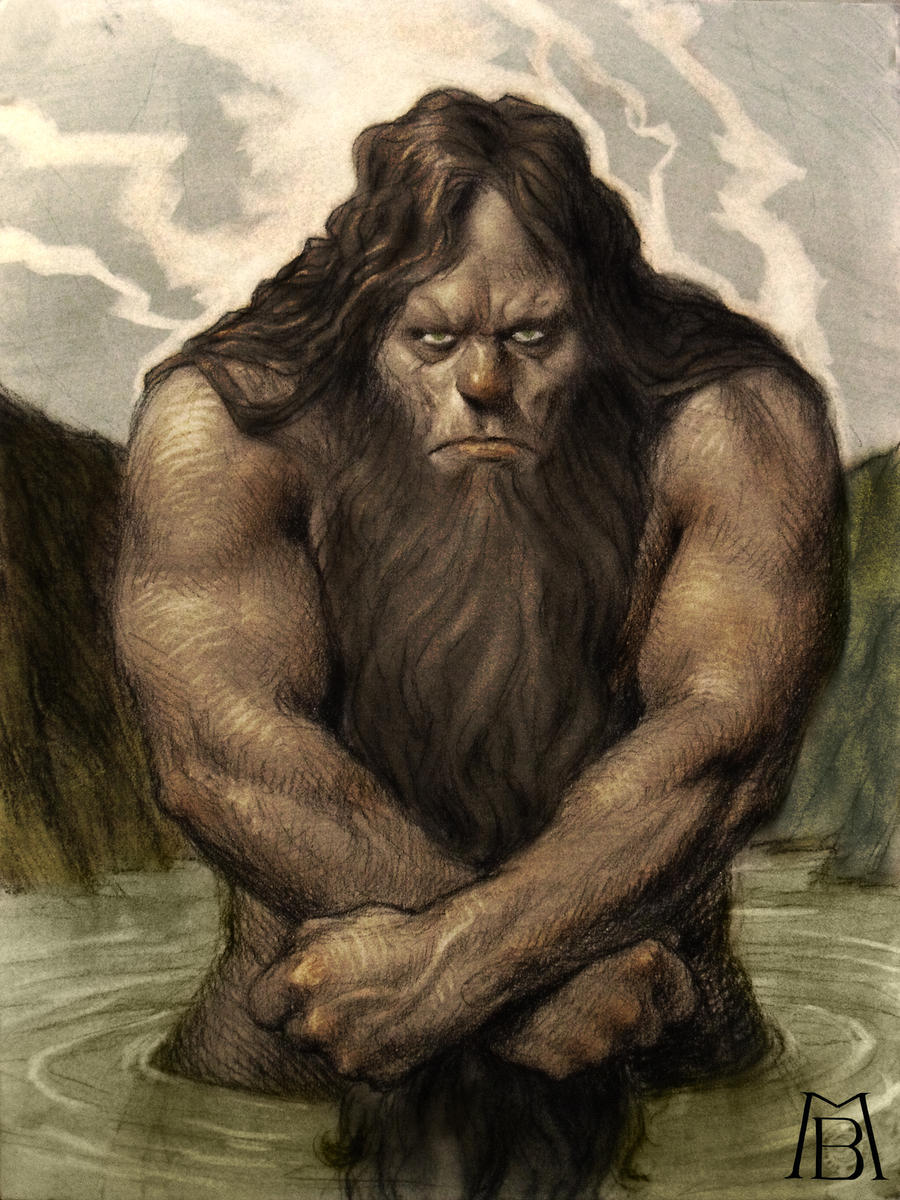
Since we're on our way to northern Minnesota, I thought I'd run an old story I'm not sure was ever published because we're soon to be in the backyard of Robert Bly, who I've always admired and whose writing career soared when he came out with a book titled Iron John. I read it. Very strange stuff.

That book was (and still is, I suppose) an attempt to revitalize maleness by creating a new mythology for men, most of whom have been taking a hit since the advent of women's lib (talk amongst yourselves). He advocated some odd stuff in that book, which Frank attempts to communicate to the steering committee at Willowhaven Church. After I read Iron John, I thought it would be cool to have some heady male converted to Bly's macho faith, then try to bring that madness home to his evangelical church. 

It's strange, I know, but so is life. Anyway, here's the story of Frank Knol's departure from Willowhaven Church, a sad day.

Sort of.  

Enjoy.
_______________________
The night Willowdale lost Frank Knol, Pastor Buntz was out of town at a seminar on relationships held, of all places, in Las Vegas, so he couldn’t make the meeting. Diane (the "other woman," as Butch like to call her) had season tickets to the symphony, so she wasn’t there either. Grady Fisher was at his daughter's Girl Scout banquet.

That left half a steering committee and no quorum: Mona, owner/operator of a highly successful bridal shop in Calumet Mall; Butch, a self‑made man, a plumber with a fleet of six Roto‑Rooter trucks; and Alan Simpson, a mortician who Butch thought as short on guts as he was long on sweetness.

Maybe things would have been different if the steering committee had been operating at full‑strength. Then again, maybe not.

When Frank Knol came in, he shook hands warmly all around—too warmly, Butch thought, since the only men he knew who pumped with two hands were truck salesmen and politicians. Frank was wearing what Mona thought of as the painted smile of a circus clown.

"Folks," Frank said, "I'm here to say that I've been to the mountain."

Butch thought that was great. "How's skiing?" he said.

Frank shook it off with a smile. "That's not what I mean." He gave Butch a consoling nod. "I have a dream."

Frank Knol came to the meeting on recommendation of Pastor Buntz, who had passed Knol's proposal along to his steering committee, a hybrid group of church loyalists Buntz created to supervise what he called "the vision thing." A steering committee was an idea he had picked up during a weekend in Cleveland, where he'd scouted a blossoming mega‑church.

"What I mean is," Frank told them, "I've seen the future, and it is us."

Mona folded her arms over her chest because she'd already caught wind that Frank had been out in the woods beating his chest, bonding with other males, behavior she recognized immediately as very, very dangerous.

"Now you know that I've always supported women's issues at Willowhaven," Frank said, deferring to Mona, "and I don't want you to misconstrue the direction of this great idea."

Butch stared blankly. Alan, who sat alone in the love seat, hid behind his coffee.

"This has nothing at all to do with women," Knol said, sitting back and adjusting his shoulders. "But it is a fact that the church today‑‑in many places‑‑is proportionally heavy with women.You all know what I’m saying."

Butch didn't know what that meant, but was quite sure his wife would have thought it shouldn't have been said like that in public.

"Now gentlemen‑‑and lady," he nodded to Mona, "what I see coming is a church like the former Soviet Union's‑‑nothing but old women‑‑and I shouldn’t have to explain the repercussions of such a thing on society." He looked around, seriously. "What I'm saying is, the church has to make bold moves in these perilous times, and, Lord help us, we're in perilous times."

"The recession," Butch added.

"No, Butch," Frank said, "worse—the loss of men, the loss of manhood."

"Loss of men?" Butch said. He was trying to line all of this up with a weekend ski trip.

"That's right‑‑you see it everywhere around you in our society."

"You do?" Butch said.

"Everywhere‑‑take a good look at mainline Protestant Christendom." Frank sat forward on the soft chair and used both his hands like paper cutters. "Today, it’s all women.” He pointed a finger. “I want you to try to see it this way. A man goes into a dangerous forest and sees a pond. And suddenly a hand comes up out of the water and grabs the man's dog."

It's a horror movie, Butch thought. The guy's seen a horror movie.

"So he goes back to the castle," Frank said, "and rounds up some men who empty the pond for him. And down there at the bottom, they find a hairy man‑‑a man named Iron John."

Mona moaned audibly because she knew he’d read some kind of macho book.

"See, we've buried this hairy man—all of us men have. We’ve buried the hairy man—that’s what I’m saying."

Iron John, sure, Mona thought--she’d read a review of that book. Lots of chest-pounding around camp fires, male bonding, blood brothers and all of that. "And you think we ought to unleash the beast," she said.

"It's not a beast," Frank said. "that's where all you women are dead wrong."

Butch's mind scrambled—an economic depression, a hairy man, a beast in a castle, dead dogs, and a ski trip? What’d any of that have to do with church?

"We need a place where men can be men," Frank said, still up on the edge of his chair. "In this church, we need a place where men can help each other find Iron John."

“Iron John,” Butch knew the man, knew him well. “Sure, pot‑bellied guy,” he said suddenly. “Used to pitch for Westminster Presbyterian. Mean riser. An old guy.”

Alan Simpson coughed lightly into a soft fist, kept that pointer up.

"So what's the point?" Mona said.

"The point is that if we're running a truly alive church here, we've got to respond to the spirit of the times," Frank said. "And one of the great tragedies of the time is all about the loss of manhood in our culture."

Loss of manhood? Butch could feel his cheeks fall into a deep blush.
_____________________
Tomorrow: Frank reveals his plan to refurbish maleness at Willowbrink Church.