Morning Thanks

Garrison Keillor once said we'd all be better off if we all started the day by giving thanks for just one thing. I'll try.

Friday, July 13, 2018

Tutu's Treacherous Flight*


Maybe it's just me, but it seems that the world has almost forgotten Archbishop Desmund Tutu. In the 90's, when apartheid South Africa was being transformed into the new South Africa, there may not have been a more universally admired human being in all of Africa or all of the world, save Nelson Mandela himself.  The two of them seemed South Africa's truly righteous.  Why stop there--the seemed the world's truly righteous.

In a immensely enriching interview aired last week on On Being, Krista Tippett offers listeners a reprise, another look at a man the world considers to be among it's most amazing and wonderful heroes, a man who, like Mandela, was somehow remarkably able to suffer immense horrors without ever losing the hope that comes by faith alone.  

So much of the uncut interview is memorable that choosing any one chunk does the whole an injustice, but one story Tutu tells goes so deeply to the heart of our sin and sadness that it bears repeating.  He says he was in Nigeria, where he boarded a plane to go back home to Johannesburg.  

When he'd boarded, he says he'd seen, up front, that both of the pilots in the cockpit were black.  Once airborne, turbulence on high made that homeward journey the mother of all apocalyptic flights.  Passengers were sure they were going to die.  In the height of the shaking and rattling and rolling, Tutu says he discovered his own fears when he couldn't help but wonder whether those two pilots, both black, were going to be skilled enough to pull that jet out of mess they were in.  Neither of them, after all, were white.

Desmund Tutu, black African Archbishop of Capetown, freedom fighter, champion of the oppressed, a man who won the Nobel Peace Prize already in 1984, in the middle of the apartheid madness, who was also awarded the Albert Schweitzer Prize for Humanitarianism in 1986, the Ghandhi Peace Prize in 2005, and the Presidential Medal of Freedom in 2009--that Desmund Tutu, on a flight home he'll never forget, discovered himself a racist.

Sadly, Archbishop Tutu's turbulence story is not beyond belief.  That he would have those deep prejudices after his people had suffered racial discrimination for centuries is actually perfectly, tragically, understandable.  

What's remarkable about the story--or so it seems to me--is how deeply it reaches into our own human character to reveal unmistakably how each of us--me too--has a a thinly concealed reserve of emotion and attitude that is, and probably forever will be, determinedly racist.  Racism is nothing anyone sheds easily.  Scratch us deep enough, and it's there.

Archbishop Tutu is 81 years old now, retired, he says, but if there was a school for Christians, if there was one huge learning center under whose curriculum everyone who claimed the name of Jesus would enroll, and if I had anything at all to do with the determining course content, I'd make his On Being interview  required listening.  I'm serious.  Just to hear the man's exuberant laugh enriches the soul.

Short on hope these days?  Listen to Desmund Tutu.
_________________________ 


*Published March 2, 2012.

Thursday, July 12, 2018

Morning Thanks--"the Amish are coming"


Apparently, while most of white America--and the white world--register birth rates that, someday, threaten extinction, the Amish are proliferating, doing quite well, thank you--so well, in fact, that they're needing more land and finding it, even out in this direction, near Tripp, SD.

It's hard not to love the Amish. They're so diligent about things, such idealogues, so blasted sure of their version of the truth. It seems they could care less about what other people say or do or think of their creeds or their language or their macabre carriages.
Are they a cult? I don't know. But the vast majority of their young people stay, even though each one of them has the opportunity to leave during a wild and crazy time they call "Rumspringa," which means “running around” in the Pennsylvania German dialect. Get this--85% stay Amish, even not a one kid has an iPod--if they do, they're tucked furtively beneath their straw mattresses.

I swear, I wouldn't want to be Amish, but it's wonderful having them around. Few of them, I'm sure, go searching for their ten minutes of fame. When they got it a few years ago--when some madman murdered their school children in Pennsylvania--they got as much ink for their incredible forgiveness than they did for the horrifying bloodletting.

I hope--I may be wrong--that not a one of them has ever heard of the Kardashians. I hope--I may be wrong--not one Amish person heard the latest Roseanne rant, nor know a guido if they saw--or heard--one. Their kids don't need cars, although I'm sure they eye each other's horses enviously (sin doesn't really respect centuries). And in their schools, they get along quite well without team sports, if you can believe it. Oh, yeah--and I'm guessing that when they get together to sing, it's not the your or my brand new praise chorus.

Strangely enough, they're growing by leaps and bounds--and they don't even do evangelism.

They satisfy one of Christ's most puzzling paradoxes--"be ye in the world, but not of it"--in a most admirable way, having determined that what the Lord wants of us is to live the way good, stout agrarian people did in the early 19th century, the Golden Age.

I'm not joining, but you have to admit they've got sturdy furniture, great breads, gorgeous quilts, and strawberry jams and jellies to die for.

And cute kids. Tons of 'em. And, apparently, always more on the way.

This morning, my morning thanks are for the Amish. More power to 'em, I say.

Horse power anyway.

Tuesday, July 10, 2018

Small Wonder(s)--Pilot Rock


Long, long ago, in the ancient past, a massive chunk of pink quartzite got left behind in the immense wash of an turbulent inland sea. It's impossible to imagine a rock that large--20-feet high, 40-feet wide, 60-feet long--getting pushed or carted anywhere, but that's what happened. Something of an ocean swept that huge rock south and east from its moorings up on the outcropping pink quartzite of Gitche Manitou or Pipestone. The glacier quite handily picked it up and then unceremoniously left it behind.

Sort of sad really. Once upon a time, Pilot Rock, all hundreds of tons of it, got orphaned on the northwest Iowa plains. Geologists call it a "glacial erractic," which is to say an oddity, which it was and still is. There it sits up on a hill, all by its lonesome.

You might think it hard to miss something that big on open land, but it isn't. Pilot Rock is private property. Thus, you can see it only from afar. It's atop a hill overlooking the Little Sioux River just a couple miles south of Cherokee. The county is kind enough to keep up a little park that sits just off highway 59--picnic table right there if you pack a sandwich. Pull over, get out of the car, and look up the hill to the east. There it sits, that huge glacial erratic all by itself, one skinny sympathetic sidekick tree beside it.  

It's just sort of sad. 

But, as always, there's a story. 

For centuries, Pilot Rock was just that, a rock that acted like a pilot to generations of our aboriginals. The only available maps for hundreds of years were rivers: you had to learn to read them to know your way around. But here and there were these goofy oddities too, big, forlorn glacial erratics. On the endless plains of northwest Iowa plains, long before there was a town named Cherokee, if you were in sight of Pilot Rock, you knew where you were. Breathe easy and sleep well. It's a sweet story. 

There's more. Some Cherokee-ans will be happy to point you at a book by America's first popular novelist, James Fennimore Cooper of Last of the Mohicans fame. It a stretch, but give those Cherokee-ans an ear because they claim Pilot Rock has a distinguished presence in Cooper's novel The Plains, and they'll be more than happy to give you chapter and verse. Hearken to the voice of James Fennimore Cooper: 
Amid the monotonous rolling of the prairie, a single naked and ragged rock arose on the margin of a little watercourse, which found its way, after winding a vast distance through the plains, into one of the numerous tributaries of the Father of Rivers.
That "single and naked rock" appears in chapter 8, if you don't trust them or me. Pilot Rock becomes a rest stop for the ragamuffin Ishmael Bush and his a covered-wagon gang of pioneers looking for a life on the frontier. 

Sometime around the time of the Civil War, white folks started drifting into valley of the Little Sioux, and when they did, they started chipping away at Pilot Rock, looking for stone for their foundations. A James Fennimore Cooper nut, a man named Riggs from way out east in New Jersey, determined that the rock James Fennimore Cooper had made famous in The Prairie should not and would not suffer such sacrilege, so he done bought a goodly chunk of the land around it to protect the rock from sacrilege of infidels.

Mr. Riggs from New Jersey is long gone, but Pilot Rock is still on private property. If you stop to see it, you shouldn't walk up the hill without permission. 

From down beneath especially, you can't help but feel sorry for that old chunk of quartzite. It has such an illustrious path: a beacon for lost souls looking for anything to mark their way, a rock of ages given celebrity status in the Cooper novel where the Deerslayer, that noble Native hero, is delivered at last to the happy hunting ground. 

Here's an idea. Grab a quarter-pounder from McDonalds just down the road. Maybe fries. Maybe not. Then drop by that little park, nicely kept, spread out a napkin or two, and get The Prairie up on your phone (it's public domain), turn to chapter eight, and have lunch just down the hill from that massive glacial erratic, once a lighthouse over an ocean of grass. 

Go ahead and have lunch with a pink quartzite orphan, a celebrity who was once a star.  

Monday, July 09, 2018

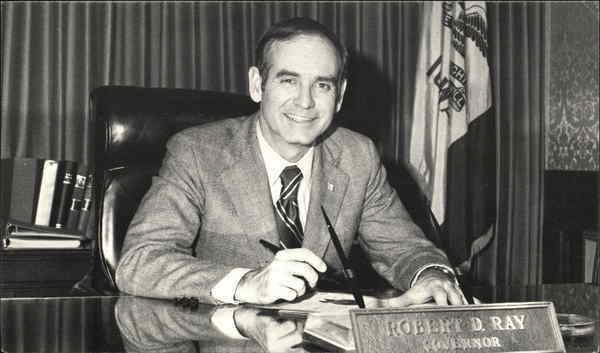
Robert E. Ray, 1928-2018

Image result for Robert Ray Tai Dam

It may well have been one of the best marketing ploys I'd ever come up with--get former Iowa Governor Robert Ray to come to Sioux City for a book rollout that featured stories about Tai Dam people, the people whose cause he'd championed in the early 70s. 

The Tai Dam had made it known that they wanted to come to America as a group, not as individuals. They wanted to live together as strangers in a strange land, and they were serious. If they were going to leave Laos--and they had to--they wanted badly to stay together.

Somehow, the Tai Dam contacted someone from inside the State Department with their request. Their lives were in jeopardy because their homeland had been overtaken by those who they'd opposed during the long war in Southeast Asia. 

That State Department official wrote every governor in the country with their request. Only one said yes--Robert Ray, Governor of Iowa, who told the Tai Dam people that Iowans would take them, all of them, just as they wanted.

It was by no means a popular decision. More Iowans than not thought boldly declared they didn't want the Tai Dam or any other refugee people for that matter. Many opposed him and his largesse, and did so publicly. 

But Governor Ray went forward for one simple reason--he was convinced, body and soul, that it was the right thing to do. Morally, he determined, we simply could not turn our backs on a people who'd helped us. America could not say no, so he made it clear that Iowa would say yes.

The book we were marketing was Crossing Over: Stories of Asian Refugee Christians, something I'd written with great help from the members of that Tai Dam community and a grant from The Calvin Institute of Christian Worship and the Lily Endowment, Inc. That was thirteen years ago.

It was my idea to get former Governor Robert E. Ray to come from Des Moines for a book opening at Siouxland Unity Church, downtown Sioux City. Like no one else on the face of the earth, Robert Ray had worked to bring the Tai Dam to Iowa. Hundreds--no, thousands--of Iowans had opened their hearts and their homes to the refugees, sponsored them, supported them, kept them in socks and underwear, helped them learn English, found jobs, became their cultural guides through a new world so much unlike anything they'd ever experienced or could have imagined.

Robert Ray was the one who made it possible, and they knew it. They loved him. There the book lay, front and center, but Governor Ray was the story. So much love and admiration filled the sanctuary that it was a blessing simply to be in the room. 

Ray talked about a visit he and his wife had made to a Southeast Asian refugee camp where conditions were anything but exemplary. He talked about going into a tent there and discovering, shockingly, an Iowa Department of Transportation map pinned to a wall, that map adorned with red and blue pins to indicate where Tai Dam families and individuals had already been greeted and helped by Iowans.

At first, 600 needed help. That number increased to 6000. Robert Ray never flinched.

At a birthday party for him not long ago, a woman named Som Baccam told the former governor that she'd been 11 years old when she came to this country in the 1970s. She told the crowd who had gathered that "Forever he will be in the Tai Dam people's heart. He is our savior. We have a home now, so we do have a place to call home."

Getting the Rays to come to Siouxland Unity Church may well have been the best marketing ploy I'd ever come up with. If the bottom line had only to do with tallying book sales, we flopped that night. But what I've never forgotten is the palpable presence of love all around in the sanctuary--him for them, them for him, a beloved reunion.

Robert E. Ray, a five-term governor of the State of Iowa, is remembered for many wonderful accomplishments, none so generous, so charitable, so selfless as what he daringly activated for a refugee people who wanted and needed nothing more than a safe home in a new land. 

Sunday, July 08, 2018

Sunday Morning Meds--Furrows


“Plowmen have plowed my back and made their furrows long.” Psalm 129:3

            There were no clouds, the sun was going down in a limpid, gold-washed sky. Just as the lower edge of the red disk rested on the high fields against the horizon, a great black figure suddenly appeared on the face of the sun. We sprang to our feet, straining our eyes toward it. In a moment we realized what it was. On some upland farm, a plough had been left standing in the field. The sun was sinking just behind it. Magnified across the distance by the horizontal light, it stood out against the sun, was exactly contained within the circle of the disk; the handles, the tongue, the share--black against the molten red. There it was, heroic in size, a picture writing on the sun.   Willa Cather, My Antonia
           
If you drive south from Red Cloud, Nebraska, the hometown of Willa Cather, and look up along the hill to your left as you enter Kansas, you’ll spot an ancient walk-behind plow thoughtfully set along a fence row. I’ve never been on that road at dawn; but at a certain time of year, you likely see the vision Jim Burton notes in My Antonia, which is likely why that old plow stands there. After all, very little in the neighborhood of slowly dying Red Cloud, Nebraska, is unrelated, today, to its famous native novelist, Willa Cather.

On any of the blue highways that line the rural Upper Midwest today, you’re likely to find a half-dozen old plow lawn ornaments on any hour’s drive. And rightly so. Nothing within human memory changed the landscape of great America prairies more fully than the moment that rich layer of centuries-old top soil was opened to furrows, to wheat, barley, corn, soybeans and what not else. 
           
I wouldn’t be sitting here had someone, 150 years ago or so, not drawn that first blade through virgin prairie. All around me, the landscape looks nothing at all like it did when tall-grass prairie swayed in the wind. When Jim, Cather’s narrator, sees the plough, “heroic in size, a picture writing on the sun,” he knows no single weapon was more instrumental in bringing him to the place he loved, as did Cather, than that valiant agricultural tool.

Some might call it rape, what happened when that blade was thrust into virgin prairie.  Some do, in fact. Today, the ecological world of tall-grass prairie is almost as extinct as the do-do bird, altered forever into a immense garden of commodities.
           
There may be no more profoundly painful metaphor in all of the psalms than this one, in Psalm 129.  The plowman enemy, scourge in hand, still dripping, has left furrows across his back, the poet says.  Thousands of years later, we still grimace, the image of that weapon slashing through flesh and muscle, leaving furrows welling with blood.
           
“Persecution is the heirloom of the church,” Spurgeon says, in reference to 129.  He’s not wrong, but it seems to me that he’s only half right.  Persecution is an heirloom, but not the only display in the museum.  Like the plow, the historic suffering of the Christian people can be manipulated and misused all to easily.  Much of Fox’s Book of Martyrs is the story of Christians torturing other Christians, after all. 

But that’s not the lesson of the psalm.  The lesson is one of perseverance, of steadfastness.  The lesson is all about moving on, holding on, knowing our only comfort, even when our backs are flush with blood. 

The lesson is simple:  here as it is so often in scripture, the lesson is “fear not.”

Friday, July 06, 2018

Horseweed Lament


For humanity, the wages of sin is death, or so saith holy writ. But it sure warn't that way all over the garden. For weeds, the wages of sin was life, something painfully close to everlasting life too in some cases, or so it seems when I work out back. 

It's mare's tail time right now, mare's tail here, there, and all over. I could, I think, have nothing but mare's tail out back--that's how husky the stuff is. In no time, it'll be up to my shoulders. Mare's tail is an annual, so the roots aren't deep. I can pull it out by hand without much trouble, but I swear I will never get it all.

There's some spider wort to the right in this picture, but in no time at all, that sweetheart would be swamped by an obnoxious crowd who thinks nothing of taking over the entire neighborhood. 

Fecundity? These guys make rabbits look like Shakers. They just won't quit. In early spring, I cut back an indoor ivy plant that was looking spindly, cut it back to nothing and stuck it outside, hoping it would come back. It's still not doing well, but look at the mare's tail go to town.


How on earth did it get there? The wages of sin. . .


Here's another, this one butting up against a screen, still showing its fists, tough as nails, growing out of nothing more nourishing than sand and ash.

I call it "mare's tail," which it is, but it also goes by "horse weed," which is a shade less romantic--"mare's tail," after all, a phrase often used for delightful clouds on a sweet summer's day. 

You'll find it spelled this way too: "marestail," all one word, no apostrophe, as if to say that this headache shouldn't be confused with sweet summer days. No relation. You can also call it "horseweed," too, which is what I'll call it after pulling it for the last few days.

When horseweed's flowers go to seed, they get windblown--and the seeds are legion, fifty thousand from a single plant, so many they get in grills, for pete's sake.

Experts say once upon a time they weren't a headache, but--listen to this!--once farmers started adopting minimum tillage, a truly righteous practice that conserves precious topsoil, a plague got itself begat. Today, horseweed never had it so good. Ain't it true?--you try to do the right thing, and you get horse-whipped by marestail. Even your best deeds are filthy rags.

What's more, hither and yon, horseweed laughs off herbicides with a native-born immunity that makes the stuff even more obnoxious. As we speak, thousands are right now laughing and singing and growing in our backyard acre, thousands. I hear 'em.

It's horseweed, a royal pain in the keester. I can pull the stuff all day long and come back tomorrow and have at it again.

All for an apple, too, a lousy apple from a tree about which the two of them, royally naked, were expressly warned. 

Woe and woe and woe.

Thursday, July 05, 2018

Morning Thanks--Beauty in the weeds

What can you see on a July morning in the valley of the Big Sioux? What might you find?


Maybe, in dawn's early light, Hawarden, down there beneath the water tower against a background summer sky that's totally peach, waiting for the dawn.


Tasseling corn, unrelenting fields of it, mile after mile after mile, sometimes cutting geometric patterns up and over unending hills. 


What seems a family cemetery, all alone, against a hill, the graves only slightly kept in grass that's largely unmowed. Still, after all the years, old moss-besotted stones standing unbowed, straight as a row of recruits. 


The mortal coil of a woman named Jerusha Edwards, born 1818, six years after the second war of liberation. She died right here, on what must have been frontier, August 23, 1879, one of the neighborhood's earliest settlers. Someone kindly poured cement beneath the stone long ago already, so it still stands. An open hand points heavenward above a single phrase "In God we trust." Does anyone know her story? I'd love to hear.


So why did George and Elizabeth, so long ago, not share a name? Both lived into their eighties, and they considered themselves man and wife. Common law? No matter. "Blessed are the pure in heart." 


So what can you find on a random trek around the valley of the Big Sioux. In addition to a whole world, as always, some blessed beauty in the weeds. 

Wednesday, July 04, 2018

Morning Thanks--The Fourth

Image result for fourth of july

Nothing was better than the Fourth. Nothing. Not Christmas, not my birthday, not the first day of vacation. Nothing shines in my memory like the Fourth, and we never left town.

It was a Legion thing. Booths all over the park were run by vets. Hoop toss, ring toss, darts and balloons, games that usually rewarded your nickles and dimes with some silly thing--a key ring, a braided finger trick, something totally useless made in Hong Kong, but a prize nonetheless. One of the booths featured a net strung up and stuck with maybe fifty wooden canes, some of which had standard handles, and others--the real prizes--topped with porcelain softball or the head of a bulldog. Put a ring around one of those babies, and you were set for strutten' in the park--Veterans Park--all day long.

Hawaiian leis, too, in abundance, so many hanging around your neck the Fourth could look like Mardi Gras. Buy three darts, poke three balloons stapled to corkboard, and win a big pink dog to give to your sweetie. 

That was part of it, too. At the park on the Fourth there were girlfriends. Didn't have a clue what kind of stuff we were dealing in, but somehow on the Fourth in the park, you could chase girls and get lost, totally get lost in the joy. 

We were Dutch Reformed so there was no beer tent, but there were brats and double brats and Oostburgers, a hamburger topped with what my mother insisting on calling "a porkie," everything grilled right there at the heart of things, where a dozen men and women, maybe more, tried to keep ahead of the orders. Pop from a tank, Springtime, brewed locally--glass bottles cold as ice, soaking wet. 

A man named Les Ludens played a little Wurlitzer up on the bandstand for most of the afternoon, He'd string together a medley of patriotic tunes that I swear I can still hear if I listen closely. He wasn't trained professionally, but it might have been impossible to have a Fourth without him. For all I know, he's still there. The man played by ear mostly, and my mother, who taught piano, winced a little when the tune would once in a while lose its way. 

My dad, himself a vet, refused to buy tickets for the drawing--proceeds go to the Legion--because he, like his father, stood foursquare against gambling of any kind, even the Legion's once-a-year drawing. He didn't rail, just looked the other way, even though the company he worked for donated one of the grand prizes--a cement mixer. Then again, there was the year his brother won. I was older then, and I couldn't help giggling. 

The memory is really faint, but very real. I was very young one Fourth, but I remember being part of what my parents called "a pageant," one of a cast of hundreds of townspeople, old and young, to parade over a portable stage during what I think was a hour-long tour of American history, maybe a reading of the Gettysburg Address. I was a first-grader maybe, something less than a decade having passed since the Second World War drew to a close in the Pacific. Hitler was dead and Hirihito was history. On the Fourth, the community was pumped for the grand old flag. 

I don't remember the pageant well, but I will never forget what I felt, strangely, when the chorus---I think I was a part of the chorus--belted out a kind of hymn that had lots of folks bringing their hands to their hearts even though it wasn't the Pledge or national anthem. It just came naturally, and I felt it myself, felt something alive in me, something responding over and above my own will. I don't know that I'd ever felt anything like that before--something electric that somehow made me want to cry, not out of fear but for joy.  

"This is my country"--that was it, an anthem born from the Second World War, not much older than I was. I don't think I've heard it sung in public for sixty years. "This is my country"--with its soaring, full-octave leap in that first line, and its oath of loyalty. 

I'm pledging my allegiance--
America, my home, 
for this is my country, 
to have and to hold.

Like a marriage vow--lyrics carried right out of a marriage vow: "to have and to hold." I don't think I understood that at all, but there I was, a little boy in a crowd of people, most of whom I knew, singing music that right then and there on the Fourth of July found a place so deep in my soul that just hearing a line of that old favorite still opens the same vein it did way back then, sixty-some years later. 

And then fireworks. Lots of them. Lights out all over the park, dozen of fountains spinning showers up against the dark cloud of night to never-ending ooohs and aaaahs, until finally, right there behind third base on the softball field, a burning display lit up to become that same grand old flag.

And then, sadly, it was over. The Fourth was history.

My sister, who still lives in Oostburg, says the doings on the Fourth are over now. Nothing's goes on in the park--maybe someone grilling porkies--that's it. None--or very few--of those WWII vets are around to run the games or hoist Les Ludens' organ up on the bandstand. The factory that made cement mixers is long gone. People rarely spend the holiday at home.

I hate to think of the Fourth not being the Fourth. But I'm a day's travel away, and even if nothing had changed, even if the park was full of people, I'd likely not be making the trip home. Mom and Dad are gone too.

But something remains in my soul, a ringing, singing memory, a pageant of life itself that emerges from just a few bars of patriotic hymn I remember singing when I was a kid--on the Fourth. For all of that, I'm thankful this morning, the Fourth of July. 
_________________________ 

Here's Tennessee Ernie Ford's rendition of that soul-stirring, patriotic hymn.


Tuesday, July 03, 2018

Small Wonders--The Church in the Wildwood


It's like a movie, a set piece from a show like The Music Man, set right here in Iowa. Pioneer days, 1865: a steam engine is belching a plume so thick you can hike on it as it pulls a string of cars through eastern Iowa's rolling hills. Aboard a flat car sits a church bell, sturdily strapped to prevent carnage. 

That bell attracts a crowd, so whenever the engine blasts out a warning to the town down the pike, people come off wooden sidewalks to have a look--and to listen. A whole crowd of rubber-neckers have heard about that bell, so it's run in every country hamlet.

It happened--or if it didn't, it should have. People say that bell rang melodiously all the way along to a destination that's no longer there, a village called Bradford, a town just then departing, as so many had to--when the railroad determined to stop in a nearby town, this time a village named Nashua.

That church bell finally came home to the people who'd bought it, the pioneer members of a little brown church in the vale.

Yes, that "little brown church in the vale," the one that would be a sweet little myth if you couldn't, yet this afternoon, drive by the place and stop for a wedding. Four of them went on the afternoon I stopped. Someone's always getting hitched within those four brown walls. Why brown?--the people were poor; they couldn't afford white.

Truth be told, the church would be no more if it weren't for that old song, a piece recorded by Alabama, The Statler Brothers, The Carter Family, the Gaither Family, Charlie Pride, not to mention Dolly Parton, and Andy Griffith and his hapless sidekick Don Knotts. Dozens of others too. They all wanted a piece of it, all of them. 


William S. Pitts

Now get this. That beloved old hymn was written before that little brown church existed. Nothing Twilight Zone about this--hark. William S. Pitts was aboard a stagecoach when it stopped at little Bradford, a town that no longer exists, strolled through the wildwoods, and decided right he'd write a song for church that wasn't there but darn well should be.

Imagine the shock Mr. William S. Pitts must have felt when he happened to return a few years later, accompanied his music students, and found that mythical hymn was not at all mythical. There a church stood, a little brown church in the vale.

In had to be one of the most stunning musical moments in Iowa history, Mr. Pitts the music teacher wanders in and, right then and there, stands in front of his students and sings a composition of his he'd never sung in public before. If you dared believe in what can't possibly be true, you might be tempted to say that the sweet old hymn conjured the church where it was first sung. I'm not making this up.

The town of Bradford is long gone, as is Mr. Pitts, whose bust should be in the pantheon of great Hawkeye musicians, just a shelf or two beneath Meredith Wilson and Simon Estes.

After all, the little brown church in the wildwood is a beehive of love, 75,000 weddings and counting. As I stood there one afternoon, families moved in at almost the same time as others left. The woman who manages the place, a smile-r if I ever knew one, whispered incessantly to me as we stood in the back, but never took her eyes off the action before her. 

The organist never turned around. "How does she know when to play what?" I asked the manager. "Oh, you can believe we got ways," she said, smiling at families streaming in. 

I don't know if that old bell rings anymore. I don't think I heard it. It would be more than 150 years old now, old as the little brown church itself. 

Pitts is long gone, of course, even if his music will be recorded again soon, I'm sure, if it's not being recorded right now. The man's elegant circular portrait is up on the wall to your left when you walk in, one of those portraits with eyes that appear to follow you all around the sanctuary. 

It's not scary. It's really kind of sweet. Even as we speak, the man is still right here in the church in the wildwood, as he was before it was even there.

Isn't that something?

Monday, July 02, 2018

Morning Thanks--the morning


Charles Wesley wrote something like 9000 poems in his life--can you imagine? It's a wonder he slept. Nearly 6000 were hymns. Even today, they're all over the hymnbook--yours, mine, and the folks down the street. His brother, John Wesley, however (they were two of the 18 kids), became more famous as an itinerant preacher who started an entire movement called Methodism.

If Charles thought it difficult to live with his sibling's celebrity, it doesn't show in his work. Give a listen: "Hark! The Herald Angels Sing," "And Can It Be," "O for a Thousand Tongues to Sing," "Love Divine, All Loves Excelling," "Jesus, Lover of My Soul," "Christ the Lord Is Risen Today," and "Rejoice! the Lord Is King!"--all Charles, all his work. There's hundreds more.

John Wesley is an important historical figure in the history of Protestantism, but brother Charles' poems are still sung hundreds of thousands of times every Sunday throughout the world. Not bad for a kid brother.

We sang one yesterday, a beauty some consider as brilliant and thoughtful as anything Charles Wesley ever wrote. "Christ, Whose Glory Fills the Skies" is a paean to Jesus, the light of the world. It's stunning poetry is rich and thoughtful. You can sing "Christ, Whose Glory" without thinking about the path it takes through life; but if you listen to the praise, it's not hard to determine why the old hymn won't be laid to rest. 

Christ, whose glory fills the skies,
Christ, the true and only Light,
Sun of righteousness, arise,
triumph o'er the shade of night;
Day-spring from on high, be near;
Day-star, in my heart appear.

The major motif is clear enough--Jesus, the son is Jesus the sun. Just as dawn--I'm sitting beside it right now--chases away darkness, so the Son sweeps hope and joy and life to a darkened world. What's real and what's symbol are sweetly entwined.

But it was the second verse that stopped me yesterday in church. 

Dark and cheerless is the morn
unaccompanied by Thee;
joyless is the day's return,
till Thy mercy's beams I see,
till they inward light impart,
glad my eyes, and warm my heart.

Again, the good Rev. Wesley's intent isn't a chore. What he's saying is that morning's opening moments--the hour or so before dawn--is "dark and cheerless" if it opens on its own, outside of the redeeming love of Christ. Only if "Thy mercy's beams" are present can my eyes be glad and my heart be warmed. Beauty is in the Son, not the sun. For a moment--correct me if I'm wrong--a dawn, even a knock-out gorgeous dawn, isn't a metaphor or a symbol. It's just not much of anything if I don't have Jesus. 

I don't care to quarrel with Charles Wesley, with his theology or his poetic talent. But when we sang that second verse, I was struck by how perfectly understandable the spirituality of the hymn was there, on display. This world's darkness is cheerless without Jesus. Let me try to put it this way: a dawn is only beautiful if I know the Lord. 

The animism in traditional Native religion would have some trouble understanding the dualism there, the strange sense that white folks require a God who stands somewhere outside the dawn. Traditionally, they might want to say that God is dawn. He's also rocks and trees and skies and seas. God is the great mystery of life itself, who lives and breathes in all things, including those shaggy bison. We honor that God when we honor the Missouri River and don't ruin it with pipelines. He isn't a symbol or a metaphor. 

But then, I think everyone could agree with Wesley's spirited final verse:

Visit then this soul of mine,
pierce the gloom of sin and grief;
fill me, radiancy divine,
scatter all my unbelief;
more and more Thyself display,
shining to the perfect day.

One of the peculiar results of 19th century mission work among First Nations was its somehow surprising successes. But, if you were Native and if you believed that all of life is religion, then picking up another form thereof wouldn't be particularly troublesome, would it? Sure we'll become Christian, some said. What's the fuss?

For a time, the sky outside my window wore a gorgeous peach stole along the horizon, a soft orange that faded into yellow, then to blue up high before the sun debuted. Now, long swaths of sunlight stretch over the fields east to west, scattering darkness. It's Midas time--everything wears a bit of gold. This morning's cloudless dawn is not glamorous, but it's beautiful.

"Christ, Whose Glory Fills the Skies" a wonderful hymn, and I'll sing it joyfully again soon, I hope. Wesley's a wonder, isn't he? 

But he's not the psalmist:

The heavens declare the glory of God; 
and the firmament sheweth his handywork. 
Day unto day uttereth speech, 
and night unto night sheweth knowledge. 
There is no speech nor language, 
where their voice is not heard.

Wesley's really good, but I'd like to believe that David's got it right.

This morning's thanks is for the morning. 

Sunday, July 01, 2018

Sunday Morning Meds--Order and chaos


Related image

 “. . .but whose delight is in the law of the Lord.” Psalm 1:2

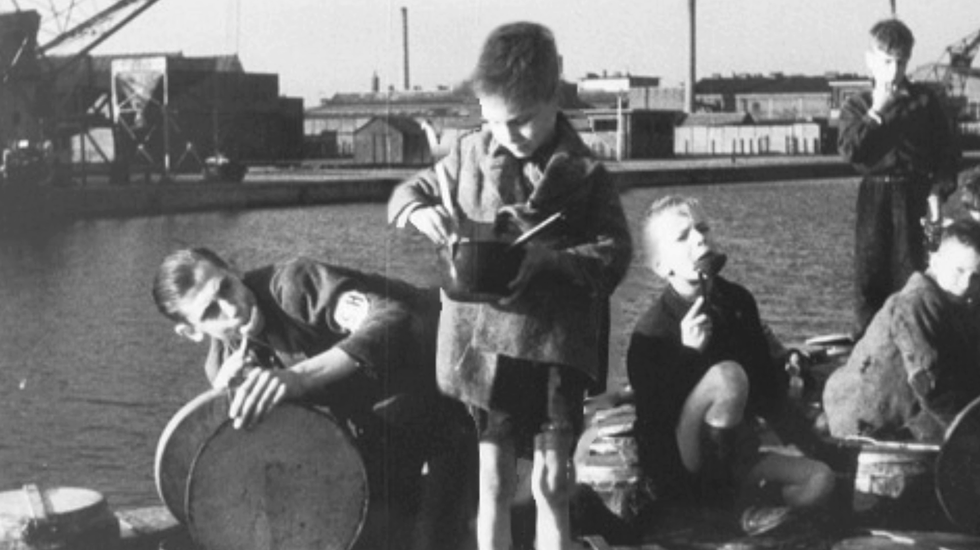
Those who remember, often call it “the hunger winter” because, in Dutch cities at least, there simply was no food. Only farmers had something to eat—their own produce, of course—and everyday, people have told me, the roads out into the Dutch countryside swarmed with city-dwellers in stumbling need of food. With no provisions, some ate their cats and called them “roof rabbits.” People did everything they could to secure what they had to, to keep themselves and their families alive. It was a winter like nothing anyone could remember.

By late April, few institutions were functioning. Schools weren’t open, businesses had little to trade, the government was non-existent. Liberation was coming and people knew it, but the Allies weren’t yet there. Life had a Twilight Zone quality.

That’s the setting for a story a woman once told me about herself, her mother, and a block of cheese. Somewhere the province of Friesland, the Netherlands, where the Nazis were still fleeing the advance of the Allies, a train was left abandoned, and along with it an entire boxcar full of cheese. Once it was clear that Germans were gone, the townspeople commandeered that train and everything in it, and dispensed liberated cheese to people who hadn’t eaten that sumptuously for more than a year.

The woman who told me the story was a girl back then, one of those who’d spent most of her days looking for food during “the hunger winter.” She got herself a block of cheese, she said, and, convinced what she’d been given was itself a miracle, she lugged it home to her widowed mother, who took one look at that free food and sent her back to the train. “It's not ours," she said. "To take that cheese is to give in to chaos." 

And so she'd walked back, placed that cheese like a sacrifice in the empty boxcar, and left, very much alone.

That’s what she remembered. That’s what she couldn’t forget.

Her mother’s behavior has cold, understandable logic. What she feared more even than hunger was the madness of lawlessness, of chaos, of a life where disorder rules, as it can only do, insanely.

Here, recently, immigration officials tightened up national borders that, they claimed, had become too porous: thousands of people wanted in, thousands too many. Things were out of control. Someone had to bring order to the chaos, they claimed, so they tightened the law.

Yesterday, thousands took to the streets to protest laws they claimed had separated moms from their own little children. In cities across the nation, people raised signs and marched in opposition to the newly tightened laws.

It’s difficult for an old late-60s guy like myself to believe the Psalmist took real delight, as he says, in a series of “thou-shalt-nots," that he found great joy in the book of Deuteronomy. 

But without law, David knew, Israel was lost. The law spelled out God's own way of life.

One of the human dilemmas we all face--young and old, rich and poor, citizen and alien--is determining the balance between justice and mercy. Life requires both, even though so often they seem to play at odds. Was that Dutch mother right in sending her daughter back, or was she crazy?

What the law gave the people of Israel was order. What it kept at bay was chaos—both collectively and individually. What the law gave the Jewish people, or so says David, the poet/shepherd, was Jehovah's way of life. The law made life manageable and livable, and made God's identity vivid and blessed.

Without taking sides in yesterday's protests, it's clear that it still does. Lawlessness bears no fruit.

Thursday, June 28, 2018

Scary


I remember, way back when, some heady discussions about the possibility of a "Christian" political party. I was, back then, in the throes of a species of Dutch Calvinist life whose ism was created, in great part, by a Dutch theologian/politician/philosopher named Abraham Kuyper, specifically his conviction that Christ's rule extended into every inch of this world, including its persistently political corners.  Still buy it, for that matter.

But we were more than a little idealistic. And that's okay--we were young. Besides, the whole moment was fun and inspiring, up on the shoulders of a radiant optimism that generated not only hope but a calling as well. 

Today, all of that seems foolish. Today, Christians can't agree on what "christian" means.

One of the givens of that old optimism was that, for the most part, no appreciable differences existed between the two political parties. Maybe it was the senior Bush vs. Dukakis or Clinton--I don't remember; but I do remembering buying the basic perception that little difference was appreciable and bad.

If you see a time machine land anywhere close, let me know. I'd love to climb aboard. 

Rasmussen Reports, a respected poling outfit, claims just about a third of us believe a civil war is likely in the offing. Ten percent are sure. Rasmussen says Democrats (36%) are more concerned than Republicans (32%); but the numbers not only speak volumes, they have volume. Almost 60% of us are concerned that those opposed to Trump and his agenda will actually take up arms. A whopping 33% are "Very Concerned." 

America today, less than a week before the Fourth, is split like a ripe melon.

Those who study civil wars, wars within a nation, claim five ingredients are observable predictors of coming bloodshed. 
1) entrenched national polarization, with no obvious meeting place for resolution;
2) increasingly divisive press coverage and information flows;
3) weakened institutions, notably Congress and the judiciary;
4) a sellout or abandonment of responsibility by political leadership;
5) and the legitimization of violence as the “in” way to either conduct discourse or solve disputes.
I could make a case for all of them. 

The latest Supreme Court rulings--the travel ban, labor unions, gerrymandering--convince those on the left that replacing Justice Kennedy will simply deepen political and social divisions at a time when the government is in the hands of a bare-knuckle fighter. 

The Schaap's cable supplier has MSNBC, Fox News, and CNN almost side-by-side. Ever since Trump grew into legitimacy, switching from one network to the other is dizzying because the issues are so black-and-white, so contrary, so much like an old-fashioned photograph negative. 

A Christian political party, we used to say. Forget it. The President's power base IS Christian conservatives. 

A house divided against itself cannot stand. Cliche, right? 

Scary. 

Wednesday, June 27, 2018

Morning Thanks--an improbable couple


Truth be told this many years later, there were some--even friends--who thought the two of us more than a little improbable. Me?--I thought they were crazy. You weren't the uptight farm girl they thought you were, and I wasn't the radical they were sure I was. We were, back then and now, pretty much cut from the same fabric.

You may remember how my sister said coming to Chicago for a weekend visit would be a good thing--"you can take out Barbara Van Gelder--you know her? She's just gorgeous."

"Know her?" I said. "She went with a roommate--two, in fact. Sorry, sis, that's next thing to disgusting."

There was a ball game--Dordt vs. Trinity. If I have my directions right, I was sitting on the north side bleachers when you walked in, an entire playing floor away. You were wearing an orange sweater that spoke volumes, and in the twinkling of an eye whatever reluctance I had vanished. We went out the next night and saw one of the worst movies ever made. I don't remember the title, and I don't want to know.

No matter. I was done in, taken, smitten; and, even though it's taken years for you to admit, you were too.

In March, we hit tolls on our way north through Chicago. We'd already developed the system: you grabbed my little coin purse out of the glove compartment and handed me the quarters. It was dark in the car, but when you put your fingers into that purse, you found more than quarters. But that ring wasn't much of a surprise. We'd been talking. You got a job in Phoenix, you'd told me. I didn't even know you'd applied.

That ball game was late January, 1972. By June--June 27--six months later, we were married in a fever in Orange City, Iowa, by a man who became Pres of the college where we both worked for a lot of years.

And all of that, all of us together, is good, still really, really good. 

This anniversary is the first time in 46 years that we're apart. You're in Oklahoma babysitting a darling little granddaughter, not even thinking of me; and I'm up here alone with our blue Russian feline, looking down on a flood plain. 

But after 46 years, all that distance between us--that's no problem. We'll find a way to celebrate when you get back. 

And even if we don't, we've already got most of fifty years of celebration behind us.