Morning Thanks
Garrison Keillor once said we'd all be better off if we all started the day by giving thanks for just one thing. I'll try.
Tuesday, June 12, 2018
Huis bezoek--ii
I dropped in on a country church in south central Nebraska two years ago now, a lively bunch of Mennonites who'd come to the region 150 years ago, fresh out of Russia--German-speaking pacifist believers, men and women who lived hard lives out of sod houses and kept rigorous by hard work and prayer. Lovely people really.
The building was a brick fortress, as well-kept as the cemetery next door. Many country churches in the upper Midwest today are handful gatherings of old folks singing along with an silver-haired organist doing her best on something by Fanny Crosby.
Those Nebraska Mennonites were anything but: lots of families, lots of kids; lots of old people too, but a lot of life. It seemed to me that people actually loved each other. May not have always liked the guy in the next pew, but were committed deeply to each other.
No one spoke to me at that church. I got the complimentary handshake, but no one asked me my name or where I was from.
I was given the complimentary handshake at Baldwin CRC too, but once again little else. I may have been the only stranger in their midst Sunday morning. All tolled, not that many congregants were thronging.
I'm not one of those who think a church should be graded solely on the basis of its friendliness. I don't doubt that a half-century ago, when those two old pastors I respected sat on these same pews, no one would have asked me my name either.
But that no one even tried to talk to the old bald guy in the red shirt does create a perception that's hard to fend off--to wit, that the people lack the vital human trait of curiosity. The Mennonites didn't speak to me because they were speaking to each other; the place was alive, even though they seemed to miss altogether the stranger within their gates. But the church at Baldwin, significantly smaller, just didn't seem as vital.
Country churches in the upper Midwest struggle. Once upon a time there were more families on the land surrounding Baldwin CRC, and each of those families had a dozen kids. Once upon a time, ethnicity bound life so tightly that some, I'm sure, thought wooden shoes a straight jacket. Once upon a time a vital, dynamic community of immigrant people surrounded that old country church, the community which birthed those two preachers I knew and respected.
But where there were once six or eight families, today there are only two--maybe only one. Old McDonald's kids gave up on farming generations ago. Ethnicity withered. A way of life once thought separate from the "Americans" all around has now largely been assimilated, and that's not all bad.
The church was half-full Sunday. Maybe members were off to their cabins, but I'm guessing it's always only half-full because it's difficult to sustain vitality when the community is wilting for reasons that have far more to do with demographics than theology or dedication.
There's a silver Psalter in the rack, but everything's on a screen. Two young women were the praise band. Half the songs were to me unfamiliar. One man, up front, raised his arms, in celebration that was far easier for him to feel than it was for me. The visiting preacher was good and strong, I thought. There just wasn't much vitality.
Maybe I should have stayed for coffee, for fellowship. I would have loved a tour of the neighborhood, loved to know where those two preachers grew up, know a bit more about farming amid all those woodlots.
I didn't race to the door. I wasn't first out into the parking lot. But didn't feel much desire to join those who stayed in the fellowship hall because up until that point I'd really not felt much fellowship at all.
This Sunday, maybe it would be different. I was nothing more than a drop-in.
Baldwin CRC sits in a low spot between slowly climbing hills on either side. You can see the old church in the middle of the building additions the people have made through the years, and I like that, a church that keeps a hold of its history.
I rode around for a while, thinking maybe there was a ghost or two lingering, a marker I might locate to note where Ted Wevers once combined corn.
Life is not over by a long shot at Baldwin CRC, and I don't mean all of this to be a dirge. Good, good people care and care deeply about Baldwin CRC. I saw some of them on Sunday, I'm sure.
But I'm guessing that, from down there below, it's an uphill struggle.
Monday, June 11, 2018
Huis bezoek*--i
I'm not sure why, but I was a bit surprised to find out it was a country church, set outside town with enough distance to seem only tangentially related--which may well be true 125 years ago, when the place was a colony of newly situated Dutch-Americans. I've always thought putting up churches out in the country is a pattern of faith more true of the Lutherans than the Dutch Reformed, but there it was, all by itself, right across the road, not surprisingly, a little Christian school.
Fifty years ago, my father, who spent most of his life among the leaders in the denomination's regional churches spoke glowingly about the Baldwin congregation. It must have been roughly of the same size and composition as the one he served all the way across the state.
Yesterday, I went out of my way to drop by that church, probably in the fashion might parents might have long ago, when any Sunday travel they undertook had to include attending Christian worship, preferably with one's own people, a fellowship they'd dutifully find in the church yearbook.
![]() |
| Rev. Bernard Van Someren |
One of those men was our preacher when I was a kid, a tall and somewhat stooped man who wore his silver hair, perfectly combed in a pompadour--nothing at all like Elvis, by the way. We thought of him as 60-ish when he was likely half that age, a preacher so devoted to psalm-singing that he'd xerox off copies of his favorites and make us recite them--in addition to the Heidelburg Q and As--every week, a practice I told him, decades later, I appreciated far more as an adult than I had as a kid.
He was a man of determined piety, but someone I'd still call a sweet, not given to the kind of untoward righteousness piousness so frequently creates. By whatever standards I had in mind back then, he and his tall wife were a near perfect match. She had the kind of voice that carried through those church on those very psalms he'd loved. Maybe just a hair flat, my mother would say, nonetheless approvingly. I can still see that woman sing.
Preachers were, at least to my family back then, men of crucial power in the community, their behavior absolutely essential to the spiritual and social health of the believers they served. This man, son of the Baldwin church, did well, I thought. He always struck me as a good, good man. I was too young to be critical.
Another pastor spent some years on a tractor in the fields between woodlands all around that old church. Sometime, out there, I'm guessing he listened to the call to ministry, when off to college and seminary as a Wisconsin farmer.
![]() |
| Rev. Ted Wevers |
Years later, as an elder in my church, I called him because I wanted to know what he thought about a vexing problem in the congregation I served. He was long gone from the church where I grew up, as was I; but I trusted his thoughtfulness.
Those two sons of the Baldwin congregation were both fine, fine men.
My father wasn't wrong about preachers, and he should have known because his father was one. In any congregation, especially a half-century ago, the preacher, the pastor, like no one else, shaped the life of the community of believers he served.
So I found a motel in Baldwin, Wisconsin last Saturday night. Paid too much too. But I wanted to worship in a place where those two men learned their catechism and listened to a call so long ago.
I wondered what I'd find.
Tomorrow, I'll try to put my impressions into words.
___________________
*An untranslatable phrase from the Dutch language, meaning the kind of "house visit" that elders of a congregation were dutifully sent out to do, at least annually, with each of the families of a congregation. For many, many years, doing "huis bezoek" was taken very, very seriously. But then, Dutch Calvinists tended to do many things very, very seriously.
Sunday, June 10, 2018
Sunday Morning Meds--". . .that has just gone by"
“For
a thousand years in your sight are like a day that has just gone by,
or like a watch in the night.” Psalm 90:4
When my
father died, the poet Scott Cairns sent me a poem he’d written at the death of
his own father. Like no other poem I
know, it offered consolation—and still does.
Countless times I’ve sent it on to others who’ve lost parents or
friends. It’s titled “Words for a
Father,” and it begins with “and,” as if we’re probably overhearing some ideas
that have been brewing in our heads for quite some time.
“And this is the
consolation: that the world
doesn't end, that
the world one day opens up
into something
better. And that we
one day open up into
something far better.”
He’s talking about afterlife, of course—our
visions of the eternal, of heaven. None
of us know a thing about what the afterlife will look like, but our differing
views (streets paved with gold, good fishing, no more wind) all share the same basic
conviction: there, things will be
better. That much for sure: things will be better.
Then he visits a vision of things,
narrating carefully one possible sense of dying:
Maybe like
this: one morning you finally wake
to a light you
recognize as the light you've wanted
every morning that
has come before. And the air
has some light thing
in it that you've always hoped
the air might have.
And One is there to welcome you
whose face you've
looked for during all the best and worst
times of your life.
He takes you to himself
and holds you close
until you fully wake.
There’s no Mormon Tabernacle Choir,
only a sweet light and a single, strangely familiar face, a maternal God whose
welcome is a blessed, wordless calm.
And then the lines that seem most
memorable to me—or certainly were in
those days following my father’s dying.
And it seems you've
only just awakened, but you turn
and there we are,
the rest of us, arriving just behind you.
We'll go the rest of
the way together.
What hurt me most at my father’s death was the sense of
his being gone, alone, the rest of us seated in the church he’d attended his
whole life, all of us, his entire family.
To the terror of that emptiness, Scott’s poem is sweet and grand relief,
profiling eternity by promising us all—my father and his included—that a
thousand years in God’s sight are like nothing at all. Nothing.
We’ll be there soon ourselves.
That, is comfort.
Friday, June 08, 2018
Morning Thanks--the open west*
My sister sent me some wonderful 1873 Timothy O'Sullivan sepia-tone shots of the West, which thrilled my soul not simply because of the rugged grandeur they attempt to capture, but also because less than a week ago I was there. Not there exactly. really--I mean, there were no teepees on the floor of Canyon de Chelly that I saw last week (see them on the valley floor?), and I didn't stand at this particular spot where he did in one of earth's most awesome canyons; but I'm quite sure I was there, almost 150 years later. Close anyway--see what I mean?
O'Sullivan was amazed at what he found--inscriptions from the 18th century and earlier, when Spaniards roamed through the high deserts all around, making pueblo people Catholic while searching for cities of gold and other sundry delights.
And here's "the white house," one of the Canyon de Chelly's most famous places, the home of the Anatasi, whose lives are understood only by the museum of goods--and these cliff dwellings--they left scattered throughout the region. Imagine what it must have been like to be the first photographer to find a spot like this.
And here the same place today--or at least as we found it in March, when we stood quite close to where Timothy O'Sullivan must have stood many years ago.
Trump's America is stiffly anti-government, between Secretaries Pruit and Zinke and the President himself. But it's good to remember that the fact that I can take shots not at all unlike Mr. Timothy O'Sullivan's 1873 portraits of these natural wonders is attributable mostly to Teddy Roosevelt, who determined that some national treasures didn't belonged not simply to the rich, but to the people.
Call him a socialist if you will, someone who stood in the way of the freedom of free enterprise. Call him what you will, but this morning I'm thankful for the West's treasures and the fact that you and I can sidle up close with a Canon and take shots not at all unlike those taken by a man behind a tripod holding a ten-pound black and white camera nearly 150 years ago.
You can still go. You can still see. You can still be awed.
___________________________
*first published June 12, 2012. Take a few minutes and scroll through all the O'Sullivan pictures here.
Thursday, June 07, 2018
Small Wonder(s): Robin of DeSmet
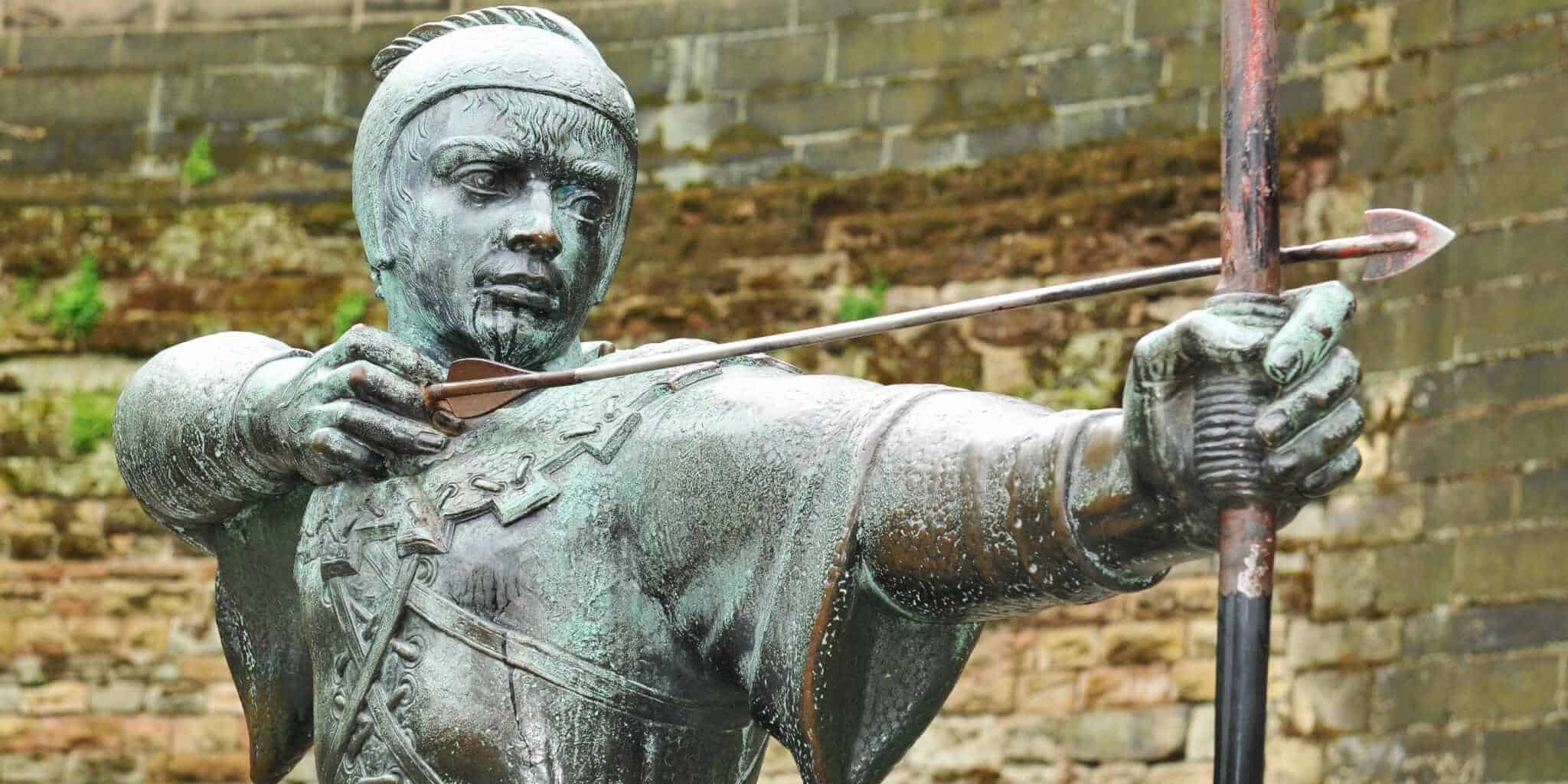
It's a stretch--I admit it--to think of Robin Hood as a hero somewhere out here on the Great Plains takes some suspension of belief. Yes, Dakota warriors could do magic with a bow and arrow, something to rival the jaw-dropping artistry of the fabled Robin of Locksley. But somehow the hero of the woodlands would be out of place without trees, on a horizon that never ends amid a sea of grass rolling in like the swells of an ocean. The plains just ain't the place for Robin Hood.But we can try. Maybe we can think of him emerging, angel-like, from a broad field of 12-foot hybrid corn. Suddenly, there he is in green leotards, and his whole band of ruffians. He steps out of that corn like Shoeless Joe and Moonlight Graham in Field of Dreams. Friar Tuck is with him, as is Little John and his entire merry band.
Okay, it's still a stretch. Perhaps we can take Sherwood Forest out of Robin Hood, but you can't take Robin Hood out of Sherwood Forest. Which is not to say it hasn't been done. Here's the story.
Robin of Locksley, our hero, was born as such in a novel by Sir Walter Scott, an Englishman--a Scot actually--who published a ton of novels in the early decades of the 19th century, at a time when a novel was, well, a very new thing. That novel, Ivanhoe, did much to make the Middle Ages popular by way of the old themes of romantic lore: adventure, love, and war, a can't miss combo--and, oh yes, seasoned with a little jousting.
What I'm saying is that once upon a time Robin Hood, of Sherwood Forest fame, was just as much a hero here in Siouxland, as he was in merry old England.
Hark.
Years and years ago, a Norwegian bachelor farmer--or someone kin thereof--a man named Old Sheldon, knocked on the cabin door of a distressed young mom on the South Dakota prairie. Think of him as a guardian angel in bibs, a straw hat, maybe a corncob pipe or a chunk of chaw in his grizzled cheek. His nose is beet red, and when he doffs that hat he's bald as a buzzard, two handfuls of old-man hairs sprouting hither and yon.
Old Sheldon has a bag over his shoulder, and when that distressed young mom lets him into the cabin, he shuffles in and simply dumps out the contents.
But first, a word about this young mom. Her husband just learned the affliction he's been working so hard to fight is not ever going away. When they were first married, he risked life and limb in the bitter cold to get what he and the neighbors needed, riding through a blizzard the likes of which we only rarely see hereabouts. Both hands and feet got frozen and never really regained the strength the man once had.
And now they were told not to expect a miracle.
What's more, she's pregnant. This young mom who already has a little one, is fighting off a bout of morning sickness not unlike the ravaging stomach she had to live with the first time around. And it wasn't convenient, this pregnancy; it wasn't something she would have chosen, not with the worry she's had to take on about how the family is going to eat.
Think of her as miserable. You may because she herself wrote that the day Old Sheldon came with that bag over his shoulder, she was "particularly blue and unhappy"--her words. And she had reasons. She was blue--worse than blue. She was downright miserable.
Old Sheldon flips that bag from over his shoulder and--get this now--dumps out the contents right there on the floor of her cabin, an entire collection of Sir Walter Scott's Waverly novels, as popular as Harry Potter back then, throughout the English-speaking world.
Chances are, that distressed mom is someone you know. Her name was Laura Ingalls Wilder, who would have to get somewhat older before she would, like Sir Walter Scott himself, write a whole sack full of novels. But, as you know, she did.
I don't know that we think enough about guardian angels. How about a nomination for Old Sheldon? When he stuck that straw hat back on his bald head, you could have seen a halo.
Or how about this? There's a pile of novels on the floor of the cabin. Laura Ingalls Wilder forgets her morning sickness for a moment because out of the cracks between those old books, a cover or two or three open mysteriously so that, in camo leotards and a goofy little hat, the guy stands up tall as the Jolly Green Giant, a quiver over his back holding arrows for that bow over his shoulder.
It's Robin. You bet it is. Robin of Locksley, a guardian angel right here on the Plains, a hero.
Wednesday, June 06, 2018
RFK at KU--3/16/68

In the summer of 1968, I wasn't political enough to be a supporter of Robert F. Kennedy. As I mentioned yesterday, I remember thinking him something of an opportunist, entering the presidential race only after Sen. Eugene McCarthy had made clear the nation's politics might be able to make a drastic change.
But last night on the drive home, I heard a segment of a speech he gave at the University of Kansas fifty years ago, and couldn't help but think how nice it would be if to have a baby-faced idealist like RFK running for President, promising to make American great again, not by bullying people to stand for the national anthem, but by ministering to this nation's soul.
And this is one of the great tasks of leadership for us, as individuals and citizens this year. But even if we act to erase material poverty, there is another greater task, it is to confront the poverty of satisfaction - purpose and dignity - that afflicts us all.
Too much and for too long, we seemed to have surrendered personal excellence and community values in the mere accumulation of material things. Our Gross National Product, now, is over $800 billion dollars a year, but that Gross National Product - if we judge the United States of America by that - that Gross National Product counts air pollution and cigarette advertising, and ambulances to clear our highways of carnage.
It counts special locks for our doors and the jails for the people who break them.
It counts the destruction of the redwood and the loss of our natural wonder in chaotic sprawl.
It counts napalm and counts nuclear warheads and armored cars for the police to fight the riots in our cities.
It counts Whitman's rifle and Speck's knife, and the television programs which glorify violence in order to sell toys to our children.
Yet the gross national product does not allow for the health of our children, the quality of their education or the joy of their play.
It does not include the beauty of our poetry or the strength of our marriages, the intelligence of our public debate or the integrity of our public officials.
It measures neither our wit nor our courage, neither our wisdom nor our learning, neither our compassion nor our devotion to our country, it measures everything in short, except that which makes life worthwhile. And it can tell us everything about America except why we are proud that we are Americans.
Tuesday, June 05, 2018
Fifty years ago

The exact circumstances of my being in Grand Rapids, Michigan, right then I don't remember. What I know is that I didn't have a job; and because I didn't, I watched TV the morning after Robert F. Kennedy was assassinated in Los Angeles. He'd just won the California primary, just made a victory speech when an assassin named Sirhan Sirhan put some bullets in him at close range. He was pronounced dead about 24 hours later.
Like anyone else alive in November of 1963, I remember almost every painful moment of his brother's death in Dallas, President John F. Kennedy. I was just a kid back then. I remember exactly where I was sitting in what class when the announcement came over the squawk box hung up beside the flag at the classroom door. It was the principal. I don't remember the words exactly, but what he told us was that our President was dead.
It was terrible, but I don't think--I don't remember really--that I would have considered myself among JFK's great admirers. An uncle of mine spoke publicly about keeping Senator Kennedy from the Presidency because--my uncle minced no words--JFK was a Roman Catholic. His election, my uncle insisted, would mean America would be run by the Pope. I remember listening to all of that in an after-church program on Sunday night. I don't remember what I thought, but I do remember being sort of proud of the way my uncle held forth.
Five years later, I was in college, older and less conservative. I only faintly remember the primaries that year, but I knew that a fresh face named McCarthy, a poet from Minnesota, had come out of nowhere to challenge the likely candidates. I knew LBJ had thrown in the towel, leaving the field open for his VP, another Minnesotan named Hubert Humphrey.
But this Senator McCarthy had taken on HH and scored some significant upsets, including a handy one in New Hampshire. That's when RFK announced that he too would get into the race.
I remember thinking him something of an opportunist, a slippery figure who'd come barging into the race once McCarthy had made it clear traditional Democrats like HH were vulnerable. He was an opportunist with huge name clout, I thought, even though, back then, I'm sure I would have appreciated his anti-war stance. There was a bit of a dynasty stink to him.
But that morning, fifty years ago, RFK was dead, and I watched for hours, trying to restrain the sinking feeling that beset most all of us that year, most of the time. JFK had been murdered five years before, MLK only a couple months back. And then this--a man who'd just scored big time in California, leaving a hotel podium through the kitchen, where yet another assassin, this one named Sirhan Sirhan, gunned him down.
It's difficult to imagine the cultural partisanship we're in right now could be any worse. Thirty-some percent of the American people would likely find a reason to stick with Trump even if he did shoot Comey did on Fifth Avenue in New York. But a pretty high percentage of people would, if given the chance, shoot Trump. It's a terrifying divide with a spectrum of associated hot buttons--immigration, climate change, gun control, Black Lives Matter. There's a sharp line in the sand that's really but a disguise covering a black hole that threatens all of us.
Is that divide scarier than the one that separated us 50 years ago?
I don't know.
What I do know is that, for whatever reasons, I really wasn't, back then, much of a supporter of the Presidential bid of Robert F. Kennedy. But as I watched television that morning, in a house not all that far from a neighborhood where race riots had already taken place, I wondered about the country in which I was born and reared, in which I lived, in which I hoped to live my adult life.
What I remember is that, to me at least, it was all very scary.
Monday, June 04, 2018
Morning Thanks--Isaiah

It's a mess, really a grand mess. Mostly it's one black promise after another, in chunks that seem almost unrelated to each other. Most is flat-out vituperation, a symphony of screeds from a pen wielded by a OT troll who just can't stop spitting rage at his people.
The Book of Isaiah, scholars say, may well have three different writers, at least two of whom aren't Isaiah. All three stare at a dire apocalypse among the fractious Jews, post-Exodus, including the kings who lead them, some of whom are--in a word we use only for a Broadway musical--wicked, determinedly and purposefully wicked.
More than a few, in fact, which makes the Isaiahs of the book crank up the rage.
And it shall come to pass, that instead of sweet smell there shall be stink; and instead of a girdle a rent; and instead of well set hair baldness; and instead of a stomacher a girding of sackcloth; and burning instead of beauty. (3:24)It's a book of commands, of injunctions and visions, of God telling Isaiah(s) to damn the people of Israel:
Make the heart of this people fat, and make their ears heavy, and shut their eyes; lest they see with their eyes, and hear with their ears, and understand with their heart, and convert, and be healed.Get that? He says to tell the people not to listen to their God; thus their lives will be open wounds.
It's has caverns of sheer darkness and the occasional pinhole of light: "For unto us a child is born" (thankfully, some lines that can't be read without hearing Handel's spin on the matter).
Isaiah is dark and scary, full of lurid evil, even cannibalism, and just a few scurrying moments of blessed grandeur ("He shall be called 'wonderful,' 'counselor,' 'the mighty God,' 'the everlasting father'". . .) between arduous soliloquies of woe. It holds its pleasures, but not many.
We've been going through it for a couple of weeks now, trying to take it seriously, to understand why this long book of mostly woe is in the canon and what it suggests to us, if anything, thousands of years after its shipwrecks.
There are no easy answers.
This much I think I've learned. Those who use it to "prooftext" had better approach in abject humility.
"Behold I tell you a mystery--you shall all be saved."
After more than a few hours of Isaiah's tirades, this Monday morning, I'm thankful that what we call "the holy scriptures" are, just as God almighty is, far bigger than we are or certainly will ever create ourselves to be.
Sunday, June 03, 2018
Sunday Morning Meds--Trust
:max_bytes(150000):strip_icc()/baby-robin-5a45041be258f80036c0af17.jpg)
“O LORD Almighty,
blessed are those who trust in you.” Psalm 84
We first
spotted the nest when a robin flew up into it, so close to our window that it
was almost startling. Up high off the
ground, that nest was in no danger from neighborhood cats, it seemed, securely
constructed in the crotch of a substantial branch of an ornamental crab just
off our deck. When I pointed it out to
my wife, she had the same thought I did—how great it would be to show our
grandchildren.
Soon
enough there were babies. Before
Memorial Day already you couldn’t miss them, rustling around whenever mom would
alight, thrusting up those thin yellow beaks as if their only job was to eat—which
it was. Soon enough, you could hear
them, their chirp slightly higher, more unrestrained than their mother’s, often
frantic.
On
Memorial Day one fell. A gray-brown
smudge of feathers simply dropped out of the nest, bounced off a smaller branch
on an untoward descent, then plopped to the ground. There she was—or he—the kid anyway or one of
them, speckled and unkempt. Crying like
a baby, which, of course, he was—or she.
That song wasn’t lament, but sheer terror. She’d lost her place.
It must
be horrifying, traumatizing, for the rest of the bunch. With as many robins as
there are in the neighborhood, some red-breasted shrink has to have set out a
shingle, I thought.
I wasn’t
about to put her back. We were sitting
on the deck, reading, and occasionally watching her helicopter mom, who
wouldn’t let her alone.
Then,
suddenly, a melee of chirping. Had to be
a cat around. I got out of my chair, stepped
off the porch and into the evergreens, and sure enough, a mangy tailless tabby
took off towards the garage. That baby
robin was safe.
Tuesday, on
my bike, right in front of the neighbor’s house, on my way to school, I had to
swerve to avoid hitting a baby robin on the pavement, flat as a paper doll. Car got him—or her. No cat.
Honestly,
I shrugged my shoulders. I’d watched
that mother nurture her child for weeks.
That child had been her life, and now the cause of her life was no more.
But even as
I type these words, a baby robin’s high-pitched song is starting the morning
just outside my window because even though some mother’s baby didn’t make it, someone
else’s has. Maybe it’s the one we
watched grow.
I’m just
happy most of that story escaped my grandchildren because they’re far too young
for sadness. That flattened baby robin
would have done my granddaughter in, I’m sure.
She remembered last Memorial Day only because, on a bike trip, we saw a
dead squirrel—“with blood on it”—on the road, she said. I’d forgotten until she
mentioned it again.
Such is
life. Our maples dumped several hundred
thousand whirlybird seeds this spring.
If I and my mower have anything to say about it, not one of them will
make it.
Such is
life. There are great stories, in and
out the nest—how a tabby high-tailed it out of the neighborhood, how a hungry
stomach got a meal, how a robin’s song delights the dawn.
But some
dreams get flattened, and eventually, of course, all the babies die.
The verifiable
soul of this beauty-of-a-psalm, Psalm 84, is this last verse. Through all the perils, all the dangers, all
the grief, in those moments when we’re so blasted far from the nest that we nearly
despair at ever finding our way back or escaping danger sufficient to end it
all, those who can continue to trust, those who won’t forget God or let him
forget them, those trusting, fallen children, in faith, somehow keep singing.
Friday, June 01, 2018
An old tract*

Just exactly where the Rev. John O. Schuring takes his readers in this old 1946 tract is not at all surprising. What he's after is convincing his readers that that too much of American culture has been a-whoring after mammon and therefore neglecting the eternal truths of the Kingdom of Christ. Remove the specifics and the meditation's general theme could be preached almost anywhere today; but the specifics are worth a closer look.
"The gold rush is on," he says, in his opening line. It's not the gold rush of 1848, but the gold rush of 1946, "equally devastating in its results." Why? "Skeletons of tragedy" lined the ancient trails of California's 1848 gold rush, he claims, but today things aren't much different, "school boards frantically searching for teachers, school houses deserted, classrooms empty, churches padlocked, hospitals and sanitariums understaffed, mission posts unmanned, social agencies neglected."
Wow. What happened? "The post-war world finds men not interested in service but in salary."
If, in my lifetime, people ever look back at some "golden age" in American cultural history, it's the post-war boom, that great era when "our boys" returned from Europe and the South Pacific, had families, built homes, and created immense prosperity. The Fifties will feel forever like Ozzie and Harriet, an innocent time when America ran on all of its cylinders, when respect and industry and goodness reigned, when America's immense losses during a long and horrifying war made peace itself heavenly. Make-America-great-again great.

But Rev. Schuring says post-war America has gone materialism mad, and he'd never even seen Mad Men.
Someone sent me this tract, thought I'd like it for its historical value, and I do. For years, it was stuck into the frame of my office bulletin board, something so familiar I didn't notice it until I cleaned up after all these years.
An asterisk claims this address was given over "a chain of radio stations" on July 21, 1946, just 11 months after VJ Day, part of a new broadcast ministry that called itself "The Back to God Hour." My parents listened to it religiously, as if it were there own--which it was. I don't doubt for a moment the my father, returning from the South Pacific would have agreed about all that materialism.
"Once this ideal ["seek first his Kingdom"] becomes the sole passion of our life we will insist that every part of life takes its proper place in striving for that goal." That's the foundational ethic which stands--or stood--at the core of the faith with which I was raised. "But all these spheres [the parts of life he talks about earlier] and those who make them must be reborn by the grace of God and then lined up for the victory march to the goal of realizing God's kingdom everywhere."
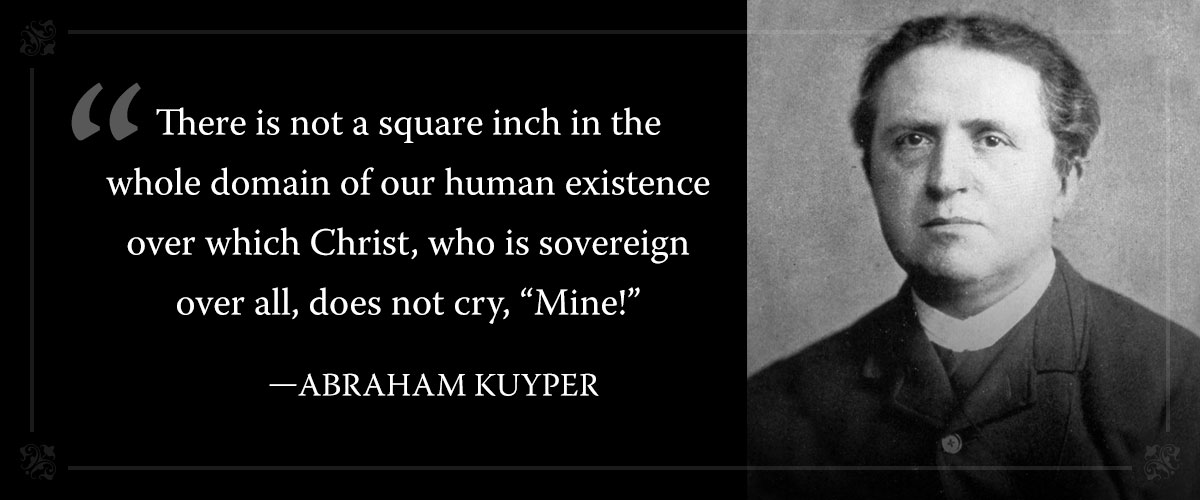
Vintage Kuyperian Calvinism. Not until I read it did I realize this yellowing tract tucked into the corner of my bulletin board was a calling card of the mission of the college where I taught. "Beg God that a new spiritual activity and power may grip us whereby one holy passion shall fill our frame, the seeking God's kingdom first, everywhere"--that's the way he preaches the line about "not one inch."
See that line at the bottom of the cover? It urges readers to pass the sermon along, maybe even to a "local one in service" because "what is sent in love is read in eagerness."
I admire it. It's not flowery-full of cheap grace, nor shy about the love of money dishonorable place in the register of human sin. Maybe it hectors a bit, but it knows what gospel it wants to bring to those who might, in fact, read it.
It's rife with weakness as it is with strength, as silly, maybe, as it serious. It speculates a ton, puts a finger in your face, but it's also full of truth.
Like us, I guess. It tells our story and it is our story. It's what we do--it may even be the very best of what we do, God helping us.
Sometimes it's downright amazing what kind of gold you can find an arm's length away.
________________
*First published May 15, 2012.
Sometimes it's downright amazing what kind of gold you can find an arm's length away.
________________
*First published May 15, 2012.
Thursday, May 31, 2018
War among the Baptists

New York Times columnist Ross Douthat doesn't buddy-up to liberals generally. Most dislike him. Scroll through his trolls sometime; it wouldn't be a stretch to say they hate him. Republican though he be, Douthat is, steadfastly, a no-Trumper, an "anything but."
Yesterday's Douthat op-ed contributes to the ongoing discussion of 45's effects on American Christianity, especially "evangelicalism." To say Trump has destroyed evangelicalism may be premature, but let's be frank: no one in the last half century has done more to smash evangelicalism to pieces than Donald Trump, who hoists plays with the righteous only because the they won't stop giving him mulligans. If Trump is an evangelical, I'm Joseph Smith.
Douthat goes after the evangelical belief that somehow only God could have created Donald Trump. He's simply the man for our time, despite his porn stars and a list of 3000 lies that grows like creeping jenny. He's a brute, a beast, and a bully, who gets away with behavior good Christians wouldn't tolerate in their kids. But evangelicals love him, not because he is one, but because he's going to end the death of babies. Only God could pull such off such an impossibility, picking that man for our time--or so the theological rationale goes.
Douthat, a conservative Roman Catholic, says believing such things is sheer folly. He describes what's clearly visible throughout the American landscape: Trump's legacy is looking more and more like disaster. In a piece he titles "The Baptist Apocalypse," he says the firing of the Reverend Paige Patterson as President of an influential Baptist seminary is a veritable sign of the times.
Patterson maintained that a good Christian woman would tend her wounds, then get down on her knees before she went back to her marriage bed, and pray, pray hard, for her abusing husband.
That didn't go over big. President Patterson got himself a sweet goodbye kiss, but Southern Baptist women ran him out of town. Douthat claims there's a new civil war down south, and it's generational. Both sides may have voted for Trump last round, but the commonality ends there. Just ten years ago, it would have been unheard of for women to carry--and wield--so much power among fundamentalist conservatives.
Trump created that incredible division, Douthat says, aided by the "Me Too" movement. The Reverend Paige Patterson's dismissal may not be attributable to Donald Trump, he says, but among the Baptists Donald Trump and his twenty or so female accusers--he calls them liars--has exposed those already weak evangelical seams.
It's a woman's thing, and because it is, nothing in the world of the old Baptists is going to be the same. Not all Baptists--and ever fewer younger ones--sing along with First Dallas's Robert Jeffries, a true Trumpian champion, the preacher who created a hymn from "Make America Great Again," a hymn his mega-church actually sings. All those Baptists may be conservative, but it's clear that most of the younger generation--and the younger generation of women--don't believe, as Jeffries claimed, that going after Patterson was "a witch hunt." (Sound familiar?)
Empowering women--or bringing a kind of justice to gender problems--can devastate conservative fellowships. I'm not sure my church, the CRC, has ever really recovered. To some, Paul's injunctions against women make praying at the bedside seem perfectly biblical.
And righteous.
If you're not a battered woman.
Baptist women didn't wait for some act of God, like the coming of Donald Trump. They acted. That's our job, Douthat says. "For Baptists as for all of us, the direction of history after Trump will be determined not just by Providence’s challenge," he says, "but by our freely chosen answer."
Wednesday, May 30, 2018
Missions
She told me that they learned to march at the boarding school. She said they got really good at it, too. She claimed she learned to enjoy marching, in great part because the girl who taught them--an older Native girl--was sweet, was nice. "We liked her," she said. So there they went, around the boarding school ground, bunched in squares like Rice Krispie bars, marching along like soldiers, little Lakota girls like recruits for the cavalry. Smiling too, she said.
There weren't many matrons or teachers she liked. Every day, it was a half day of school, and a half day of work--washing, ironing, scrubbing floors, sewing, most of the work kind of janitorial, keeping up the grounds, keeping up their dormitory. Once, she'd been told to run the mangle. I had no idea was a mangle was, so she told me it was a machine-like thing for ironing. "We mangled quite a bit," she told me. I giggled and told her that sentence sounded perfectly awful. She smiled.
Once when she was mangling or ironing, she ran across a blouse with ruffles, she said. She didn't know whether she was supposed to iron the ruffles or not, so she didn't do it, and in just a few minutes that blouse was back in front of her--with a reprimand. They didn't tell us how to do what we had to do, she told me. And they never said thank you or anything like that.
There was another older girl there, a big girl, she said, so big and strong that she remembered when she and another little girl or two, right there in the dorm, hung from that big girl's extended arms, hung there while she twirled. A human merry-go-round, I thought. She told me it was lots of fun, and the big girl--she was older too--the big girl always looked out for the little ones. That was good too because nobody else did. There weren't many things really nice about the boarding school, she said. When they cut her hair, she told me she cried off and on for three or four days. Such was life at the boarding school.
They didn't go home for nine months back then, she said. When in May their parents came to pick them up, some of the littlest children didn't recognize their mothers.
Oh, yes, and the big girl, she told me--she left the year her two little brothers came to school. She left and enrolled at another boarding school, this one north of their place, not east. When she did, she registered as a boy so she lived in the boy's dormitory because she refused to allow her little brothers to be abused by anyone, red or white. She pretended--all year long, she pretended--that she was a boy, just to make sure her little brothers didn't get hurt. When her father came to pick up his children in the summer, he asked for his daughter. The school told him he didn't have a daughter. She'd done it: all year long. And the boys?--she'd kept them safe. That big girl, she was a lesbian, she said. She learned that later.
But you know, she explained, in my culture the people respect them. Did you know that? In my culture, she said, we think of them as being gifted. They've been blessed by being given two conscious-es, one of them male and the other one female. To have two persons in one person, she said, in my culture, that's considered very special.
In 1888, the very first missionary my people sent to the Brule Sioux from the Rosebud reservation, came home after two years and reportedly claimed that bringing the gospel to such people little, if any promise. To his credit, he'd been there at the time of Wounded Knee, when the reservations were alive with a messianic vision that eliminated the white people then taking over all the Native homeland. Must have been scary.
But on them, Dominie Vanden Bosch said, on their pagan culture, preaching the gospel of Jesus would likely be a waste of time.
Tuesday, May 29, 2018
Square inches and Project Blitz

“It’s kind of like whack-a-mole for the other side; it’ll drive ‘em crazy that they’ll have to divide their resources out in opposing this,” David Barton said, or so he was quoted in the Sunday NY Times. Barton is a historian and one of just four members of a steering committee aiming to flood state governments with legislative action meant to turn America into the kind of Christian nation Barton and his cohorts believe it should be.
What he's talking about is a bill in the Minnesota legislature designed to make it legal for a teacher to put a sign up in his or her classroom that says, "In God We Trust." Or, legislation in Oklahoma to allow foster care agencies to discriminate according to their own beliefs.
The whole movement, the Times says, something called "Project Blitz," is being mounted to move America back to what Barton and others consider the nation's Christian roots. Today, it's "In God We Trust" in public schools, and tomorrow it's promoting legislation which would allow individuals and businesses to discriminate against the LBGTQ's among us. Think wedding cakes.
Their animus isn't based in out-and-out discrimination, or so says Katharine Stewart, whose book The Good News Club: The Christian Right’s Stealth Assault on America’s Children, probably preaches a different sermon, but to our economy. They can prove, they say, that LBGTQ people simply cost society so much more. In other words, they claim it's a pocketbook argument that only secondarily has to do with sin or righteousness.
A reference at the end of Ms. Stewart's op-ed bowled me over, a quote from a man named Bill Dallas, another Project Blitz steering committee member, who is working the social media angle in an effort to get out the vote among Christian fundamentalists. “What we do is track to see what’s going to make somebody either vote one way, or not vote at all.” Stewart then quoted Mr. Dallas, in a video introduction he made with an organization in Florida, where he brought up the name of someone very near and dear the hearts of those who determine mission and purpose at the college where I taught for 37 years. "In October 2016, Mr. Dallas offered a neat summary of his political philosophy," Stewart says, "one built on an idea by Abraham Kuyper, 'There is not a place in the universe where Christ does not shout out, ‘Mine!’ "
Should Dordt College--now "University"--have minted a coin anytime in the last 20 years, that line would have been in-scripted on one side or the other, maybe both.
Mr. Dallas and Mr. Barton are, without a doubt, among the 80% of Christian evangelicals who believe God almighty in his infinite wisdom brought Mr. Donald Trump into the Presidency of the United States, at such a time as this, to right the course of a nation tumbling headlong toward paganism, a kind of savior who will end abortion once and for all, a leader to protect them from the evil seeking to destroy Christianity and its followers.
Wow. Mr. Dallas and Mr. Barton use Abraham Kuyper, my Abraham Kuyper, to buttress their "whack-a-mole" mission.
I could cry.
Monday, May 28, 2018
Morning Thanks--Memorial Day crosses and stars
Let me guess, because I have no way of knowing.
I found this cross in an American war dead cemetery far south in the Netherlands. Van Ooyen is no relative, not even a particularly familiar name; but I'm guessing the kid was from somewhere around Pella, which suggests that maybe a century before he was killed--somewhere on his way to Berlin--some of his ancestors left Holland with Dominie Scholte, when that Leiden intellectual took off for the prairies of Iowa, a significant flock of followers in tow, pious folks all.
Sgt. John Van Ooyen may well have died someplace not all that far from neighborhoods his ancestors left. Something took him down in March of 1945--a bullet maybe, a grenade, maybe a blast from a tank. All the marker tells us is his rank, his company, his Dutch name, and the plain and simple fact that he's one of 8000 war dead commemorated here, even though his mortal coil may well be somewhere back home in central Iowa.
It's stunning to stand amid all those white crosses and realize that what's there--row after row after row after row--is a decimal point to the many thousands of others who also never came back to Pella or Brooklyn or San Bernadino, 416 thousand total.
For what? For freedom. For righteousness. For peace. For an end to a madman's dreams of world dominance and the insane slaughter of millions the Nazis judged not good enough for the master race.
Still, stand in a Allied graveyard sometime, and you can't help but note at least something of the cost of war.
And then there's this. Look closely.
There beyond his cross, just a three or so back in the row to the right, stands a marker with a star of David--a grave of a Jewish guy.
I wonder if this Dutch-American kid from Iowa ever considered his dying was for a New York Jew too. I wonder whether that thought was in his head when he enlisted or was drafted. I wonder if it was something a nice good kid from the Tall Corn State ever thought about at all.
When I visited the cemetery, when I stopped and paid my respects to someone named John Van Ooyen and thanked him for what he gave up for me and my kids and my grandkids, I couldn't help but notice the grave marker of a Jewish guy named Rudolph Nadel, a New Yorker, who died just two months later and is thoughtfully remembered just a couple of yards down the row.
Maybe they knew each other.
Maybe not.
Doesn't matter, really. Jew and Gentile, New Yorker and wooden shoe Iowan, they both gave us what we have. They died for for a ton of reasons--and I'm one of them.
So are you.
This Memorial Day morning, I'm thankful for both of them, all of them.
Sgt. John Van Ooyen may well have died someplace not all that far from neighborhoods his ancestors left. Something took him down in March of 1945--a bullet maybe, a grenade, maybe a blast from a tank. All the marker tells us is his rank, his company, his Dutch name, and the plain and simple fact that he's one of 8000 war dead commemorated here, even though his mortal coil may well be somewhere back home in central Iowa.
It's stunning to stand amid all those white crosses and realize that what's there--row after row after row after row--is a decimal point to the many thousands of others who also never came back to Pella or Brooklyn or San Bernadino, 416 thousand total.
For what? For freedom. For righteousness. For peace. For an end to a madman's dreams of world dominance and the insane slaughter of millions the Nazis judged not good enough for the master race.
Still, stand in a Allied graveyard sometime, and you can't help but note at least something of the cost of war.
And then there's this. Look closely.
There beyond his cross, just a three or so back in the row to the right, stands a marker with a star of David--a grave of a Jewish guy.
I wonder if this Dutch-American kid from Iowa ever considered his dying was for a New York Jew too. I wonder whether that thought was in his head when he enlisted or was drafted. I wonder if it was something a nice good kid from the Tall Corn State ever thought about at all.
When I visited the cemetery, when I stopped and paid my respects to someone named John Van Ooyen and thanked him for what he gave up for me and my kids and my grandkids, I couldn't help but notice the grave marker of a Jewish guy named Rudolph Nadel, a New Yorker, who died just two months later and is thoughtfully remembered just a couple of yards down the row.
Maybe they knew each other.
Maybe not.
Doesn't matter, really. Jew and Gentile, New Yorker and wooden shoe Iowan, they both gave us what we have. They died for for a ton of reasons--and I'm one of them.
So are you.
This Memorial Day morning, I'm thankful for both of them, all of them.
Sunday, May 27, 2018
Where Morning Danws
“Those living far away fear your wonders;
where morning dawns and evening fades you call forth songs of joy.”
Psalm 65
A verse like this from Psalm 65 makes me think of the opening chapters of the Institutes. I’m serious.
“Wherever you cast your eyes,” John Calvin says, “there is no spot in the universe wherein you cannot discern at least some sparks of his glory. You cannot in one glance survey this most vast and beautiful system of the universe, in its wide expanse, without being completely overwhelmed by the boundless force of his brightness (52).”
There is, he says a few lines later, “more than enough of God’s workmanship in his Creation” to lead human beings across the wide earth “to break forth in admiration of the Artificer.”
Some Christians find that awestruck John Calvin hard to believe because his reputation is rooted in telling the rest of us how to live on the straight-and-narrow, and to punish us when we wander. When you think Calvin, you don't think awe.
But Calvin can also create a spacious tent. It’s there in the Institutes, just as is David’s very similar compass reading here: “where morning dawns and evening fades you call forth songs of joy.” King David the singer knows his own big-hearted praise is but one voice in a concert, dedicated daily to the Creator, and that idea just blows him away.
That silly old Coke commercial wasn’t all wrong. Assemble the multitudes from every tribe and nation, put ‘em up on a hill, on a wide hill before a broad, flat plain, and let ‘em be, let ‘em see, let ‘em sing. Because in the face of sheer beauty they will. Even those far away.
No cheap soft drink will ever turn them into a choir, but maybe a dawn will. Maybe a sunset. Maybe a glimpse of something so much bigger than they are will bring them to their knees, as it does so many of us when we allow the possibilities.
So Calvin would say. As do I.
Here's what was out there this morning.
Subscribe to:
Posts (Atom)


.jpg)


.jpg)