Morning Thanks

Garrison Keillor once said we'd all be better off if we all started the day by giving thanks for just one thing. I'll try.

Wednesday, December 14, 2016

Manipulation


The ad is dated--Time magazine, sometime in 1971 or so, I think. But it's a classic. If you look closely at the frosty glass, you'll see three ice cubes. The frosty lines through the middle ice cube form something akin to the letter E. The ice cube on the bottom--look closely now--has an X embedded within, sort of--see it? And if you're with me so far, you can see the letter formed by the lime against the top one. Yeah, that's right--S.

S-E-X. And it sells. Lord a'mighty does it sell, right? This perverse ad's manipulative composition sells gin by gunning engines. Or so people said. 

Decades ago, subliminal advertising was gigantically hot. In 1981, I sat in a crowded little grade school gymnasium and listened to a mightily righteous speaker describe manipulation by putting ads like this one on an overhead projector, blew them up the size of a gym wall so that we could all see what we'd missed. 

And there's more in this one. As yourself this: when is a bottle cap not a bottle cap?--easy, when it's a spent male you-know-what. See it? Sure. Goodness, how did I miss that?

That was the guy's racket, frank talk about erections and vaginas in a little Christian school gym where those words where only horny eighth grade boys ever used those words, and then furtively. By the end of the presentation, he'd trained us to see penises in all shapes and sizes wherever we'd look. Freud had a field day.

I was skeptical--I'll admit it. The whole thing felt like manipulation. "See that female sex organ?" he'd say and 300 imaginations created images we would have considered sinful if the speaker wasn't such a devout Christian. There would have been far less oogling if we'd met on a nude beach.

All of that came back to me with the ongoing saga of a Harvard social psychology researcher named Prof. Amy Cuddy, whose TED speech set records and still is--the tally is 21,000,000 viewings. There's no sex in this presentation, but what research has shown is her findings are just as suspicious. 

What Prof. Cuddy sells (I know it's a pejorative word) is the efficacy of body language--both to others and to self. What research shows (some say it's dubious) is that if we adopt power poses like this Superman look, we can actually gin up our state of mind and turn our fears into bombast. What she argues, famously, is that body language not only reveals our state of mind, but also shapes it. After a fashion, we can channel Superman if we mimic his body language.

Prof. Cuddy's blessed advice to millions who watch her and believe her is that they can alter the shape of their lives by simply adopting--even covertly--Superman-like postures. She tells them to go into bathrooms or other secluded places for two minutes before a challenging interview or presentation--get in there and reshape your shoulders, look formidable, and in two minutes, she says, you'll come out swinging. 

Once more--21 million hits. And a best-seller. And appearances on tv talk shows all over the place. And speeches and presentations at the five-figure level. That kind of successful. Just a little of this, she says, 



and the world's your oyster.

Sex in the ice cubes is all about fear, about who's manipulating me. That speaker had a gym full of suckers, most of them already convinced that evil was everywhere. Prof. Cuddy's millennial presentations are all about power--how to get it, how to keep it, how to wield it, a different sermon altogether, a different sermon for a different audience and a different time. Twenty-one million people want to be afraid of nothing. 

But both presentations are pretty much bogus. 

It was P.T. Barnum, people often say, the circus king, who once said, "There's a sucker born every minute." If he didn't, he could have--that's certain.

But nobody knows exactly where that cynical line comes from. All we know is that it has real sticking power, because there is. 

Who knows?--I'm probably one of 'em. 

Tuesday, December 13, 2016

Growing into the office


Even before the Rebs fired on Fort Sumter, there were two distinct motivations for the Feds to go to war. One reason was slavery--the "peculiar" institution already erased from most Western societies and cultures, but still very much alive and kicking here.

More than a century later, it's helpful to remember that opposition to slavery, however, was not the most pressing motivation for going to war. Keeping the Union together was. The Union Army was full of men who went to their deaths believing that no black man would or should ever be granted the right to vote. 

Abraham Lincoln himself was thoroughly anti-slavery and said his much for years before becoming President in 1860. Although he came from a region of southern Illinois known for its sympathy for its slave-holding neighbors, as early as 1837 Lincoln and one other Illinois legislator were the only reps who objected to an anti-abolition measure that passed overwhelmingly. 

So many years later, it may come as a surprise--it did to me!--to know that significant differences existed between those who opposed slavery and those who campaigned for abolition. Some historians argue that when Lincoln was inaugurated he hated slavery, opposed it, wanted it ended. He was anti-slavery.

But he wasn't an abolitionist, wasn't someone who wanted equal rights for the slaves, for the millions of African-Americans who'd been brought here against their will, treated and regarded as animals. 

In 1860, President Abraham Lincoln simply believed, like many others, that the end of American's "peculiar" institution was soon to come. He wasn't in league with John Brown or any of the wild-eyed New England abolitionists, or those passionate believers who carried the cross of Christ into battle. Equal rights was simply unthinkable. 

But in office, during the war, Lincoln changed. Why? Some historians argue that when the Union effort included over 200,000 former slaves, it became impossible for him to believe that those patriots (as in the 1989 film Glory) could be anything less than American citizens once the fighting ceased. 

Lincoln himself believed that his signing the Emancipation Proclamation was his most important contribution to American history and culture. “I never, in my life, felt more certain that I was doing right, than I do in signing this paper,” he said. “If my name ever goes into history it will be for this act, and my whole soul is in it."

It's difficult not to argue that Abraham Lincoln grew into the office he held. The Civil War--the death of thousands of Americans on both sides, the destruction wrought by almost five years of bloody battles--changed him and made Lincoln a more powerful presence in American history.

Those of us who believed Donald Trump was not fit to be President have no choice now but to trust that what happened to Abraham Lincoln can happen once again when we inaugurate this nation's 47th President. Trump is not about to be deposed or to quit. He is our President, as hard as that is for me to say. His disdain for the CIA does not mark any progress down that road. He continues to lie about most everything. 

But people grow into the offices they hold. Even Lincoln did. That's what I have to continue to tell myself.

Monday, December 12, 2016

The Brule Blessing


Maybe it's because the guy embodies what he testifies--I don't know. Maybe it's just the music, a scintillating mix of Native elements with traditional Anglo/Western harmony. Maybe it's just me--I don't know. But the concert on Saturday night was, to me at least, unforgettable.

And it wasn't just me. The place was packed. If there were empty seats in Sioux City's Orpheum theater I didn't see them. Getting in and out downtown took some doing because the sheer bulk of the crowd tested the place's seams. What happened on stage was a marriage of the Sioux City Symphony and Brule, a quartet of instrumentalists who redid Christmas with the unmistakably Native sounds of flute and drum and brought along Native dancers whose color and story-telling was itself a wonder.

The four tickets I bought weren't cheap--trust me. I knew it was a gamble with those who came with me. But every last moment was a joy.

Paul LaRoche, adopted as a child, was almost 40 years old when he discovered--or his wife did, secretly--that her husband's racial heritage was Native, Lakota. He was a civil engineer in the Twin Cities, but also one of those driven performers who can't shake the obsession to make music. Coming to grips with his own Lakota heritage created for him as whole new range of musical possibilities, a range as wide as the Plains his ancestors roamed. The result was and is, well, unique.  What Brule does is not quite Native but certainly not not. Whatever it is, it scores--and did once more, beautifully, on Saturday night for Christmas.

Grandpa's guests were enthralled, which is, I'm sure, another reason I loved the concert. They loved it. The kids.

For me, when Brule started off with their Native version of "O, Holy Night," I knew at that moment I could have paid twice as much for the tickets and been thrilled.

It wasn't just music either, it was more. I've listened to dozens of Navajo people tell me their stories; I've stood at their graves in New Mexico, and the South Dakota grave of Little Crow, the Dakota leader who only reluctantly led his people into a war he considered futile to reclaim their land from the swarms of European pioneers taking it away. Less than a month ago, I stood at the grave of the remains of hundreds of Ponca and Pawnee on a lonely hilltop in Nebraska. For months now, like so many others, I watched hearty Standing Rock souls protest the black snake that cut a swath right through my own neighborhood with a nary a voice of alarm.

I've brought buses of people out to Wounded Knee, where I've told white folks that what happened out there was no battle but a massacre. I've stood alone in the winter cold on the hilltop where the Seventh Calvary set one of its Hotchkiss guns and aimed it down on the place where hundreds of Lakota people were killed.

I've read dozens of books about Christian missionaries, well-meaning people who worked among the nation's Native populations in the 19th century. I've heard dozens of horrible stories of children strong-armed from homes and families, then sent to treacherous boarding schools.

It's just plain impossible to live anywhere in America and not realize that if you're European, like I am, somewhere along the line you were yourself an illegal alien, fully undocumented, an atom in an immense human wave who looked at very land beneath my feet as if it were only recently discovered and forever unoccupied.

On Saturday night, the Orpheum Theater, downtown Sioux City, Iowa, was a sanctuary of racial reconciliation. Brule brought the flute and the drums; the orchestra brought the violins. And the result was peace, a blessing of peace.

The result was Christmas peace. That's why I loved it.

Sunday, December 11, 2016

Sunday Morning Meds--Words


“He wraps himself in light as with a garment; 
he stretches out the heavens like a tent. . .” Psalm 104:2

Not long ago, my student assistant went camping.  It was mid-summer, mid-South Dakota, boiling hot. I told her she was simply going to fry.  She did, she said. 

“What did you camp in?” I asked.

A trailer, her friend’s parents’. 

I was thinking a tent.  “I bet it was hot,” I said. 

She shrugged her shoulders.  “We had air.” 
           
THE TRAILER HAD AC.  “Call that camping?” I said.

My age was showing.  Fifty years ago, our family started out on a trip across America, in a brand-new Sears tent.  Camping was the only way my parents could have afforded a trip to California with three kids.  Camping, to me, still means a tent. 

I should know better.  For years, I worked at a Wisconsin state park where tents slowly disappeared as pop-up campers and Airstreams started rolling in.  When I started, the park had separate areas—one for tents, the other, much smaller, for trailers.  Tenters, today, are few and far between.

The virtual disappearance of the tent may be crucial to negotiating the intent of this verse of Psalm 104—“he stretches out the heavens like a tent.”  I’m guessing that the associations most of us have with tents—a rather slavish way to camp nowadays—keep us from catching what most KJV readers probably picked up vividly with an alternative translation: “he stretches out the heavens like a curtain.”  That line offers a different picture, a royal portrait of God almighty as King.

Watch the action unfold here.  In verse two, God almighty enrobes himself with light, then sits before a curtain, in very royal fashion.  (And there’s more to come.)  He’s king, of course, king of creation.

But then, I confess that, as an American, I’m not all that susceptible to the allure of monarchy.  Princess Diana was a knock-out, but California is full of starlets, a ton of them, probably, comelier.  She’s been dead for years, but if you want to sell a grocery-aisle magazine, break a story on her—or fake one.  She was royalty after all—or at least she married into royalty.  Yawn.

But the psalmist is no 21st century American.  He’s reaching for his richest reservoir of images here, and that reservoir is filed under “the King.”  He wants to get the most he can from his words, and he can’t reach higher than royalty. 
Nonetheless, he says “tent,” and I see a Sears-Roebuck with aluminum poles—or a two-man mountain dome, something shaped like an igloo.  I don’t see a king, but then, even if I would I wouldn’t fawn.  I’m an American.  We vilified King George and fought a revolution to rid ourselves of monarchy, right?  Read Thomas Paine sometime.

But I live where the sky is huge, and frankly I don’t care if God uses the heavens as a tent in a park or a curtain in a castle.  I’m floored from the allusion that God almighty, a God who loves me, uses all of this sky, the broad, unending heavens themselves, as if they were a fashion accessory.

Tent or curtain, verse two brings me back to that image in Psalm 8 of God the Creator, smiling upon us as his fingers tinker with solar systems as if they were car keys, the work of his hands. 

King or camper—no matter.  All of our language fails anyway.  He is our God.

That’s the gospel.

Saturday, December 10, 2016

Saturday Morning Catch

The snow was 48 hours old, but still clean and pristine in the shafts of a luminescent sun this morning, the sky as clear as the snowfields.  I don't know about taking home any art, but I need to get out more often and look.  Really, beauty is not hard to find most Siouxland early mornings, but for me at least it is tough to catch.  But then, the hunt is all I really need. (From a couple of years ago. . .)


Friday, December 09, 2016

Menageries


Someone's happy dalmatian showed up on TV last night, and I couldn't help think that maybe a dalmatian is what we need. Ever since we've moved into the country, I've thought about getting a dog. We've had cats ever since we've been married. When we celebrate our 50th, we really ought to put together a scrapbook of cats we've known and loved and owned, if it can be said anyone owns cats. 

But I'll take some credit for selflessness on this dog business because, truth be told, I'm thinking of the dog, not for my sake but his--the dog's. We've got an acre of prairie out back and beyond that open ground--and a river--about as far as you can see. We built a house where we did because of where it is--dog country, a world some big clumsy yaller dog would consider something close to the Elysian fields.

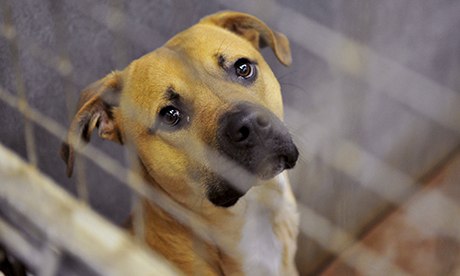
I stay out of pet stores, and I refuse to visit animal shelters. I know myself, my weaknesses, my sins; and should I ever walk through the door of some sad pound I'd be helpless to leave without some mangy tag-a-long. All I'd need is a leash. Look at that face. You think he doesn't know what's out back of our house? You got to heartless not to take him home. That's why I stay away.

Seriously, our sprawling, tenantless back yard makes a shot like this one obscene, even criminal, turns me into just another Iowa pig. 


But what would we do with them when we leave? And who's going to walk 'em when it's ten below, like it is right now? Are they house-trained? Can they find a peaceful place in a cat's world? 

Get serious, I tell myself. Besides, we got a cat. Well, he has us.

A dog doesn't really need much. Not like a giraffe. Did you know that King George IV owned a giraffe and paid three artists to do his portrait--the giraffe's, that is. When his pet died a year later, the King had him stuffed. 

An Englishman named Mr. Brooks had something of a menagerie, including, of all things, a white camel. But Brooks got bored--who didn't have a camel, after all?--so he painted black spots on the poor thing and tried to sell it as a "camelopard." 

Once upon a time, Anne Boleyn was given a monkey as a present, even though she hated animals. What the monkey thought of her is not recorded. 

Some Brit's Ethiopian zebra grew "exceedingly fond" of the ale she got from the canteen of the  Royal Menagerie, but then she probably didn't have a back yard like ours. Can you blame her?

Speaking of zebras, Lord Clive insisted that his pet mate with mule. His zebra demurred, wasn't moved in the least. So Clive painted his ass with stripes and the fusion was thereby accomplished. Proving what, I don't know.

In the late 18th century, King George III was presented with two kangaroos. What he wasn't told was that once there were five slated to be gifts, but when the ship's crew found themselves hungry, three exited the ship by way of decidedly different delivery. 

When a London pub got itself a rhino, customers could look upon the beast for a shilling or ride it for two. Pets suffer, after all. In 1661, Samuel Pepys, whose diaries tell us so much about England in the 17th century, got himself angry and beat his pet monkey to death in a rage.

All of these pleasantries are from Menagerie: The History of Exotic Animals in England 1100-1837 by Caroline Grigson, and available for Christmas giving, if you have a pet lover on your list. 

It's a book of course, and not a pet. Don't expect it to love you unconditionally or carry in your slippers. On the other hand, you can stay curled up on the couch on cold winter nights. And that's nice. By the way, our man Pepys in a fit of pique ended up giving away his pet eagle, the whole event glibly recorded in his famous diary, where he says "we were heartily glad to be rid of her, she fouling our house mightily."

There's the pet mess too. I think I'll just not look at pictures and stay the heck out of shelters. 

Thursday, December 08, 2016

Sioux County history--The Gentlemen on the Prairie

William Brooks Close

"Give me your tired, your poor,
Your huddled masses yearning to breathe free,
The wretched refuse of your teeming shore.
Send these, the homeless, tempest-tossed to me.
I lift my lamp beside the golden door."

Emma Lazarus's storied sentiment is etched on a plaque inside the pedestal of that grand lady who stands in the New York harbor and therefore clings to our perceptions of how this country was settled, a nation of homeless and tempest-tossed, Europe's wretched refuse yearning to be free.

It's not inaccurate. Only one of my Dutch immigrant ancestors, a pastor/professor, arrived as a man of means, and his means were not particularly abundant. My other forebearers can certainly be numbered among the huddled masses who'd come with great faith the new land offered vastly more opportunities than the land of their birth. 

Dutch-Americans of my tribe shouldn't forget that Dominie Scholte, the godfather of the huge Pella colony in Iowa, was hardly homeless, even if many of his 800 followers were from the Netherlands' huddled masses. 

A real anomaly were the English gentry, the Gentlemen of the Prairie (a book by Curtis Harnack), who were anything but homeless. The Close brothers, who'd come to America in 1876 for a centennial regatta in Philadelphia, were Oxford's most prestigious student athletes entered in a sport that clearly offered no home for the homeless. While their showing on the river in the City of Love was nothing to write home about--the whole team caught some kind of stomach ailment--one of the crew got a blister of sorts in a place that kept him out of training.

That brother, William B. Close, an English gentleman (think Downton Abbey) happened to meet a well-heeled American businessman named Daniel Paullin, from Quincy, Illinois, one Sunday afternoon while the rest of the Oxford crew was training. The two began to talk business, Paullin explaining to the young English gentleman that great fortunes could be made in real estate because valuable land out west was being bought and sold for peanuts (okay, he probably didn't say "peanuts"). Paullin, by all appearances, had done well, had become something of a gentleman himself.

Young Mr. Close decided on a road trip Paullin created for him, a sales trip to northwestern Iowa, to here, where I'm sitting, in fact, a place where Paullin claimed fertile land was both abundant and dirt cheap, ripe for harvest in every possible way. 

What resulted from that sales trip was a Siouxland English colony made up of country gentleman who only occasionally got their hands dirty. Close was among England's most storied athletes, so when he advertised possibilities for an English colony of gentlemen in the American frontier, his words got notice. Hundreds came.

"The achievement of these gentlemen during the past two years," the local press trumpeted, "in the way of improving and developing the country, stands without a parallel in the history western civilization." That's trumpeting. "The business of the two firms embraces the investment of English capital in lands, and the improvement of the same; that is transforming the broad prairies of the peerless northwest into improved farms."

The story of these gentlemen on the prairie--told first by Sioux County historian Jacob van der Zee (The British in Iowa, 1922) and later by Curtis Harnack (Gentlemen on the Prairie, 1985)--is not to be forgotten.

Years ago, Frederick Manfred told me he wanted to write a novel about the gentlemen, so he did a little looking around and turned up the last of the Close family, a fellow, he said, who probably spent too much time with his elbows up on a bar.  At least that's where Fred met him. He told me that he'd asked this last English gentleman on the prairie what he'd done, where he'd worked, what he'd done for a living.

"Oh, I wasn't born to work," the man told him, smiled, and returned happily to what was before him.

They're gone now, the English gentlemen. They were not homeless, not members of the huddled masses, but they are part of the story of the land beneath my feet. 


Wednesday, December 07, 2016

Silliness?--or not so?


The guy's name is Jestin Coler. He voted for Hillary. But he and his buddies haul in some extra dough by a game they've created, a game called false news. Coler is a fiction writer. He and his friends created a story about a Texas family contacting Ebola (you can read it here), and hauled in the take from five million hits when that fiction went viral. Slap a few ads on the page, and there's money to be made.

A story Coler wrote about Hillary--remember, he voted for her--got a half-million reads in just one day, just three days before the election. It was a stinker of a story, but all kinds of people read it. Went like this--an FBI agent died mysteriously after investigating Hillary's emails. Never happened. Pure fiction. Pure bullshit, but Jestin Coler made about eight grand on that one. Just telling stories. (Some videomaker cranked out a You-Tube using the story--be sure to read the comments.)

I'm in the wrong racket. 

NBC found Jestin Coler. They were looking for someone like him because a North Carolina man named Edgar Maddison drove up to D. C. last weekend, got himself heavily armed, and then Lone Ranger-ed into Comet Ping Pong, a family pizza place to "self-investigate," he told police. He'd read on line that the joint was center stage for a child porn and sex trafficking ring created by Hillary and her buddy John Podesta. Those emails Wikileaks were releasing before the election?--they proved it, or so Maddison claimed. 

He carried in a rifle, did a little shooting. Thankfully, no one was injured. He wanted to free the poor children.

He didn't find Hillary, nor Podesta, nor any child sex racket. It was and is all fake news. 

No matter. Some souls believe it. They badly want to.

Let me do the math. Jestin Coler, who's a nice guy--he's got a wife and kids and a Christmas tree--created and armed Edgar Maddison, another nice guy with a wife and kids. Jestin Coler, and others like him, bears responsibility for what happened last Sunday at Comet Ping Pong, to say nothing about shaping the election. Jestin Coler ought to go to jail, but right now technology's myriad opportunities are only beginning to be charted. We have no laws governing what he did. Besides, it's free speech, right? First Amendment.

Jestin Coler is picking up extra cash for his kids for Christmas. Buy 'em a drone maybe, something he couldn't have afforded otherwise. He's what we call an "entrepreneur," isn't he? He didn't break any laws. Look for yourself.

"It's addicting," he told NBC news, meaning creating fake news. He loves it. Hits come up his screen and he laughs all the way to the bank. 

"Don't sweat it, lady," the serpent told the woman. "You certainly will not die." 

False news has a long history. People want badly to believe.

And it's not over. Almost immediately another story went up. In this one, Hillary's people hired Edgar Maddison to get arrested. It was all a set up, a diversion. She and Podesta's people paid him richly to cover the evil racket that's still going on at Comet Ping Pong Pizza. 

No, don't go. Please don't go. Leave Comet Ping Pong alone. There's nothing there but pizza.

Tuesday, December 06, 2016

Morning Thanks--Count your blessings


Some psychologists want to drop the last initial in PTSD. They claim that to call PTSD a "disorder" makes the condition appear unusual. It isn't. They claim that if you've been to war, you have post-traumatic stress because war is trauma.

I can't help thinking such distinctions wouldn't have mattered to the woman in the casket yesterday. She had a husband who took Nazi fire at the Battle of the Bulge and came home with a purple heart from wounds that were visible--and some that were not. "He just wasn't the same when he came back from the war," one of his relatives said to me some time ago. Then the guy shook his head with a kind of inevitability.

Her husband died already 32 years ago, but he could have gone to his Maker at least twice before that, once in a cold winter battle in Europe, then again by a truck accident that did almost everything but kill him. She suffered through that also. It was cancer that took him finally. He was always a heavy smoker. She was there too.

She died last Thursday, her 96 years it's own kind of Life magazine. She'd seen a whole lot more than most of us ever will, a whole life of trauma, if you count the trials. 

She had a baby boy in 1945, when she received word that her GI husband had been wounded in Belgium. She had to have understood that all three of their lives wouldn't be exactly as she imagined. I don't know if she ever talked much about getting the news--where she was or how it came. What her family knows is that she got that telegram with a little boy, six months old, in her arms.

The obit says she was born in Estelline, South Dakota in 1920. She went to country school through eight grades, then "worked out," which is to say moved into farm homes whenever and wherever women needed help, generally after having babies. Thirteen, she may have been, maybe fourteen, doing every last thing farm wives did back then, and they did every last thing. 

The Dutch Reformed of Estelline in the 1920s were not affluent. Most had moved west and north to homestead cheap land, hoping to make a life on a landscape that wasn't particularly tamed. She was a child when the stockmarket crashed. I'm sure she remembered the Dust Bowl, when whole skies full of Oklahoma and Kansas dust drifted into every corner of a farm house. 

Chances are, when she got married, she wasn't thinking about her sweetheart going off to war. It was eight months before Pearl Harbor, and it would be two years before he was drafted. They were in Iowa then, right up close to the South Dakota border, hilly Sioux County country, not prime land, but greatly livable. Knowing her, I can't imagine she wasn't happy.

Then came the war. And then the man she loved returned, not exactly the man she'd married. Back then no one knew the initials PTSD, and she probably wasn't the only woman who nursed all kinds of wounds. Back then, they just didn't talk much about it.

She and her husband had another five boys, six in all. Six boys trying to make a go of it on a hardscrabble farm.

In 1965, that oldest son of hers was killed, a passenger in an accident the newspaper described this way:
Early morning fog covered Highway 18 as the local men attempted to pass a gasoline transport. As he pulled around the truck he was driving east a milk truck. . . was approaching from the east. The Rock Valley man attempted to slow down and pull back into the right hand lane but in doing so he collided with the rear of the transport which tossed the pick up broadside in the path of the oncoming truck.
 She was likely at home on their farm when she and her husband got that news. 

Fifty years later, she buried yet another son, my brother-in-law, after he'd been killed instantly in a construction zone on a Wisconsin interstate. He and my sister were on their way to Minnesota to visit their kids and grandchildren. He was killed instantly.

She was a resident in the old folks home. That time, her remaining four sons delivered the news.

By a country mile, her allotment in sadness and death exceeded what most of us will ever suffer. But yesterday, at her funeral, when the pastor spoke and her family reminisced, the sweet face that appeared right there in church was smiling because she always did. One after another, her grandkids claimed her giggle was perfectly infectious. And it was. I swear when they spoke, her smile lit up the sanctuary.

One of her sons told the audience that with six rough-and-tumble boys growing up on a hard scrabble farm, there were weeks and months, even years, when there was no end of trouble. Once, he said, when he was in it, when he was right there in the heart of horror, his mom offered him that smile and said just three words: "Count your blessings."

That testimony plays in a league all its own.

Funerals do good work when they concentrate attention. This one did. 

Once upon a time, in a moment that doesn't need to be detailed, she looked at her boy, one of six, and this woman who'd suffered so much sadness, so much trauma, gave him a line to live by, a line that to me, up until yesterday, when he repeated it, seemed little more than an empty cliche. 

"Count your blessings," she told him, smiling. 

Never in my life have those three words carried so much love.

Monday, December 05, 2016

Morning Thanks--Vets at Standing Rock


It was an unusual prayer request. Most all of the members of the little church up the road are steadily getting up there in age, so requests almost always have hospital settings. Most people know other people who are dying, often relatives. It's fair to say, that political consciousness isn't high, in part because life itself is the major concern.

So yesterday when the widow a pew over raised her hand and said what she did, her prayer request was unusual, but understandable too. It had to do with the veterans on their way to North Dakota, a couple thousand of them, she reminded us, to protect the protesters. "We should be praying for them," she said, robustly, holding a little lapful of attentive grandson who seemed greatly satisfied with his binkie.

The standoff at Standing Rock started months and months ago. There's nothing new about it. Yesterday, after church, the whole congregation could have got into cars and taken a gravel road three miles north to see the swath where the black snake has been already laid beneath precious Iowa topsoil thoughtfully returned to the corn and soybean fields the pipeline transgressed late summer. 

I'd wondered about the news story of the veterans. I'd wondered what locals might think about 2000 vets heading up to all those protesters thereby giving the whole movement a cutting edge it hadn't had as long as it was only a bunch of Indians. In our church, I didn't remember anyone asking for prayers for the Lakota people. After all, right here, a block from church, dozens of travel trailers belonging to the Dakota Access pipe crew inhabited downtown for months. The workers were honored guests.

What changed up north was the attention of "the veterans," a couple thousand of them, due to arrive yesterday in North Dakota. What charged that grandma's passion was safety for "the veterans." She didn't mention the protesters. She wanted the Lord to look out for the veterans. 

Just so happens that I know a veteran who's been there more than once in the last several months, one of the protesters, in fact. I rather doubt local law enforcement fears her much, nor did she go up to Standing Rock simply to protect peace-loving protesters. She's no strong arm, after all. She's 96 years old, a protester herself. 

She's Lakota, from the Cheyenne River Reservation, just south of Standing Rock. She's a highly decorated vet who served with Allied forces once a beachhead was established at Normandy, once it was safe enough for her and her unit of army nurses to put up a makeshift hospital on ground only recently freed from the Nazis. The French people rewarded her with a medal for her heroism a few years ago, flew her to Normandy to pin that medal on her.

That vet's been to Standing Rock before.

I think it's wonderful that the grandma with the toddler asked for the prayers she did. It wasn't all that much later yesterday when my phone lit up with news service headlines about the Corps of Engineers determining the time had come to search out alternative routes. Reportedly, great rejoicing erupted at the protesters' camp. 

Maybe it was that grandma's request that registered with the Creator of Heaven and Earth. Or else it may have been the rabbi from Oregon, who told the protesters yesterday that what was happening right there before their eyes was a "battle in a greater war. It’s a war for the hearts of humanity. And the only way to win that war is through prayer," she said. "You can’t win by fighting. They can take away your gun. But they can’t take away prayer."

Today, it's still Obama; tomorrow it'll be Trump. Who knows what'll happen? After all, you can bet Trump's got money in oil.

Just the same, what happened yesterday in North Dakota was an answer to prayer. I don't know if the Army nurse was out there yesterday in the cold--I don't think so. But I do know her well enough to know that today she's rejoicing. 

And so am I. This morning's thanks is simple: peace. 

Sunday, December 04, 2016

Sunday Morning Meds--Miracles of Light


“He wraps himself in light as with a garment; . . .” Psalm 104:2

I know when it came to me. I remember that morning well. I still have the photo that goes with the story, and while it holds no particular attraction to anyone else, to me it’s a reminder of what I learned that morning.

It was a Saturday, and I was somewhere north of here on the bluffs above the Big Sioux. 

Dawn was arriving and I was still in the car, trying desperately to find something, anything to shoot against. Some dawns are gorgeous all by themselves—the eastern sky a whole gorgeous palette. But others—mid-summer and mid-winter dawns especially—can be, well, boring, the sun rising from the horizon as if unattended in a sky that’s clear and undistinguished, buttery, at best.

Honestly, I don’t remember the sky that morning, but I remember my own frantic search for a setting because I ended up in the river hills, in someone’s driveway. Across the road was an open valley, some woods, and a little late fall color. The sun was just starting to bump above the horizon, so I jumped out of the car, took off running for a wood pile I’d spotted, hoping there were maybe some angles I could bring into composition. I was almost an hour from home, and I was starting to think I was going to get skunked. What I saw in my camera wasn’t much.

No matter how you cut it, it wasn’t a memorable dawn.

Then I turned back toward the east and saw the guy’s garage. A garage—that’s all. Not an old one, not something adorned with knotty, antique wood. Just a garage with plain, wide siding, neatly painted, off-white, and saplings he’d planted alongside just a year before, a half dozen at most.

When I looked through the lens, there was absolutely nothing for great composition—I swear it. I wasn’t going to make a million selling that picture, but I shot—six, seven, ten times because what I saw was somehow gorgeous: the light was extraordinary, wonderful. It spread parallel lines from the saplings over winter grasses frosted heavily enough to sparkle with life. The picture I took—and I love it—captures the soulful gorgeous essence of the side of some guy’s garage.
           
That morning, I learned something about landscape photography: it’s all about light. Standing just beyond the driveway, I felt as if I’d seen a vision. I had, and here it is: it’s all about light. While composition is important, capturing something breathtaking in a photograph is all a matter of light.

It took me nearly sixty years of living to realize how precious and priceless light really is—not just for photography, but for beauty itself. What is darkness but the absence of light? The night sky is memorable, not for its dense blackness, but for its pinprick sparkling jewelry, for its light. 

Every imaginative writer knows we draw a reader into a story we create with by way of the senses—all six. Want to make a character live? —don’t tell us, show us. The senses are the beginning of apprehension, in children too.

And where does our apprehension begin? Where did creation begin? In light. Let there be light, and there was. It’s all about light.

And this God, our God, takes this most gracious blessing, light itself, and wraps himself with it, as with a garment, verse two of Psalm 104 says. Want to see him? —check out his garment. When you want to see him, look at his light.

There he is now, honestly, just beside the garage.                 

Friday, December 02, 2016

Our post-truth world


I don't want to think it was always this way, but maybe it was. I'm enough of a Calvinist to believe that even our fanciest duds are filthy rags--and that the only way we wash up clean is an eternal love far beyond our means and grasp, a God of grace who stoops to conquer. 

Maybe it was always this way. Could be. Think about it: what was going on in Jerusalem a couple thousand years ago had Pilot's head spinning. "What is truth?" he asked Jesus. Ever wonder what tone of voice he used? Was he pleading? sincere? I don't think so. I think he was exasperated. That overheated crowd of choleric Jews outside his window made no sense. "What the heck is truth anyway?" he might well have intoned. "Sheesh." 

Maybe lying is a constant we've always lived with. I'll buy that. 

But it sure seems that right now there's more of it. 

After all, the people who create Oxford dictionaries determined that their Word-of-the-Year this year is the hyphenated rookie "post truth," an adjective to which they've given this meaning: "relating to or denoting circumstances in which objective facts are less influential in shaping public opinion than appeals to emotion and personal belief."

This year, they say, that yearling word created a life all its own. 

Now to those of you who believe that what I'm saying is just the prelude to some "dump Trump" effort, Oxford had more in mind, specifically a 2000% rise in the use of that word "in the context of the EU referendum in the United Kingdom." They also mentioned the U. S. Presidential sweepstakes.

Hillary's about-face on the Trans-Pacific Partnership trade agreements, supporting them as models for opening markets around the world before the primaries, then doubling back and stomping on them once she realized Bernie was painfully close to taking out her achilles tendons--that's vintage post-truth too.  

And what are we to make of former Presidential candidate Mitt Romeny. Just six weeks ago, Donald Trump was "a sniveling coward," and "a serial philanderer" as "entertainer-in chief." Little more than a month ago, he was "a con-man"; yesterday, Trump was the man who can lead America "to a better future."

But the President-elect himself is Prime Minister of the post-truth world. After the election he tweeted that millions of people in this country voted illegally--millions. When all kinds of people, Republican and Democrat, laid bare the silliness of that claim, his staff put out a 42-page catalog of facts that proved nothing at all but supposedly documented the truth of his word. It failed. Our President-to-be flat-out lied.

Maybe you've seen the CNN segment in which Allison Camerota asks a gallery of long-time Trump supporters about the election. Incredibly, they simply repeat the President-Elect's allegations, convinced they're right--millions of people in this country having voted illegally, all of them, one would suppose, for Hillary. When Ms. Camerota asks them where they heard it, they said, simply, "the media." 

And when they insist President Obama had deliberately and specifically instructed undocumented workers to go to the polls and vote, the CNN panel claimed they discovered that he did it on-line. 

Allison Camerota couldn't believe it. "Where?" she said. 

"Just google it," one of them insisted. 

This old Calvinist finds that scary.

Yesterday, one of the President-Elect's long-time surrogates told a panel on NPR's The Diane Rehm Show that there's a whole new world order right now: “One thing that’s been interesting this entire campaign season to watch is that people that say facts are facts. They’re not really facts,” Scottie Nell Hughes said. “It’s kind of like looking at ratings or looking at a glass of half-full water. Everybody has a way of interpreting them to be the truth or not true. There’s no such thing, unfortunately, anymore as facts.”

I guess that's the brave new world. 

What the heck is truth anyway, right?

Thursday, December 01, 2016

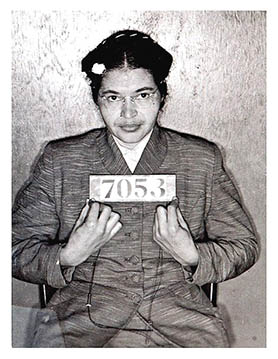
What Ms. Parks did in 1955


One can only imagine how annoyed white folks were on the bus that afternoon. After all, it was the end of another working day and nobody was making all that much money. They were all tired and weary, and a bunch of them had no idea what was on tap for supper--they'd still have to figure it out once they got home. "Get out of work and get on the bus and get home and put your feet up," was just about all there was to it that afternoon, 61 years ago today, in Montgomery, Alabama.

I'm betting no one even saw her get on, none of the white folks anyway. Why should they notice. They were busy, had their own heartaches, they're own crappy stories. They didn't need any colored woman's problems that late afternoon. 

Some of them didn't even like the pushy driver. He had a history of pissing people off--black people especially. Some people just got airs, you know? Some people aren't content with having it their way; they just want to do nothing more than poke a sharp stick in the eye of someone else, like that colored lady especially. She wasn't breaking any law sitting in the middle section. The whole world knew it was "first come, first served." Stupid driver.

And, sure, it would have been right for that white guy to just give up the seat that lady had. After all, he was younger and she had a hard day too that day. I mean, you could see it on her face. She was beat, and he didn't have to make a point of lording it over her the way he did. The way most of the people on the bus saw it that morning, there wouldn't have had to be a dust-up, no arrest for pity sake. The whole mess simply wouldn't have had to happen.

And,  yes, she could have moved too. The other Negros sitting beside her had moved after all, when that pushy driver commanded them to. And he didn't have to yell at her that way either, if the truth be told. He could have just said it kindly, not screamed. He's an ass really, and I don't mind saying it. That driver is an ass. He bears responsibility for the whole bus boycott thing. Why can't we all just get along?

If I were some white guy from Montgomery, circa 1955, there's a good chance that's what I might have thought and how I might have thought it.

Sixty years later, we've made a hero out of Rosa Parks, even a Christian hero. People today claim say she emitted some kind of "Christian glow," a mystic presence so moving even white people in Alabama saw it, a kind of aura. Even if they're wrong about the glow that day, it makes little difference because she's become what we've made of her, a saint. Rosa Parks refused to give up her seat to a younger white man and thereby broke the back of certain kind of segregation in the Jim Crow South. 

She did it all alone and without violence. She did it without saying much at all. She took it upon herself to stand up for justice she saw violated every day of her life. That day, 61 years ago, she simply told herself and that bus driver that she wasn't going to take it anymore. She insisted on staying right there where she was. 

And that's what started it all.

Sometimes white people like me don't realize or remember what a bother Rosa Parks must have been, what a squeaky wheel, what an "agitator," my father's favorite word for Dr. Martin Luther King. Before he died, I should have asked him whether he'd changed his mind about MLK; it would have been a tough question, I'm sure, one he might not have wanted to answer. 

People like Rosa Parks and Martin Luther King upset things, got people riled up, raised cane, made trouble, put things off track when all any of us wanted was to make a living and provide for our families. White people just didn't want to be bothered by black people's problems, not when they had their own. Turn on the news and what do you see but people in the streets when they ought to be at work. That sort of thing.

"Black Lives Matter" gets tiring, doesn't it? Sometimes you just want to tell 'em all to go get a job somewhere--go home and make a family or something, make something of yourself. It's such a bother, such a mess. I know the feeling. Besides, this is America, land of the free, home of the brave, a Christian nation. 

Sometimes we laud heroes and forget what made them heroic. 

Wednesday, November 30, 2016

Morning Thanks--My own first noel


Truth is--and I'm proud to say it--my wife's gift is somewhere in the mail. I'm way ahead-of -time on that one. And it's a dang good choice. Not only that, but this year she's not going to know what it is before Christmas because I'm keeping my mouth shut. She's not going to know until she opens it and it's nothing she asked for, so in every way it'll be a surprise, and that's rare and that's good.

But I haven't thought much about Christmas.

There's a tree planted--so to speak--in one of our garden boxes just outside my window, a nine-foot reject from my daughter's attic. I put it out last week already, and it blew down the first night so I piled up a bunch of boulders beneath it, stuck in some stakes and wired it back up.

Hope springs eternal. 

I can't imagine that prairie winds won't tame its temerity--and mine. The lights are bad, all green with an odd white girdle. I've got to do something about that, if the old thing stays up.

That little candelabra up top stands in my window down here, an old plastic thing from the 40s, I'm sure. But its age and history make it priceless. It belonged to my wife's grandparents, and I'm blessed to have it down here next to me. She put it up a week ago already. I love it. Isn't it great?

That does it, really. Upstairs, there's a wreath on our front door and a few things around, here and there. There'll be more, I'm sure. We've got ourselves a tree the day after Christmas, but we haven't decorated yet. That'll get done.

We're not big Black Friday people, never have been and probably never will be, so that passed largely without notice.

What I'm saying is we hadn't done Christmas yet, not that we're off to a late start. We'd had a first snow, but still--it wasn't even December. I didn't think we were far behind.

And then came Sunday. The church up the road was full of Christmas trees. Someone spent serious Saturday time getting the sanctuary Christmasy. It was nice, but no big deal.

But then the organist started in on a prelude-- "The First Noel," and when she did she just about took my breath away. Simple old carol, no huge chancel organ, no inspiring cathedral, no Mormon Tabernacle Choir--just a few bars of "The First Noel" and I got planted far more sturdily than that shaky nine-foot tree outside, right there in the heart of Christmas. 

No precious old stories rise mystically from the bars of that old hymn. I didn't flash back to a living room moment long ago around a tree or the Christmas Eve my parents hid a J.C. Higgens 26" bike, with streamers, behind the couch. Nothing like that. In church on Sunday morning, in that quiet time before things really start, it was just the idea--"the first noel," no caps, no upper case, the old hymn became very much my own carol. And it was good. It was very, very good.

Advent, I know, is supposed to be all about waiting, but right then I felt far less anticipation than deliverance. It's been rough on everyone, this whole election season, very difficult. We've all taken a beating. I have, and it's still not over. 

But Sunday morning in church on the chorus of that old carol--you know, when the line reaches way up for a moment?--right then, my heart broke into its own"The First Noel" because once upon a time in a old town barn outside a cheap hotel in Bethlehem, an unmarried girl, little more than a child, tired and beat from travelling on a donkey, gave birth to a King who still last Sunday made all things new--old candelabras, reject trees, and beat-up pilgrims.

All of that in just a few blessed bars from the chorus of "The First Noel." This morning, this brand new Christmas season, I'm thankful for the first noel.

Tuesday, November 29, 2016

A Saturday Dance Macabre


I don't mean this to sound like a "dance macabre," the old late-medieval allegory of death. I swear it wasn't. Don't think of that Saturday morning as a dirge. Far from it, even though what I have to show for it is an endless parade of monuments. 

Stay with me. 

The cemetery I wanted to revisit sits high above the mouth of the Niobrara River. I knew ahead of time that neither the grave of Standing Bear (the first Native man or woman the white man's court declared human), nor his son's (who wanted his remains to be returned to the land of his ancestors and prompted the Ponca's long walk) are marked. 

No matter. You stand up there above the rivers, and you just know they're there, where they both wanted so badly to be. 

Ancient ritual and customs festoon Native cemeteries with things for the dead to enjoy in the life hereafter, all kinds of things. Even so, the figurine up front here--actually behind the stone--is Roman Catholic. But then syncretism is far less a sin among Native people than it was or is to the white folks in black robes who brought the Book. 

Beyond (see it?) is the river and its abundant hills. 


If you turned west that morning, buffalo roamed. I'm not making this up. 


If I'd simply spent an hour or so wandering that graveyard, I'd have already seen enough to make the long trip west worthwhile; but I'd only just arrived. One stone I wanted to revisit, a place where thirteen years ago some proud ritual must have taken place, attended, I'd guess, by hundreds. Must have been a drum or two, some singing, some Ponca, some Pawnee. Still, the inscription begins "Our Father in Heaven." 

Stories haunt the place, as they do in any cemetery. 


Back down the hill, I found Buffalo Chip. Couldn't help but smile at the poor guy's name. It took me a couple of days to trace down his story, even though lots of his life stories are there in the space between dates of his birth and death. 


The Missouri River is "braided" between Springfield and the dam at Pickstown, SD, so the old river looks at least something akin what it did before being drawn and quartered by the Army Corps of Engineers. You can't turn back the clock, but seeing it here, from Ponca State Park, is both blessing and revelation, a reminder of how things looked when Lewis and Clark came up and back, it's big shoulders powdered that morning with fresh snow. 


Back in town, I stopped for a sign along the highway. 


Three brothers from rural Niobrara, Nebraska, died together in June of 1969, when an Australian aircraft carrier collided with an American destroyer, cutting that destroyer in half and sending 74 American sailors to their deaths, including these three Sage brothers from right here, rural Nebraska. 

Can't help but pause. Ages 22, 21, and 19.

The Standing Bear Bridge links Nebraska to South Dakota. I had to walk back a ways to get some shots of the river's deftly carved sandstone.


Up there on the ridge, two makeshift, snow-covered memorials right at the precipice remember deaths I couldn't help thinking were suicides. 


Not so far up the road, I stopped at a pioneer cemetery, same date, 1880, as the Ponca graveyard.


Once upon a time a colony of Dutch Reformed, my tribe, put down roots and left a graveyard--no Buffalo Chips or Standing Bears; nothing but Boschmas and Wynias and Talsmas. 


Once I wrote a story of a woman who lived out here during the Depression, a grand old grandma who remembered the Dust Bowl, who'd gave birth to all her children out here at home and, each time, gone back to work a couple hours afterward. She lost a son in World War II--he's probably buried here. She left South Dakota when her kids established lives elsewhere. But when I remember her telling her story, it's only right to say that she took some of this world with.

I ate an Indian taco at Ft. Randall Casino, got back in the car and went west across the river to the the old fort cemetery, where there are more stories--like this one: the Dezaires, an American family: a mixed blood Army scout and translator married to an African-American woman, both buried here, beside their child. Someone somewhere, maybe, has the names written in a family tree. I hope so. 


And this one, Lawrence Nugent, who died in July of 1871. The roll just outside the gate attributes his death to suicide. Stand there some time and you just can't help asking why. 


And then I turned east and went home. I know, I know--the whole thing sounds like a dance with death, but it wasn't. Not at all. It was a great day. Really was. I learned a lot. Really did.

That Siouxland dance macabre was an exercise not so much in death as in life. “Stories make us more alive," Madeleine L'Engle once wrote, "more human, more courageous, more loving.” 

I hope that's true.