Morning Thanks

Garrison Keillor once said we'd all be better off if we all started the day by giving thanks for just one thing. I'll try.

Wednesday, December 16, 2015

Calvin's problem with white supremacy


Could be you heard this, but in case you didn't, here's the news. A social work professor from Calvin College, a sister (well, mother) institution in Grand Rapids, Michigan. got some national ink from an opinion piece he wrote in the Calvin Chimes, a student newspaper with a storied tradition of pot-stirring.

Anyway, his comments responded to an incident on campus when two students (who later confessed) wrote "white power" on car fenders festooned with pure Michigan snow and then included a swastika or two, I guess, acts which led to mournful hand-wringing on campus and prompts Presidential candidates like Ted Cruz to claim (as he did last night) that America's greatest problem is political correctness.

Does such wintery finger-painting prove Calvin College racist? Of course not. What it proves is that two students should flunk Western Civ and be hereby sentenced to a dozen Saturday evenings being forced to watch newsreels shot by GIs who stumbled into Dachau and Bergen-Belzen.

Maybe Calvin ought to send those two pranksters out here in a week or so. I'll bring them to Wounded Knee to stand up on the hill where two Hotchkiss guns rained death on Big Foot and his people exactly 125 years ago this December 29. I'd love to play Dean for a Day at Wounded Knee. I'll drive. My gas.

The problem is, this social work prof comes off as the last of the guilt-tortured lefties in this opinion piece he wrote. This kind of thing doesn't go over well with white people, some of them at least, today.

Racism built America and its systems and institutions. Those systems and institutions, from Congress to Calvin College, tend to disproportionately benefit white people because that’s who built them. If, as a white person, you refuse to acknowledge this privilege, you are asserting that the game of life in America is inherently meritocratic, that it is a fair game, that those who try hardest win.
It's entirely possible that the only conservative stronghold more heavily fortified than northwest Iowa is southwest Michigan. (Yesterday, Crowdpac named Orange City, Iowa, the sixth most conservative place in America.) Where descendants of Dutch Calvinism live, work, and have their being, lo, there shall be Republicans because we work dang hard and so should you. So the professor's typically-liberal shot at our national guilt made national news. Look for Cruz to quote the Calvin prof sometime this afternoon. Maybe morning.

Here's the sticky phrase: "white privilege." If you say it doesn't exist, saith the professor, you lie. Any such proposition cues responses that include words like lazy and shiftless, food stamps and welfare queens.

That Calvin College professor is, of course, demonstrably right. It's impossible to deny that the Dutch Calvinists progeny who rule here (and there), like me, are squatters. We're the undocumented. If I were Yankton Sioux, we'd be illegal immigrants. Forever.

Not acknowledging that fact creates lies. Like this one.


In a new and proud display of love of country, Sioux Center, Iowa created a series of beautiful granite slab panels in a war memorial downtown that celebrates the honor roll of heroes, including locals, who've given their lives for human freedom.

The monument includes a panel that says "Indian Wars 1917 - 1898." I honestly don't know where the dates come from. King Philip's War let blood on both sides way back in the 1670s. White people have been fighting Indians since the day after the first Thanksgiving.

"SERVED - 106,000," it says, and "KILLED IN ACTION - 1,000*, the asterisk signifying "ESTIMATE."

KILLED has to mean whites only.  So were the thousands of Native people who died chopped liver? Shouldn't the number of Americans killed in the Indian Wars make some mention of the fact that the Indians were, in fact, Native Americans?

Or is it this?--we only list the good guys.

Then why put George Armstrong Custer on the monument? At Little Big Horn the man was far more of an idiot than he was a hero.

And if the Massacre at Wounded Knee (still called a "Battle" in government documents) occurred on December 29, 1890, why does the memorial say the Indian Wars were over in 1898? Someone's doing revisionist history, telling a skewed story.

Does all of this mean that Sioux Center is "racist"? I don't know who can answer such a question; I can't, and I won't try. I'm not the judge.

But the professor is right, no matter how hard it is to have to listen to his Jeremiad. There is such a thing as "institutional racism," and there certainly is such a thing as "white supremacy." Case in point? a beautiful new memorial, well-meant, to honor our national fallen heroes right downtown in a small town in Iowa.

The more difficult question is this one, always: how then shall we live?

Tuesday, December 15, 2015

What if?


It is a legitimate question, quite frankly, and among a select breed of academic historians, something of a hot one. The example that lit the fire was a question thrown to Jeb Bush: "if, given what we know, the opportunity arose to kill baby Hitler, would you?" 

"Hell, yes," said Jeb (!), who lost his exclamation point about the same time as his oompah. His answer struck most listeners as vainglorious, but it lit up a controversy on the legitimacy of what academic historians call "counterfactuals," ideas about what might have happened if. . .

What might have happened if Custer determined that taking on the thousands of Native people along the Little Big Horn would require more firepower, if he'd not said, "Hurrah, boys. Let's finish them up and go home"?

"What ifs" are great fun. They test our knowledge of history, the breadth of our imagination, our understanding of human nature, the worldview we stand on. 

"Hell, yes," Jeb said. He'd blow out baby Hitler's brains. 

It's a silly question, really. It goes nowhere and reveals nothing but a candidacy in trouble. "Hell, yes," he said like Wayne LaPierre or Donald himself.

Counterfactuals are silly, period. What if the greatest Native victory in the Great Sioux Wars hadn't happened? What if Sitting Bull hadn't seen bluecoats falling from the sky? If some hot-blooded Mormon in a covered wagon hadn't lost it about a cow to some Minneconjou warrior in 1854, would there ever have been a battle at the Little Big Horn some 22 years later? 

It's downright silly to speculate--or so say historians, who think of those who practice such historial treachery as "counterfactionalists" and the game they play as "counterfactionalism."

You can't do history via "what ifs?" because no history is there to be done. I get that.

What if my aunt hadn't been killed in a freakish auto accident? Would my grandpa not have cried when my father told him that he wanted to take Grandpa's only daughter and our family to Michigan? If Grandpa hadn't cried, would dad have moved across the lake to the job he'd always dreamed of?

What if I'd grown up somewhere other than the western shore of Lake Michigan? What if I'd have gone to Michigan State rather than Dordt College? Would I be someone else?

You can't do history via "what ifs?" because no history is there to be done.

But you can do fiction. You can put every last synapse of your imagination to work. You can dream. You can create, concoct, fantasize. You can fancy and idealize. 

You certainly can do fiction via "what-ifs." In fact, it's unlikely you can create a story without them.

The novel I'd love to finish this week was hatched by a what-if. "What if a tragedy happened to a someone with a complex family history, a young woman maybe who had a birth mother, an adoptive mother, and a divorced step-mother, as well as a series of fathers, all of whom cared for her? Who would attend her in emergency care? and in the waiting room outside how would they speak to each other?

What if a sea captain loses a leg to whale he remembers as white? What if that loss creates an obsession? How far would he got to find the white demon? What would he risk?

What if your mother had married the guy she went with before dating your father? What if your great-grandparents decided to make peace with the church they believed to be too liberal and simply stayed on the island of Terschelling, the Netherlands, rather than immigrated to America? Would you be the person you are right now? 

The legitimacy of counterfactualism is a conundrum only for historians.

I'm way over the hill when it comes to "what-ifs." I am their victim.

What if my father had been a mechanic? a truck driver? my mother a blues' singer? 

Think about it. 

Monday, December 14, 2015

Greetings


As a rule of thumb, amazon.com never looks better than when arriving cars thread the rows looking for the last open spaces in the mall parking lot. That's how it went last week. We should have known better than to go shopping in December, but it was December, only 20 days until Christmas.

People everywhere. In the air there's a feeling of Christmas, all right--ka-ching, ka-ching, ka-ching. Store-to-store people. Lugging bundles. Lots of them. Hundreds. Thousands.

Listen, I'm not about to cast the first stone. When last week's first Syrian refugees arrived in Canada they were greeted by Justin Trudeau, our northern neighbor's way-too-handsome and far-too-youthful, brand new Prime Minister. Trudeau was there at the Toronto airport, with his family. Don't look for Ted Cruz in Dallas or Huck in Little Rock or Trump at the Tower making political hay with the same kind of deft move. They'd court their voters by slinging AK47s over their shoulders and standing guard at the gates.


But last week's overflowing mall crowd included more than a few young Middle-Easterners, immediately distinguishable by the women's veils. I rode the elevator just behind a whole bunch of Muslim millennials jabbering away in their own language. Barely a week had passed since San Bernadino. I was, I admit, uncomfortable.

I'm not proud of saying it, but I couldn't help wonder why on earth their women would wear hijabs right then, as if they were proud of their spiritual heritage. My nativist reactions surfaced in anger and fear. I'd rather not feel what I most certainly did. And I get it. I understand how, unlike Canada with its outstretched arms, Americans would rather keep the Syrians away. I get it. I got it in me too.

We've been reading Exodus as of late, and Moses is no great help. Pulled from the Nile by Pharaoh's daughter, he comes heir to the best education money can buy. He's raised in the court, fed on extravagance, treated as if he were a child of the king, a child of royal privilege. He becomes indistinguishable from his adopted siblings. He's no slave boy; he's silver-spooned Egyptian.

But as if he can't help himself, one day, after he's grown up, the Bible says, "he went out to where his own people were and watched them at their hard labor." What on earth made him think that the Israelite slaves were his own people? He'd gone to Yale or Harvard, did an internship on Wall Street, had a season ticket at Yankee Stadium. He knew more Egyptian history than Egyptians. But with his bare hands he kills the Egyptian beating the Israelite slave, the man who is "his people." 


So he takes off out to the desert, where one day he comes to the aid of seven sisters getting abused by some redneck shepherds. When the girls tell their father what happened, they explain it this way: "Some Egyptian showed up and sent those shepherds packing."

Who was Moses anyway?--was he Egyptian or Israelite? The girls' father gives this Egyptian one of his own daughters, a sweetheart named Zipporah, who, the nuptials behind them, then has a son Moses names Gershom because, he says, "I have become a stranger in a strange land."

I wish all of this were less confused, but it's God almighty who, it seems, finally determines Moses's identity when he tells him that he's seen the anguish of the Israelites and he's chosen Moses, this obscure desert-dweller who's become a Midianite, to be the actor and return to the Jews from whom he came, a people who are suffering in his own native Egypt at the hands of the people who raised him.

Everybody knows what follows--one of the most important stories in human history, the Exodus.

If Moses's story has any meaning in our present political crisis, it suggests that the matter of identity, the matter of our sense of home, isn't easily resolved. Can devout Muslims become American? That's the salient question, isn't it? Can they, like every other ethnic group, fit in here? Will they take their place among the shoppers at the mall at Christmas? Or will they turn, like 
Syed Rizwan Farook, into cold blooded killers?

Canada is betting they can become Canadian. We're putting our money elsewhere.

The choice is stark, but not easy: love and fear. Justin Treadeau himself was at the Toronto airport last week. He's chosen love.

Ted Cruz, Jeb Bush, Donald Trump, Terry Branstad read it differently.

And I get it. I understand why.

But I don't agree.

Sunday, December 13, 2015

Sunday Morning Meds--Past tense


“I cried out to God for help; 
I cried out to God to hear me.” Psalm 77:1

The kid was eighteen. He was in his last year of high school, the last month-and-a half really, and he was on his way to the state high school basketball tournament.

It was one of those accidents that could have happened a hundred miles away but didn’t. It happened on a non-descript intersection people have passed for years on their way to work and never, ever noticed, an intersection minutes away from his home. The three of them were on a little trip to the state capital, they’d just started, and just like that one of them was dead.

It makes a difference how, I suppose, but I’m glad I’m not the law because what kind of penalty could you exact that would be worse than what has already been given? The guy is dead, someone who, by all accounts, was a great kid, someone who, just days before, had professed his faith in God. For that death, someone else already has a life sentence.

The poet of Psalm 77 starts with history, repeated like a mantra. “Here are the facts, Lord. In the past, when I cried out to you for help, you answered. That’s what I know of your love. You were there when I needed you. My cries were never bootless, never empty, never unheard.” That’s what he’s banking on now.

Just one of the reasons the shocking, accidental death of a kid a couple hundred miles away from the chair where I’m sitting is so frightful is that so many of his friends likely have no such history. Many of them—just kids—can’t testify the way the poet does in Psalm 77; many of them can’t—if they’d be asked—recite chapter and verse of earlier distress or horror. All of this—the sudden, inexplicable end of a life—is new.
           
Yesterday, a friend of mine once held forth in chapel about hairs falling from heads. He did a careful analysis of every such simile in scripture and showed—forcefully and convincingly—that the phrase itself, “not a hair can fall from your head,” is scriptural shorthand for life itself. He referred to specific tragedies suffered just recently in the community, even mentioned the loss of his own son, years ago; and then passionately offered this eternal bromide: God himself will never leave us, even in death.

He was speaking at just about the time some very tragic news was hitting a rural community in Minnesota—one of their own, a really good kid, was dead.

I never knew the kid. He’d decided to come to the college where I teach next year, but somewhere in a campus office sometime soon, his application will soon be filed elsewhere. If years were moments—and in an eternal way, they are—he might have been in chapel that day to hear the powerful lesson about hairs falling.
           
The Apostle Paul says in Romans 5 that suffering builds perseverance, perseverance builds character, and character creates hope. It sounds so good at distance, in a rearview mirror. Makes great sense if we’ve got a history.

But in rural Minnesota this morning there are hundreds crying, many of them kids. They’re losing some innocence and gaining a history. Maybe someday the words of the poet will be theirs just as surely as they were his: when I bawled, you wiped my tears—remember? But this morning they’re just learning all of that.

May the God of peace answer them, just as he’s answered the chapel speaker, as he’s answered me, as he answered the poet. Past tense. And present.


Be there. That’s all the poet asks. And all of us do.

Friday, December 11, 2015

Morning Thanks--a Christmas concert


In the Netherlands, people make a game out of the outlines of the nation's little burgs, the silhouettes its towns cut against a gray, Dutch sky. Like fingerprints, no two of them are exactly the same. 

Winners are determined by who can recognize most towns. It works, at least in part, because the Netherlands has only one hill. Centuries ago, if you were Dutch and you were committed to believe the world is flat, you could be forgiven because it is.

Every country hamlet has a church tower. When people built cathedrals a thousand years ago, they were determined the place itself had to inspire, to point toward the creator of the universe. No one would have thought that worshiping in a bowling alley was hip. Basically, if you want to win at "Name That Burg," you have to know cathedrals.

Couldn't be done around here, even though there aren't that many more hills. We could create a similar game out of gyms--"Name That Gym." While there are some huge churches in small towns around here, it's the communities' gyms that wow people, which is why, I suppose, some of the biggest churches have their own. 

You could make a case that the real places of worship here gymnasiums. Third-grade tournaments draw grandparents. People drive across the state--from Amsterdam to Paris--just to watch seventh-grade girls play volleyball. Athletics is a religion here; gyms are our cathedrals.

So it was, in many ways, counter-cultural for a high school on the other side of town, a Christian high school at that, to put real money into a sprawling performing arts building. You can imagine what good people said. It wasn't always kind. After all, "why can't kids sing in the gym? There's a stage in there, I think, isn't there? Strikes me as extravagance. Call that stewardship?"


But it went up, and last night it was packed. Fifteen minutes into the Christmas concert, men were still hauling in chairs to accommodate the overflow. But the size of the crowd wasn't surprising. Put kids on display and those same grandparents--like me--show up. By the hundreds. Last night, almost by the thousands. 

It was a terrific concert--all Christmas, all the time. Sometimes cute, sometimes reverent. You know the melodies. It was all about the season.

Even the end. The high school's stringed orchestra was on-stage when the director motioned to the choir members in the sanctuary to return for the evening's last number. Hundreds starting coming up. While they were, she told the audience she was waiting all night for finale, not because the rest of the concert was chopped liver, but because it would bring up just about every kid in the high school, and the orchestra, and a harp and the kettle drums and a harpsichord so that huge stage overflowed and lyrics that couldn't help but inspire.

That's not all. She told that audience that if any of them wanted to sing along they too should come up. 

In a moment that performance hall looked like something out of Billy Graham. From all corners audience members streamed down the aisles to the front, to the stage and somehow found a square inch to stand. Seriously, there had to be a thousand people, all tolled, up on that stage.

A wonderful mythology has grown up around George Frederick Handel, who wrote the score for the Messiah in just 24 days of white-heat creativity. People have loved to believe that he was, as Christians say of Bible writers, "inspired," fired by nothing less than the power of the Holy Spirit, that when he wrote the "Hallelujah Chorus" specifically, he saw before him the heavens opened. Literally.

I don't know about all of that, but had G. F. Handel been in that high school performance hall last night and watched and listened to singers and performers of all ages praising God with music he wrote, I can't help but think he'd have scribbled on the program the very same Latin phrase he wrote on the manuscript the moment he finished--"Solo deo Gloria."

To accomplish what was accomplished in that moment required much, much more than a gorgeous performance hall, a place on campus for music; but I'll tell you this: when that crowd moved out of the hall after the program, no one was talking money. Everyone was talking praise.

Solo deo Gloria.


Thursday, December 10, 2015

Unabashed Christmas huckstering


This brand fresh spanking new book of meditations, just out, signed by the author--me--can be had for a meager $15. Send me a note on Facebook or by email (jcschaap17@gmail.com), and we'll swap addresses. I'll sign it and send it out.

Here's a paragraph from the preface:

When I picked up Come Be My Light: The Private Writings of the ‘Saint of Calcutta’, in the pre-dawn hours of what would be a gorgeous day in the Hill Country of Texas, I was smitten—not only by the story of Mother Teresa’s life, about which I knew very little; not only by her unflagging commitment to the poor, which I knew only in outline; not only by her teachings, which I had never heard in her own words; not only by her decades-long dark night of the soul, about which very few of us knew anything; but also by what I shared with her as believer, by what she could teach me, by what I needed to learn even though my own faith tradition is hopelessly Protestant and even (gulp!) Calvinist. I loved the book, loved the woman whose words fill it.
What are others saying?
We love reading James Schaap on the quirks of the Dutch Reformed on the prairie, or perhaps the travails of Native Americans. But a Roman Catholic saint? This book isn’t so much “about” Mother Teresa, as it is about Schaap’ s encounter, maybe even dance, with Teresa. Suffering is a prevalent theme, but always tempered by Schaap’ s expected wit, warmth, and authenticity. 
Steve Mathonnet-Vander Wel, Pastor, Second Reformed Church, Pella, Iowa, and editor at The Twelve, Perspectives blog.
James Schaap's "Reading Mother Theresa" represents his entry into a devotional genre that breaks the mold in deliciously satisfying ways. It's confessional tone challenges the Protestant reticence to acknowledge the depth of Catholic spirituality. Its word smith's command of language allows for an evocative multi-layered reflection that is rarely found in works of this nature. The result is a devotional that does what good devotionals are meant to do - provoke a thoughtful piety that lingers well beyond the initial reading.
John Hubers, PhD. Professor of Religion at Northwestern College, Orange City, Iowa 
Jim Schaap, faithful Calvinist, teacher, writer of vivid stories, photographer of beauty wherever he finds it, focuses a year of his pondering on Mother Teresa's life and writings. He and she are worlds apart in origin and influence, yet in this book he invites us into what may be called an intimately ecumenical embrace, finding a valued kinship despite their differences. Follow his thinking and writing in this gentle book and discover what makes spiritual kinship possible. 
Luci Shaw, poet and essayist, author most recently of Adventure of Ascent: Field Notes from a Lifelong Journey and Thumbprint in the Clay: Divine Marks of Beauty, Order and Grace.
It's easy to think of Mother Theresa, that "mighty little woman," as a saint far away from our experience and far above our emulation. James Schaap, in this series of meditations, dwells attentively in her writings and her life, putting them in conversation with the Bible and with his own Midwestern Protestant faith. By drawing fruitful connections with his own experience, he teaches all of us to see Theresa of Calcutta not as a distant icon, but as our sister, a fellow servant. And to see in her struggles a brave encouragement to persevere in passionate love for God.
Debra Rienstra, Professor of English at Calvin College, Grand Rapids, MI, and author of Great With Child: Reflections on Faith, Fullness, and Becoming a Mother, So Much More: An Invitation to Christian Spirituality, and Worship Words: Discipling Language for Christian Ministry. 

Send me a note (and a check), and I'll get one out in time for Christmas. . .Thanks!!!!! 

Wednesday, December 09, 2015

Sioux County--giant killer!


It was a dream I had, but the vision has faded now that Donald Trump determined no Muslims will come into this country until a bunch of smart guys he appoints figure out "what the hell is going on," in his words.

What I dreamed was that Sioux County, Iowa, would send him back to his casino towers. That's right--Sioux County would be the giant killer. I'm serious. Here's how.

Republicanism, so saith St. Ronald, is a stool with three legs. First, fiscal conservatives are Republican because Reaganites love Reagnomics. They want lower taxes and less government. To them, prosperity trickles down. What's good for Morgan Stanley is good for America. Think, well, Karl Rove. (Is he still around?)

Second, defense hawks are Republican because we should be the world's policeman. Defense hawks are low profile these days; most people, right and left, don't think much of the War in Iraq. Neo-cons think Reaganesque-ly because they want nothing better than for the U.S. of A. to carry one heckuva big stick. And, if need be, use it. Think Dick Cheney.

Third, social conservatives, people who maintain that America's original sin wasn't slavery or what it did with this nation's first nations but Roe v. Wade. Social conservatives shudder at gay marriage; they're sure God will turn his back on a nation where men and women. . .well, we don't want to think about it. Social conservatives?--think Mike Huckabee.

This three-legged stool is a Reagan metaphor, and it works. Republicans stand sturdy as a stool when each faction carries its weight. 

Here's the dream. Sioux County, Iowa, dumps Donald Trump. 

We are, after all, the most heavily Republican county in the State. No county voted more exclusively for Rep. Steve King last time around than we did (that's an editorial we, by the way, not a confession). The Republican who's going to win Iowa, needs Sioux County.

Are most Sioux Countites fiscal conservatives? Yes. I didn't crunch numbers, but most people here balance checkbooks and wish America did. They'd like fewer taxes, and they raise an eyebrow at people who use food stamps. We work hard here. We earn our keep, dang it, and so should you. 

But they don't vote Republican for economic reasons first of all.

Are most Sioux Countians defense hawks? I doubt it. We don't breed Marines here. We're patriotic, but not militaristic. We're not pacifists by any means, but army recruiters don't harvest much from our high schools.

Are most Sioux Countians social conservatives? Well, duh.  Ask a dozen people on the street and most of them will tell you how many babies we slaughtered last year. Gay marriage?--an abomination. Here, Christian convictions create conservatism.

If there's an old Republican milking stool in Sioux County, Iowa, these days, it still stands proudly on all three legs. Two of them may be a little shaky, but one is foundational. It's Christian conservatism that birthed hometown hero Bob Vander Plaats, perhaps the most powerful political player in Iowa, despite his never having won an election.

Trump's failure will come about at the hands of Christian conservatives. He's vulgar. Only his disciples, his cultists, believe his bloviating about being a Christian. He says he doesn't remember asking anyone or anything for forgiveness. He's the kind of man who would find it tough to pass through the eye of a needle.

So I'm thinking Trump loses, big-time, here. Big-time. When red-blooded Sioux County Christian conservative Republicans get in the voting booth and look at a choice between Trump and Carson, they vote Carson. That's what I'm saying. Trump and Huck?--they vote Huck. Trump and Rubio?--they vote Rubio. Trump and Cruz?--they vote Cruz. Christian conservatives in northwest Iowa aren't going to vote for a man who's on his third wife and rakes in millions from his casinos. 

Social conservatives elsewhere may vote for Trump, but not here. Good Lord, not here. 

Because he can't win in this conservative bastion, he loses the state. Suddenly there's a brand new trajectory and it's a falling star. Won't be long and he'll be out. He loves the limelight, but when the spots move elsewhere he'll find the exit. Fast. 

Thus Sioux County, Iowa, brings down the Goliath, Donald Trump. That's the dream.

Here's the newest theory--he honestly doesn't want to be President. Look at what the Presidency did to George W. Bush and Barack Obama. He knows he's not going to "bomb the hell" out of ISIS. He knows he can't ship 11 million undocumented workers across the border. He knows customs can't turn away visitors because they're Muslim. He may well be a bigot and an opportunist, but he's no idiot.

Even though I love the idea of Sioux County, Iowa, bringing Trump down, I can't help wondering after the whole Muslim thing, whether he actually wants the job. He's acting suicidal politically.

And what about the 30 percent or so who compose his mob?

H. L. Mencken would say, "No one ever went broke underestimating the intelligence of the American people."

Tuesday, December 08, 2015

Faith and reason in San Bernadino


The woman in the story was a practiced marksmen, or so authorities have concluded. When she and her husband got stopped in the black SUV they were driving, she tried to kill cops with the AK-47 she leveled. She filled the air with bullets. She knew what she was doing. 

Now it seems that she's Delilah, the one most well-practiced at jihad. She caught the bug of cultic hate first, then bargained it somehow to her brand new American-born husband. She gave her six-month old baby to her mother, dressed herself in martyr's gear, and, with her husband, shot 30+ people at a Christmas party for social workers, killing 14. 

She did not listen to whatever warnings her own still small voice of reason maintained. She lost her ability to doubt, gave it up for the purity of a faith that promised a beautiful after-life. She believed the screed that said everyone who isn't of us must be slain. She knew that faith by heart. Nothing in her said, "wait a minute." If there was a voice of doubt, she squelched it, choked it off, left it behind in a blaze of what had too be for her heavenly glory. She was a true believer, so faithful to the cause that she turned her back on family--essentially killed her husband, abandoned her baby.

"We are all suckers for belief," says Maria Konnakova in last Sunday's New York Times, in an article that couldn't be better timed. We're all "born to be conned." The best con artists--and what is jihad but an elaborate, evil con?--do not work by force or coercion or intimidation; they simply determine to play music for us, music we can't help but love. They tell us we're worth something, that the world should be the kind of better place they claim it will be someday. They beg us to work for the kingdom. They ask to be our savior. 

Great stories, writers know, are greatly effective--and affective--because they successfully maneuver us to suspend our disbelief. They have no typos, no spelling mistakes or grammar miscues; the stories they tell are such seamless wholes that we put away red pens back in our pockets. Those stories leave no room for questions and simply offer reverie. Only the best stories can lift you sweetly from the here and now. Jihadists obviously tell beautiful stories men and women like the San Bernadino terrorists give themselves faithfully, even prayerfully, to listen.

There's more. "Even as the evidence against them piles up," Konnikova says, "we hold on to our cherished beliefs." We will not be moved. "Faith," says the letter to the Hebrews," is the "substance of things hoped for, the evidence of things not seen." And it is, sadly, in this and every day and age. It is and was and has been.

People I trust say that Donald Trump's latest platform plank is a boon to jihadists, to Islamic terrorists because by maintaining, as he did yesterday, that we should allow no more Muslim people into this country for any reason, we are positioning ourselves to fight the way the terrorists want us to--as Christians vs. Muslims. Nothing that occurred yesterday in Syria or Iraq or anywhere else in the world gave over as much new territory to ISIS as Donald Trump's latest obscenity.

Try tell that story to the thousands who applauded him last night in South Carolina. They believe in him. They have no doubt he's right. Their faith too is the substance of things hoped for, the evidence of things not seen." 

During World War II, FDR shipped hundreds of thousands of Japanese-American off to camps throughout the rural west. Americans--75 percent of them--believed in what he was doing. 

Trump's disciples, I'm sure, would too.

What Christianity has to fear from all of this isn't martyrdom--we've co-existed with martyrdom for centuries, even grown because of it--as ISIS is right now. What Christianity has to fear from terrorism is the wholesale abandonment of faith itself, the almost inevitable conclusion many will reach that belief itself is evil, that faith is not a joy but a cancer.

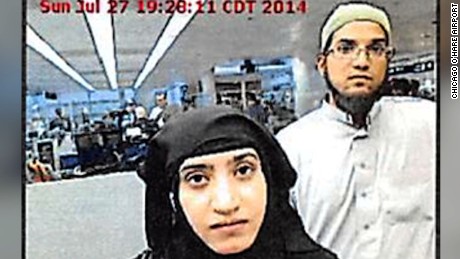
When Syed Rizwan Farook and Tashfeen Malik left their six-month old baby with her grandmother and sped off to murder and certain death, they weren't unbelievers. They counted themselves most definitely among the faithful, among the saints. They believed. 

Help thou our unbelief.

Monday, December 07, 2015

Pictures at Exhibition


It's altogether possible I came from the factory with more capacity for window-peeking than ordinary people. I know this much at least--I can get lost in dusty family albums even though I don't have a clue who is in the pictures.

What drew me to this one was the inscription. This darling little snapshot could well have been taken at a bend in the river just a quarter mile outside my back window. The photograph is 101 years old, and the couple frolicking in the mud--at least they'd be muddy today if they were here--will likely be forever anonymous. I don't know if anyone knows. 

You've got to look close to see them, but let me help those less practiced as peeping toms. There's a story in this picture, a story sweet as anything, made such, perhaps, by being a little. . .shall we say risque? Look for yourself.


They are not inflicting any harm on each other--look at those comfortably-spaced protruding feet. But still, covered as they are, who knows exactly what they're thinking?

If you're thinking gay in Sioux County, Iowa, circa 1914, it's unlikely. The old album holds too many other pictures that document a traditional relationship. Besides, if they were, I don't think the shot would be permanently glued into the family album. 

They're lovers, plain and simple and sweet, and probably more than a little taken with each other. They could very well be lounging at a bend in the river pretty much right here in our backyard. 

There's a story in Margaret Atwood's "The Old Cabin," the daily poem sent out yesterday by the Writer's Almanac, and it's a sad one. She's heard the news that the family cabin is gone. Fire took it. But then she says that in her mind the old cabin is still there because she has no image of its burned remains.

the house is still there in me

among branches as always        I stand
inside it looking out
at the rain moving across the lake


She knows very well that a time will come soon when that the old cabin is gone will be all too painfully real.

but when I go back
to the empty place in the forest
the house will blaze and crumple
suddenly in my mind

collapsing like a cardboard carton
thrown on a bonfire, summers
crackling, my earlier
selves outlined in flame.

She can't help wondering what of herself went up in flames when the old cabin did.
Here's how she finishes poem.

Left in my head will be
the blackened earth: the truth.

Where did the house go?

Where do the words go
when we have said them?

That last line is haunting, especially in an album of old pictures that catch us at being us, our native us. Where do the words go/when these lovers have said them?


Or look here. Downtown Sioux Center, Iowa, a century ago. A great picture of life and exuberance. But on those unpaved streets, what happened to those caps, the car, their bicycles? The truth?--is all of it really "blackened earth"?


Or how about this? The NRA would love it. A holiday at the Rock River, names and all.


Where did all of this excitement go? What happened to the joy? "Where do words go/when we have said them"?

And here's the two from the Floyd River mud bath, vastly more presentable and proper, just as much in love, here on a carpet of pasture slightly hidden behind a hill with a fence line. Relax. 
Someone is there to wield the camera; someone shot the pose.


This one may well be more storied because we haven't a clue about how their story ended. It's a photograph, a moment stopped in time. If there's blackened earth, it's somewhere we'll never see, even if they will, as they inevitably did. They're beautiful people really, dressed well. I can feel her hands on his arm.  He's as cocky as a bridegroom.

"Where do our words go/when we have said them?" What happens to our love? What happens to our joy? What happened to them?

Maybe this old peeping tom doesn't want to know.

Sunday, December 06, 2015

Sunday Morning Meds--Being fruitful with song


“The meadows are covered with flocks
and the valleys are mantled with grain;
they shout for joy and sing.”  Psalm 65:13

Truth be told, her son or daughter came with, came in the door considerably before her, I should say.

I'm sorry. That opening line is not a comely description and herewith apologize because it jokes a bit about the young lady’s state of being: she was pregnant--waaaay pregnant; and when she stepped into the restaurant, her profoundly rounded profile suggested a blessed first cry could well sound momentarily. This beautiful young girl--just a kid it seemed, long dark hair, oval face, and rich, dark eyes--was just about as stout as she was tall. She was so richly pregnant, I think she was due.

Honestly, she was beautiful in a way that most of us somehow recognize. I am absolutely certain that nine months before last night she was gorgeous too in a wholly different way. Last night, however, she was just about ready to give birth. She was that kind of beautiful.

It’s a strange phrase really, isn’t it—“to give birth.” Birth is not really a metaphor, not if we think of the word as a synonym for life. Last night, that young lady—she had trouble getting herself comfortably in her chair--was ready to give life.

That life started long ago, of course, at conception. But last night the drama seemed just a scene away from its own spectacular close, which is to say a scene away from a new beginning really. The rest of that child’s life will be her mother’s story’s denouement—how then shall this child live?

It's probably chauvinistic of me to say that young lady was gorgeous. What do I know about lugging around an eight-pound baby?—about cramping and thimble-sized bladders and morning sickness, aching backs and varicose veins? This old man spots a beautiful girl great with child, happens to see her walk into a restaurant, and I want to enlist Vermeer to park right beside me, haul out a canvas, and create a ageless portrait. If I were a musician, I might well want to sing.

There’s a dry, tawny-ness to late September just outside my window. Beans thin into dust when they mature; the leaves go gold in less than a week. A deep emerald landscape is gone so quickly you wonder if a magician dropped a blanket over the land, then jerked it away in the twinkling of an eye, so great and quick the change.

Corn rustles aloud when the leaves dry. A whisper of wind sets a field to song. If farmers can hit it right, the grain is bone dry when they combine. Everywhere you look, a blanket of harvest dust hovers over the land and won’t leave until north winds blow.

The land where I live is beautifully pregnant in August, when the whole emerald world gleams richly. The land is beautifully pregnant when as far as you can see the valley stand thick with corn, and beans flourish waist-high. The land is beautifully pregnant when all you see is jade.

I’m no farmer, never have been. I’ve watched my wife carry babies, but some parts of ordinary life I’ll never experience. What do I know about any of this?

It's beauty David sees in the last verse of this psalm of praise. “The meadows are covered with flocks,” he says. I’ve seen it, and it’s beautiful. “. . .And the valleys are mantled with grain.” Happens here every year. “. . .They shout for joy and sing.” 

I can’t speak for the land, really, or for farmers, just as I can’t speak for that young lady last night so boldly pregnant.

I can’t speak for them, but I can speak for me, and I'll try my best to speak for beauty.

Even if I can't sing, I can try.

For a dozen weeks now, every Sunday we’ve been reading David’s song, number 65 in his psalter, this song of the beauty of the earth. Think of this as mine. 

And do sing along.

Friday, December 04, 2015

Lost in the cosmos


No historical record exists to document the size of Paul Bunyan's snowshoes, but they had to be cyclopian. 

What is known is that if the big lumberjack wanted pancakes, four boys would skate over his hot frying pan, each with a quarter of a hog strapped to his snowshoes, just to keep the griddle greased.

Paul Bunyan's snowshoes may well have been the size of an acreage. 

I say that only because I think mine are just a size smaller.  After all, keeping a human being my size atop newly fallen snow requires a significant wingspan. What I'm saying is that my snowshoes are massive, almost planetary. You simply can't lose things that huge. 

Somehow, I did. My wife was out of town on the Saturday after our first gorgeous snow, a perfect snow for snowshoeing. I hadn't strapped them up and walked out back for almost a year, so I figured I couldn't do better that bright, sunny day than a hike. I looked in the garage. No shoes.

I looked in the furnace room. No shoes. I looked in the downstairs storage room, the one full of stuff, Christmas stuff too.  No shoes. I looked in the spare downstairs bedroom. No shoes. 

I tramped through the house once again. Upstairs closet? No shoes. Visited the garage. No shoes. Went back downstairs, visited each space, looked more slowly this time, because my wife has made it memorably clear that my looking for something guarantees nothing. I searched painstakingly in the basement rafters. I could stick them up there, huge as they are, just to get them out of the way. 

No shoes.

Third time, third round. No shoes. Fourth round. No shoes.

I threw in the towel and went to the gym. 

When she got home, I slipped the news into a conversation, fearful that she'd simply walk into one of the rooms I'd checked eleventy-seven times and find them. "Snowshoes?--how could you miss 'em?"

No shoes. 

We looked together.  No shoes. We actually grew to distrust our best friends. I sent e-mails to four couples--"By any chance did we loan you. . .?"

No shoes.

I looked again. And again. And again. 

No shoes. Remember, they're huge. One doesn't just lose things that big.

Weeks passed. Another gorgeous snowfall blanketed the land out back, perfect for snowshoeing. 

No shoes. 

"It's time I really look," she told me earlier this week. "This makes no sense whatsoever. They've got to be here. How on earth can you lose things that big?"

No kidding. Don't think tennis rackets. Way bigger. Way, way, way bigger.The greater the tonnage, the bigger the shoe, after all. Think townships. How can you lose townships? How can you misplace the back forty?

Head full of steam, my wife descended the stairs once more, determined the end this madness. We'd alienated our friends with rash allegations about their stewardship of our property. We'd gone over storage rooms time and time again, but this search--she said--this one was going to be comprehensive.

In five minutes she came up hoisting a huge brown bag over her shoulder. Inside, voila! Our snowshoes. 

For two weeks, I looked  for that long tail and the straps hanging down from huge netted snowshoes, the image my imagination projected on the screen in my mind. That's what I saw; that's what I was looking for.

But they were in a bag. A huge bag to be sure, but a bag. I was not looking for a bag. I'd completely forgotten that just last spring I'd smartly put them in a canvas bag we had no other use for. Forgotten completely. "Completely" is a level of "forgotten" I seem to surpass almost weekly, registering new and fearful highs. 

I'd looked everywhere time and time again, but I hadn't been looking for a huge brown bag.

Woe and woe and woe. I qualify for dunderhead-ship. 

But at least I've got my snowshoes. 

They're huge. Did I mention that? Think Paul Bunyan. You know it used to take four boys with a quarter hog a piece strapped to their snowshoes just to keep his pancake griddle greased?

Or did I tell you that?

Where were we again? 

Thursday, December 03, 2015

Reductio ad Absurdum


If I've got this right, then the way yesterday should have gone down would have been something like this, right? At 11:00 a.m., when two masked and armed gunmen walked into the Inland Regional Center in San Bernadino, fourteen people would not have been murdered and seventeen more been wounded if the holiday revelers at an institution serving clients with disabilities had been armed. These folks. Not all of them maybe, right?--but at least some of them.

Since the two attackers did their horrific work with assault rifles, legally bought and purchased by the way, that horrible tragedy (one of two yesterday), coming just a week or so after a similar bloody assault in Colorado Springs, would have been boldly thwarted had those who were victims of the assault been similarly armed with their own AK-47s.

Is that what most every Republican is arguing? Am I hearing them right? If the hosts of the Inland Regional Center's annual Christmas party had at least hired guards with assault rifles, then we'd have had no horror because the only thing that stops two bad guys with AK-47s--whatever their cause--is two good guys with AK-47s.


That's the argument.

Yesterday, I walked into a local high school. What I or any other visitor really needed to know in a place like that is that someone somewhere has an assault rifle down his pants or in his jacket because should a similarly armed madman or madwoman killer come in to wreak havoc, the student body has to be wielding at equal power, if not more, because the more weaponry good people have, the safer good people are. Isn't that right?

Yesterday I would have been able to feel most safe in that high school (this one happened to be a Christian high school, but that's no matter), if lots of students were carrying guns--and most safe if everyone carried at least something--sawed-off shotguns for freshman, sidearms for sophomores, rifles for juniors, but you got to be a senior to tote an AK-47. How's that?

It is, of course, absurd to think that people with disabilities, including mental disabilities, should be given assault rifles, but isn't that the ruthless end of the logic? There would have been no blood at the Christmas party if all 400 people were armed.

Reductio ad Absurdum, we call it, right?--in order to counter the argument, I'm reducing it to absurdity.

Yesterday, an ex-lawmaker from Arkansas named Jay Dickey admitted he was wrong about thwarting legislation to have the Center for Disease Control study the issue of gun violence in America. The Republicans, led by their superheroes in the NRA, nixed funding for any such research way back in the 90s already, Dickey himself putting his name on the legislation. You know what study might lead to--gun control. 


Nope. Allowing the CDC money to study guns in our culture is nothing more than a slippery slope. No money to fund a study, just a study. Just some smart people doing research. No, saith the demi-gods at the NRA. No, saith the Republican faithful.

Except the man whose name is on the legislation. NOW Jay Dickey himself regrets it. According to the Huffington Post, Dickey admitted that he wished he had the opportunity to do it again because he'd reverse ground. "I wish we had started the proper research and kept it going all this time," Dickey said. "I have regrets."

The thing is, he can have regrets today: he's no longer in Congress or running for office. But don't look for any such reversals on the part of any Republican candidates for President.

I just hope that when they whip the Democrats in next year's Presidential election, President Cruz or Trump asks for legislation to arm all of us. That's what we need--free guns for a free people. What needs to happen in the land of the free and the home of the brave is that we stop this epidemic of mass killings by arming every man, woman, and child because the only thing to stop a bad man with a gun is a good man or woman or kid with a gun.


Who needs free guns? We're well on the way on our own. The Associated Press reported the FBI “processed a record 185,345 background checks” on Black Friday this year. Do the math--that roughly two per second that day. I'm feeling safer already. We're the only country in the world where there are more guns than people.

Reductio ad Absurdum.

Wednesday, December 02, 2015

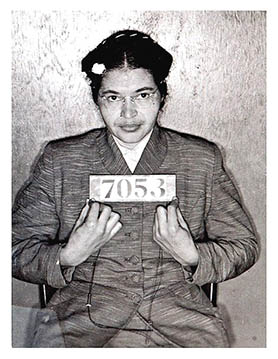
What we forget about Rosa Parks


One can only imagine how annoyed white folks were on the bus that afternoon. After all, it was the end of another working day and nobody was making all that much money. They were all tired and weary, and a bunch of them had no idea what was on tap for supper--they'd still have to figure it out once they got home. "Get out of work and get on the bus and get home and put your feet up," was just about all there was to it that afternoon, 60 years ago, in Montgomery.

I'm betting no one even saw her get on, none of the white folks anyway. Why should they notice such things. They were busy too, had their own heartaches, they're own crappy stories. They didn't need anybody else's problems that late afternoon. 

Some of them didn't even like the blasted driver. He had a history of pissing people off--black people especially. Some people just got airs, you know? Some people aren't content with having it their way; they just want to do nothing more than poke a sharp stick in the eye of someone else, like that black lady especially. She wasn't breaking any law sitting in the middle section. The whole world knew it was "first come, first served." Stupid driver.

And, sure, it would have been right for that white guy to just give up the seat that lady had. After all, he was younger and she had a hard day too that day. I mean, you could see it on her face. She was beat, and he didn't have to make a point of lording it over her the way he did. The way most of the people on the bus saw it that morning, there wouldn't have had to be a dust-up at all. The whole mess simply wouldn't have had to happen.

She could have moved too. The other Negros sitting beside her had moved after all, when that white trash bus driver commanded them to. And he didn't have to speak that way either, truth be told. He could have just said it kindly, not screamed. He's an ass really, and I don't mind saying it. That driver is an ass. He bears a whole ton of responsibility for the whole bus boycott thing. Why can't we all just get along?

*  ~  *  ~  *  ~  *
We've made a hero out of Rosa Parks, even a Christian hero. People today, 60 years later, say she emitted some kind of "Christian glow" so present and so moving even white people in Alabama saw it, a kind of aura. Even if they're wrong about the aura that day, it makes little difference because she's become what we've made of her, a saint. Rosa Parks refused to give up her seat to a younger white man and thereby broke the back of certain kind of segregation in the Jim Crow South. 

She did it alone. She did it without violence. She did it without saying much at all. But she did it, took it upon herself to stand up for justice she saw violated every day of her life. That day, 60 years ago, she simply told herself and that white passenger that she wasn't going to take it anymore, and when that jackass bus driver insisted, so did she. She insisted on staying right there where she was. 

And that's what started it.

Sometimes white people like me don't realize or remember what a bother she must have been, what a squeaky wheel, what an "agitator," my father's favorite word for Dr. Martin Luther King. Before my father died, I should have asked him whether he'd ever changed his mind about MLK; it would have been a tough question, I'm sure, one he wouldn't have wanted to answer. 

He saw King as someone who just upset things, got people are riled up, raised cane, made trouble, put things off track when all any of us wanted was to make a living and provide for our families. What's the crime in that? My father didn't want to be bothered by black people's problems, dang it!--he had his own. Turn on the news and what do you see but people in the streets when they ought to be at work. That sort of thing.

"Black Lives Matter" gets tiring, doesn't it? Sometimes you just want to tell 'em all to go get a job somewhere, to go home and make a family or something, make something of yourself.

It's such a bother, such a mess. This is America, land of the free, home of the brave, a Christian nation. 

Sometimes our adoration of heroes makes it too easy to forget what made them heroic. 

Tuesday, December 01, 2015

Brooklyn--a movie you can live with


What I liked best about Brooklyn, the movie, was the exceptional graciousness of its characters, all of them really. Only one, an old Irish scold, is made of cardboard in this blessed period piece. Everyone else is prompted along the way by motivations that are, quite simply, good. If there is evil in this movie, in it's ourselves, not our neighbors. 

The people on the streets of Brooklyn are, well, good, not sweet--this isn't Sound of Music. The dilemma which Eilis Lacey (Saoirse Ronan) faces by the end of the story is difficult for any immigrant, I'm sure, but not constructed of her own victimization. She brings the most profound conflict on herself by choosing not to tell her friends and family in Ireland that she was married in America, that she has a husband. When a local bachelor begins to show more than passing interest, it's impossible for her not to entertain the possibilities of how good it might well be to go back to the homeland and live out comfortable, native life. She has to make a heart-wrenching decision, nicely created by a script that's emotionally generous Eilis, as it is to the entire cast, without being sentimental. 

Okay, I loved Brooklyn, but then I'm a sucker for historical fiction that creates a world that's no longer here but somehow understandably liveable--a 1950s Brooklyn neighborhood where just about everybody is Irish, the kind of neighborhood that exists only where recent immigrants cluster to try to make it in a new land by, at least in part, remembering fondly "the old country" together.

Eilis can put her aching homesickness in the U.S. of A., behind her only when a man comes into her life, a man who loves her, an Italian-American named Tony who explains his presence at a Irish church dance by telling her, simply, that he likes Irish girls. When you sit in a theater and a white guy steps onto the screen--a young white guy, an Italian young white guy--you can't help but think, today, that trouble is waiting on the other end of the block. He's going to beat her.

Well, he doesn't. He loves her.

I'm also a sucker for writing that sneaks up on people falling in love and lets us listen, that uses dialogue and setting and characterization to make you smile simply because you know yourself how love feels, even if you don't know. 

In Brooklyn, you quite literally find yourself right there on the streets, not because you're a New Yorker (I'm not) or Irish or Italian (I'm not) or even in love (I'm an old man), but because what you share with the characters is the simple fact that you're human (I watched it with my granddaughter). You're as much of what the characters are as is anyone in the theater who's watching. Brooklyn isn't a great movie because of its jaw-dropping spectacle; it's a great movie because somehow it's about us, not simply at our best either but in our own mysterious somehow lovable humanness. It's real. 

In an extended review of the 1965 novel Talk, Linda Rothfeld, writing in The Nation, explains old-fashioned realism and its longevity as a rich source of human understanding. I'm a sucker for realism too. Rothfeld brings up the novels of Henry James, who is not, by any means, my favorite 19th century American novelist. ("I'd rather be damned to hell than read a novel by Henry James," Mark Twain once said famously.) Not so Ms. Rothfeld. 

But what Rothfeld says helps me to understand why I loved Brooklyn.
Works like [James's] The Portrait of a Lady present us with a paradox realized: In substantively realist fiction, we are privy to much that we are structurally occluded from witnessing in real life. We observe the characters unobserved; we are with them even when they’re alone.
That kind of realism, she says, offers an intimate blessing. 
Stiff though they may be, James’s novels fulfill an impossible yearning for deep interpersonal connection. They yield the sort of emotional intimacy that eludes us in everyday life, where human encounters always contain at least a trace of performance. What we want from fiction is often precisely this: a chance to be the audience as well as act in the play.
If, like me, it's altogether too clear to you that most of contemporary cinema is meant for popcorn lovers other than yourself, Brooklyn may well be worth much more than the price of admission. 

Brooklyn is the kind of movie you can live with.