Morning Thanks

Garrison Keillor once said we'd all be better off if we all started the day by giving thanks for just one thing. I'll try.

Tuesday, July 03, 2018

Small Wonders--The Church in the Wildwood


It's like a movie, a set piece from a show like The Music Man, set right here in Iowa. Pioneer days, 1865: a steam engine is belching a plume so thick you can hike on it as it pulls a string of cars through eastern Iowa's rolling hills. Aboard a flat car sits a church bell, sturdily strapped to prevent carnage. 

That bell attracts a crowd, so whenever the engine blasts out a warning to the town down the pike, people come off wooden sidewalks to have a look--and to listen. A whole crowd of rubber-neckers have heard about that bell, so it's run in every country hamlet.

It happened--or if it didn't, it should have. People say that bell rang melodiously all the way along to a destination that's no longer there, a village called Bradford, a town just then departing, as so many had to--when the railroad determined to stop in a nearby town, this time a village named Nashua.

That church bell finally came home to the people who'd bought it, the pioneer members of a little brown church in the vale.

Yes, that "little brown church in the vale," the one that would be a sweet little myth if you couldn't, yet this afternoon, drive by the place and stop for a wedding. Four of them went on the afternoon I stopped. Someone's always getting hitched within those four brown walls. Why brown?--the people were poor; they couldn't afford white.

Truth be told, the church would be no more if it weren't for that old song, a piece recorded by Alabama, The Statler Brothers, The Carter Family, the Gaither Family, Charlie Pride, not to mention Dolly Parton, and Andy Griffith and his hapless sidekick Don Knotts. Dozens of others too. They all wanted a piece of it, all of them. 


William S. Pitts

Now get this. That beloved old hymn was written before that little brown church existed. Nothing Twilight Zone about this--hark. William S. Pitts was aboard a stagecoach when it stopped at little Bradford, a town that no longer exists, strolled through the wildwoods, and decided right he'd write a song for church that wasn't there but darn well should be.

Imagine the shock Mr. William S. Pitts must have felt when he happened to return a few years later, accompanied his music students, and found that mythical hymn was not at all mythical. There a church stood, a little brown church in the vale.

In had to be one of the most stunning musical moments in Iowa history, Mr. Pitts the music teacher wanders in and, right then and there, stands in front of his students and sings a composition of his he'd never sung in public before. If you dared believe in what can't possibly be true, you might be tempted to say that the sweet old hymn conjured the church where it was first sung. I'm not making this up.

The town of Bradford is long gone, as is Mr. Pitts, whose bust should be in the pantheon of great Hawkeye musicians, just a shelf or two beneath Meredith Wilson and Simon Estes.

After all, the little brown church in the wildwood is a beehive of love, 75,000 weddings and counting. As I stood there one afternoon, families moved in at almost the same time as others left. The woman who manages the place, a smile-r if I ever knew one, whispered incessantly to me as we stood in the back, but never took her eyes off the action before her. 

The organist never turned around. "How does she know when to play what?" I asked the manager. "Oh, you can believe we got ways," she said, smiling at families streaming in. 

I don't know if that old bell rings anymore. I don't think I heard it. It would be more than 150 years old now, old as the little brown church itself. 

Pitts is long gone, of course, even if his music will be recorded again soon, I'm sure, if it's not being recorded right now. The man's elegant circular portrait is up on the wall to your left when you walk in, one of those portraits with eyes that appear to follow you all around the sanctuary. 

It's not scary. It's really kind of sweet. Even as we speak, the man is still right here in the church in the wildwood, as he was before it was even there.

Isn't that something?

Monday, July 02, 2018

Morning Thanks--the morning


Charles Wesley wrote something like 9000 poems in his life--can you imagine? It's a wonder he slept. Nearly 6000 were hymns. Even today, they're all over the hymnbook--yours, mine, and the folks down the street. His brother, John Wesley, however (they were two of the 18 kids), became more famous as an itinerant preacher who started an entire movement called Methodism.

If Charles thought it difficult to live with his sibling's celebrity, it doesn't show in his work. Give a listen: "Hark! The Herald Angels Sing," "And Can It Be," "O for a Thousand Tongues to Sing," "Love Divine, All Loves Excelling," "Jesus, Lover of My Soul," "Christ the Lord Is Risen Today," and "Rejoice! the Lord Is King!"--all Charles, all his work. There's hundreds more.

John Wesley is an important historical figure in the history of Protestantism, but brother Charles' poems are still sung hundreds of thousands of times every Sunday throughout the world. Not bad for a kid brother.

We sang one yesterday, a beauty some consider as brilliant and thoughtful as anything Charles Wesley ever wrote. "Christ, Whose Glory Fills the Skies" is a paean to Jesus, the light of the world. It's stunning poetry is rich and thoughtful. You can sing "Christ, Whose Glory" without thinking about the path it takes through life; but if you listen to the praise, it's not hard to determine why the old hymn won't be laid to rest. 

Christ, whose glory fills the skies,
Christ, the true and only Light,
Sun of righteousness, arise,
triumph o'er the shade of night;
Day-spring from on high, be near;
Day-star, in my heart appear.

The major motif is clear enough--Jesus, the son is Jesus the sun. Just as dawn--I'm sitting beside it right now--chases away darkness, so the Son sweeps hope and joy and life to a darkened world. What's real and what's symbol are sweetly entwined.

But it was the second verse that stopped me yesterday in church. 

Dark and cheerless is the morn
unaccompanied by Thee;
joyless is the day's return,
till Thy mercy's beams I see,
till they inward light impart,
glad my eyes, and warm my heart.

Again, the good Rev. Wesley's intent isn't a chore. What he's saying is that morning's opening moments--the hour or so before dawn--is "dark and cheerless" if it opens on its own, outside of the redeeming love of Christ. Only if "Thy mercy's beams" are present can my eyes be glad and my heart be warmed. Beauty is in the Son, not the sun. For a moment--correct me if I'm wrong--a dawn, even a knock-out gorgeous dawn, isn't a metaphor or a symbol. It's just not much of anything if I don't have Jesus. 

I don't care to quarrel with Charles Wesley, with his theology or his poetic talent. But when we sang that second verse, I was struck by how perfectly understandable the spirituality of the hymn was there, on display. This world's darkness is cheerless without Jesus. Let me try to put it this way: a dawn is only beautiful if I know the Lord. 

The animism in traditional Native religion would have some trouble understanding the dualism there, the strange sense that white folks require a God who stands somewhere outside the dawn. Traditionally, they might want to say that God is dawn. He's also rocks and trees and skies and seas. God is the great mystery of life itself, who lives and breathes in all things, including those shaggy bison. We honor that God when we honor the Missouri River and don't ruin it with pipelines. He isn't a symbol or a metaphor. 

But then, I think everyone could agree with Wesley's spirited final verse:

Visit then this soul of mine,
pierce the gloom of sin and grief;
fill me, radiancy divine,
scatter all my unbelief;
more and more Thyself display,
shining to the perfect day.

One of the peculiar results of 19th century mission work among First Nations was its somehow surprising successes. But, if you were Native and if you believed that all of life is religion, then picking up another form thereof wouldn't be particularly troublesome, would it? Sure we'll become Christian, some said. What's the fuss?

For a time, the sky outside my window wore a gorgeous peach stole along the horizon, a soft orange that faded into yellow, then to blue up high before the sun debuted. Now, long swaths of sunlight stretch over the fields east to west, scattering darkness. It's Midas time--everything wears a bit of gold. This morning's cloudless dawn is not glamorous, but it's beautiful.

"Christ, Whose Glory Fills the Skies" a wonderful hymn, and I'll sing it joyfully again soon, I hope. Wesley's a wonder, isn't he? 

But he's not the psalmist:

The heavens declare the glory of God; 
and the firmament sheweth his handywork. 
Day unto day uttereth speech, 
and night unto night sheweth knowledge. 
There is no speech nor language, 
where their voice is not heard.

Wesley's really good, but I'd like to believe that David's got it right.

This morning's thanks is for the morning. 

Sunday, July 01, 2018

Sunday Morning Meds--Order and chaos


Related image

 “. . .but whose delight is in the law of the Lord.” Psalm 1:2

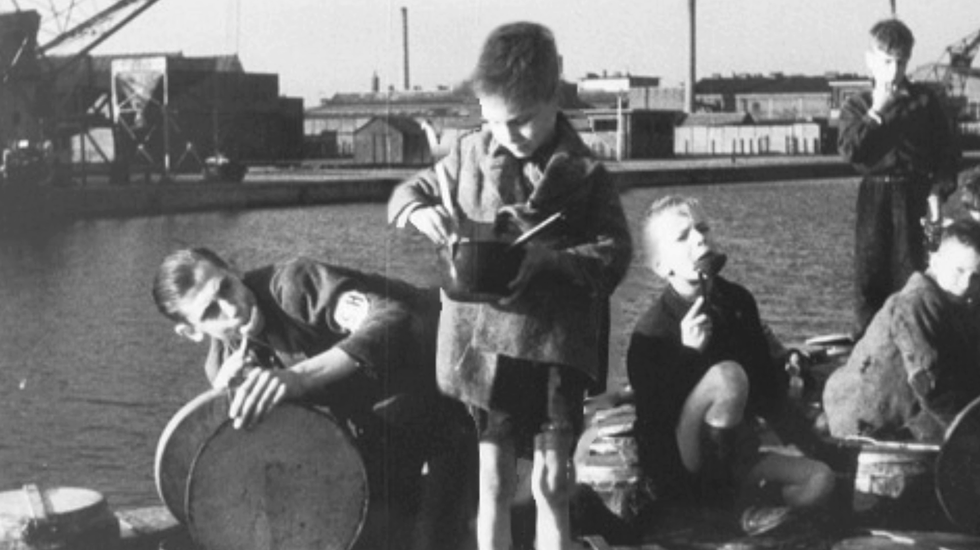
Those who remember, often call it “the hunger winter” because, in Dutch cities at least, there simply was no food. Only farmers had something to eat—their own produce, of course—and everyday, people have told me, the roads out into the Dutch countryside swarmed with city-dwellers in stumbling need of food. With no provisions, some ate their cats and called them “roof rabbits.” People did everything they could to secure what they had to, to keep themselves and their families alive. It was a winter like nothing anyone could remember.

By late April, few institutions were functioning. Schools weren’t open, businesses had little to trade, the government was non-existent. Liberation was coming and people knew it, but the Allies weren’t yet there. Life had a Twilight Zone quality.

That’s the setting for a story a woman once told me about herself, her mother, and a block of cheese. Somewhere the province of Friesland, the Netherlands, where the Nazis were still fleeing the advance of the Allies, a train was left abandoned, and along with it an entire boxcar full of cheese. Once it was clear that Germans were gone, the townspeople commandeered that train and everything in it, and dispensed liberated cheese to people who hadn’t eaten that sumptuously for more than a year.

The woman who told me the story was a girl back then, one of those who’d spent most of her days looking for food during “the hunger winter.” She got herself a block of cheese, she said, and, convinced what she’d been given was itself a miracle, she lugged it home to her widowed mother, who took one look at that free food and sent her back to the train. “It's not ours," she said. "To take that cheese is to give in to chaos." 

And so she'd walked back, placed that cheese like a sacrifice in the empty boxcar, and left, very much alone.

That’s what she remembered. That’s what she couldn’t forget.

Her mother’s behavior has cold, understandable logic. What she feared more even than hunger was the madness of lawlessness, of chaos, of a life where disorder rules, as it can only do, insanely.

Here, recently, immigration officials tightened up national borders that, they claimed, had become too porous: thousands of people wanted in, thousands too many. Things were out of control. Someone had to bring order to the chaos, they claimed, so they tightened the law.

Yesterday, thousands took to the streets to protest laws they claimed had separated moms from their own little children. In cities across the nation, people raised signs and marched in opposition to the newly tightened laws.

It’s difficult for an old late-60s guy like myself to believe the Psalmist took real delight, as he says, in a series of “thou-shalt-nots," that he found great joy in the book of Deuteronomy. 

But without law, David knew, Israel was lost. The law spelled out God's own way of life.

One of the human dilemmas we all face--young and old, rich and poor, citizen and alien--is determining the balance between justice and mercy. Life requires both, even though so often they seem to play at odds. Was that Dutch mother right in sending her daughter back, or was she crazy?

What the law gave the people of Israel was order. What it kept at bay was chaos—both collectively and individually. What the law gave the Jewish people, or so says David, the poet/shepherd, was Jehovah's way of life. The law made life manageable and livable, and made God's identity vivid and blessed.

Without taking sides in yesterday's protests, it's clear that it still does. Lawlessness bears no fruit.

Thursday, June 28, 2018

Scary


I remember, way back when, some heady discussions about the possibility of a "Christian" political party. I was, back then, in the throes of a species of Dutch Calvinist life whose ism was created, in great part, by a Dutch theologian/politician/philosopher named Abraham Kuyper, specifically his conviction that Christ's rule extended into every inch of this world, including its persistently political corners.  Still buy it, for that matter.

But we were more than a little idealistic. And that's okay--we were young. Besides, the whole moment was fun and inspiring, up on the shoulders of a radiant optimism that generated not only hope but a calling as well. 

Today, all of that seems foolish. Today, Christians can't agree on what "christian" means.

One of the givens of that old optimism was that, for the most part, no appreciable differences existed between the two political parties. Maybe it was the senior Bush vs. Dukakis or Clinton--I don't remember; but I do remembering buying the basic perception that little difference was appreciable and bad.

If you see a time machine land anywhere close, let me know. I'd love to climb aboard. 

Rasmussen Reports, a respected poling outfit, claims just about a third of us believe a civil war is likely in the offing. Ten percent are sure. Rasmussen says Democrats (36%) are more concerned than Republicans (32%); but the numbers not only speak volumes, they have volume. Almost 60% of us are concerned that those opposed to Trump and his agenda will actually take up arms. A whopping 33% are "Very Concerned." 

America today, less than a week before the Fourth, is split like a ripe melon.

Those who study civil wars, wars within a nation, claim five ingredients are observable predictors of coming bloodshed. 
1) entrenched national polarization, with no obvious meeting place for resolution;
2) increasingly divisive press coverage and information flows;
3) weakened institutions, notably Congress and the judiciary;
4) a sellout or abandonment of responsibility by political leadership;
5) and the legitimization of violence as the “in” way to either conduct discourse or solve disputes.
I could make a case for all of them. 

The latest Supreme Court rulings--the travel ban, labor unions, gerrymandering--convince those on the left that replacing Justice Kennedy will simply deepen political and social divisions at a time when the government is in the hands of a bare-knuckle fighter. 

The Schaap's cable supplier has MSNBC, Fox News, and CNN almost side-by-side. Ever since Trump grew into legitimacy, switching from one network to the other is dizzying because the issues are so black-and-white, so contrary, so much like an old-fashioned photograph negative. 

A Christian political party, we used to say. Forget it. The President's power base IS Christian conservatives. 

A house divided against itself cannot stand. Cliche, right? 

Scary. 

Wednesday, June 27, 2018

Morning Thanks--an improbable couple


Truth be told this many years later, there were some--even friends--who thought the two of us more than a little improbable. Me?--I thought they were crazy. You weren't the uptight farm girl they thought you were, and I wasn't the radical they were sure I was. We were, back then and now, pretty much cut from the same fabric.

You may remember how my sister said coming to Chicago for a weekend visit would be a good thing--"you can take out Barbara Van Gelder--you know her? She's just gorgeous."

"Know her?" I said. "She went with a roommate--two, in fact. Sorry, sis, that's next thing to disgusting."

There was a ball game--Dordt vs. Trinity. If I have my directions right, I was sitting on the north side bleachers when you walked in, an entire playing floor away. You were wearing an orange sweater that spoke volumes, and in the twinkling of an eye whatever reluctance I had vanished. We went out the next night and saw one of the worst movies ever made. I don't remember the title, and I don't want to know.

No matter. I was done in, taken, smitten; and, even though it's taken years for you to admit, you were too.

In March, we hit tolls on our way north through Chicago. We'd already developed the system: you grabbed my little coin purse out of the glove compartment and handed me the quarters. It was dark in the car, but when you put your fingers into that purse, you found more than quarters. But that ring wasn't much of a surprise. We'd been talking. You got a job in Phoenix, you'd told me. I didn't even know you'd applied.

That ball game was late January, 1972. By June--June 27--six months later, we were married in a fever in Orange City, Iowa, by a man who became Pres of the college where we both worked for a lot of years.

And all of that, all of us together, is good, still really, really good. 

This anniversary is the first time in 46 years that we're apart. You're in Oklahoma babysitting a darling little granddaughter, not even thinking of me; and I'm up here alone with our blue Russian feline, looking down on a flood plain. 

But after 46 years, all that distance between us--that's no problem. We'll find a way to celebrate when you get back. 

And even if we don't, we've already got most of fifty years of celebration behind us.

Tuesday, June 26, 2018

Morning Thanks--the end?

The Schaap's lake house circled.
Don't let me dissemble here. I've not been stuck in an ark with ten thousand critters for forty days and night. It's not even a week, and let me assure you that I'm not been greatly inconvenienced. We have a scum line twenty-feet wide in some parts of the backyard that'll need cleaning up, but I'm dry as a cork. So I'm not going to tell you I know how Noah must have felt when that dove came back with a sprig of green in his beak. I don't. 

But I do know some fraction of his relief at the sight of that bird.

We got bunnies out back, and somewhere in this house a whiny cat; but I don't have seven pairs of giraffes kneeling here beside my desk, nor an equal count of muskrats or possums. 

I can feel something of the old man's thrill, however. The rain's been falling here for days on end, so much so that I lit out of Dodge late afternoon yesterday, drove to Sioux City, took care of some business, ate a buffet dinner at Hardrock Casino--just $9 for supper, and I didn't leave a dime behind in the machines, in case you're wondering. I had to get away, but it rained, hard, the whole time. 

Sunday night clouds out back.
I'm not 600 years old, and I don't have a 300-cubits long ship afloat somewhere handy. 

The truth is, we don't have it half bad, even if watching the water rise again yesterday was more than a little daunting. Common sense insisted it wasn't coming all the way up into the basement, but common sense has little to say about things when river banks across the field give way to torrents spilling down from somewhere north. 

In Rock Valley, people are truly inconvenienced, evacuated, stranded. There's likely no end to the families, there and elsewhere, who are, as we speak, ripping out besotted basement carpets. As some locals say, there are two kinds of people around here--people who got water and liars. 

I slept fairly well last night, in my own bed, not on a church pew or a inflattable mattress in some safe arbor elsewhere. I don't have to look down the steps into a house full of mud. I got it good, really. 

My wife is in Oklahoma being a grandma. Last night, alone, I told myself she couldn't have done better because she says that baby is even cuter than she is when she shows up on the pictures her parents send almost daily because we can't get enough of them. Barbara is well off the ark right now, even if that leaves me alone.

I'll confess--last night I bought a bottle. . .but it's still unopened, so don't worry about me sprawled out in my underwear somewhere in the garden. I'm not Noah, but I think I understand him a little better.

The forecast today is for cloudiness. That's all. No rain. Count me among the doubtful on that one, but anything less than yet another deluge is sheer blessing. Last night, coming back from Sioux City, I swear I saw a sun. Not long, but I did. It's still there.

This morning I'm thankful--greatly hopeful too--that it's over. 

I take that back. Right now--7:17--it's raining. 

But I've got all sorts of reasons for thanks.

Monday, June 25, 2018

Small Wonder(s)--Herman the German


You've probably never heard of Herman the German and likely never stopped to greet him in New Ulm, Minnesota. Then again, you could have driven through town and not seen him at all. You've got to go south and up into the wooded hills.

But once you're there, he's a can't miss. Herman the German stands 32-feet tall--you heard that right. What's more, his statue stands 102 feet above town--way up there. Herman the German ain't no "small wonder"--he's huge.

He has a real name--it's Arminius the Cheruscan, enough of a mouthful to prompt Martin Luther himself to bestow a nickname, so ever since the Reformation he's been Hermann Deutsch or Herman the German.

Herman burnishes a huge sword and faces east towards the Romans, I guess. He's a freedom fighter who thwarted not one, not two, but three Roman garrisons with a few ragtag rebs to gain German liberation from Roman tyranny more than two thousand years ago. You heard that right--2000 years.

Herman's heroics happened in the year we might call 9. Not 1009 or 309, but 9. New Ulm's Herman the German makes George Washington a johnny-come-lately. Get this--he lived almost 2000 years before there was a New Ulm. His great-great-grandchildren wouldn't have believed a huge continent called North America existed. The guy goes way back.

That huge statue came to mind when a news story broke about the Pieper twins, a couple of World War II radio operators, just 19 years old and from Nebraska, who were killed when their ship hit a mine in the English Channel, thirteen days after D-Day in 1944. One of the twins, Louie, was buried in the military cemetery just off Normandy beach, but Henry's remains were never located.

Not, at least, until a history project by a high school kid named Vanessa Taylor prompted government officials to speculate about the remains of six American sailors whose remains were retrieved from the LST-523, the ship on which both twins served. A French salvage team found the wreck in 1961 and located the remains of six seaman, one of them in the radio room, where Henry Pieper served.

Had to be Henry. Had to be. 

So today, thanks to a Nebraska high school girl, the Pieper twins' remains lay side by side at Normandy, where they and so many others were killed. 

So, what do the Pieper twins have to do with Herman the German? Stay with me. Louis and Henry Pieper were themselves the children of German immigrants, on their way across the English Channel in support of an Allied Army sworn to destroy guess who?--Germany, the Third Reich and their mustachioed maniac fuhrer.  The Piepers were German-Americans who may well have had to learn a new language at school because Ma and Pa spoke only Deutsche.

You can't help wonder what it must have been like for millions of Americans of German heritage to send their children off to a war against the Huns, two of them in fact. Two world wars. Hundreds of thousands did it, lots of Mas and Pas from right here in our world.

Related image

If you think there's something weird about New Ulm, Minnesota, erecting a huge to a German tribal hero dead by the year 50, a man who never even heard of the US of A, so do I. But then, there's something weird about democracy. Very weird. 

You may have heard this one. After the first constitutional congress, a Mrs. Powell button-holed Ben Franklin. “Well, Doctor," she said, "what have we got, a republic or a monarchy?” Franklin's answer bears repeating, “A republic," he said, "if you can keep it.”

A republic can make even Herman the German an American hero, strange as that may seem. Only a democracy can make a foreigner one of us.

Sunday, June 24, 2018

Sunday Morning Meds--To the Hills


“I lift up my eyes to the hills--
where does my help come from?” Psalm 121:1

Car-makers know something about the American public that no one else does:  to wit, that we all secretly long to stretch our legs in the wide-open country of the Great Plains.  Why?—I don’t know, but automobile ads very frequently seem to feature “the country”—more specifically, the rural Midwest and Great Plains. 

Makes sense, I suppose.  According to the U. S. Census, the states with the longest average daily commutes are New York, New Jersey, Maryland, Illinois, and California.  Backed-up freeways don’t sell cars.  Where is commute time least?  You guessed it:  South Dakota, North Dakota, Montana, Nebraska. 

What sells cars is the mythic backroads adventure—SUVs, four-wheeling, mud-defying pickups, even though very few of us ever do any off-roading.  What sells car is the perception of escaping bottlenecks, fast food, strip malls, and wearying eight-lane metro traffic. What sells cars is the siren song of getting away.

In that sense, the psalmist is just like everybody else: he lifts up his eyes to the hills.  He wants to get away. A place on the lake, maybe a river—that’ll do it. Doesn’t need to be big either, just a cabin, and I’m outta’ here. 

It may well be a version of the old “grass is always greener” argument, this verse.  From the day-to-day grind of our lives—same faces, same cluttered desks, same blasted lunch counters and restrooms—we simply want release. 

We fantasize. I remember dreaming of living near mountains. Then, we did. But grading papers is grading papers, and we never got up there, even though those mountains were close. The only times I took note of them was on my bike, riding to work, when they seemed as much a dream as they ever had been.

Forty years later it’s still in me, this yearning to look to the hills.  I’m about to grow gills.  For the last month, every Saturday, every weekend, it has rained. My forays into the rolling hills west of town ground to a halt four weeks ago, and me and my camera have been missing the gold-quilts maturing beans lay over the land. There’s been no sun on Saturdays.

Dark and dreary weather has kept me from a weekly pilgrimage that has been the joy of my life for the last several years, Saturday morning country wandering.  I could be in one of those ads. 

God doesn’t dwell in some hand-hewn log cabin in the hills. He doesn’t even weekend there. He got a place at the lake all right but no Airstream or fifth wheel. Yosemite is as gorgeous a place as you can find on earth. Jasper, the Big Horns, Yellowstone, the Canadian Rockies—even the words get me itchy. He’s there too, but he’s not just there.

The psalmist must have felt it too because the first line of this beautiful psalm of praise and joy is a confession, I think—I lift up my eyes to the hills, as if he’s there somewhere, as if God is in residence at Custer State Park. When we get tired or bored or stymied, we all want to go somewhere we’re not. 

But the hills won’t do it. Weekend rains for a month, and I’ve got to remind myself those little Saturday trips don’t bring me home.

Help doesn’t come from the hills. Our help comes from the Lord. 

Friday, June 22, 2018

Morning Thanks--Sgt. Floyd shows his stuff


Here 'tis, yesterday at its worst. 

Waaaaaaaaaaaay too much rain in the entire region had put us on edge, but we've been in two 100-years flood already since we moved here, so we didn't really get jittery. The river named after a the only guy to die on the Lewis and Clark Expedition climbed out of its bed and swept angrily through the flood plane as if to remind us that we aren't in charge, at least not as much as we'd like to think. 

Yesterday, the Sgt. Floyd River broke its own records by a foot or more--upwards of 20 feet above flood stage. And it got close to us, a bit frighteningly close.

How high did it get?


High enough for us to stop in LeMars and pick up a sump pump. I'm embarrassed to say it, but we'd always had a hole but never had a pump. Just hadn't gotten around to it. When our neighbors called (we were in SCity), wondering if they wanted us to check our pump, they said the water had come up into the backyard. We own an acre, so that didn't mean immediate disaster; but during those two other century floods, the river never really threatened. 

We stopped in LeMars because five inches of rain in Orange City suggested that no Orange City stores would have any left (about that, we were right, by the way). So now we have a sump pump. Last night, thank goodness, it didn't have to work, but still. . .

How high did the water get?


When we got home at about three, it was in our backyard all right and still rising. We started to think about clearing things out of the basement. A couple dozen people at least were sandbagging at the neighbors', where things got much worse. But here, the water came up so high that Barbara grabbed the cushions on the grand old Morris chair and lugged them upstairs, leaving the thing bare naked.

How high did it get?


See that scum line? That's how close. I'm standing on our deck, and that's our rock garden in the lower right. Last night when we decided the day was done, Sergeant Floyd covered everything, smothered everything between that scum line and the water. Nothing from that point on peeked above the surface. On the far left is a renewed prairie that's got a ton of my sweat in it. We'll see what happens to all those pale purple cone flowers and so much else that had (sigh!) just started to bloom. 

Then, after sundown on the year's longest day, there was just enough break in the clouds to brighten the sky. 


You have to remember--what you see is a flood. But it's not hard to think of all that pink as a blessing.

But here's a much bigger one. This morning.


We made it. Everyone did in the neighborhood, but not without some wonderful, selfless help. A guy named Josh Van Wyhe and three others came in out of nowhere, took a look at our new sump pump, and sent me to the hardware store for a coupling we'd need. The woman there, bless her soul, jerry-rigged something out of alternative parts because, as you might guess, we weren't the only customers who needed sump pumps. Lots of people I know believe we don't give our own legion of  guardian angels the credit they deserve. 

So that makes three 100-year floods in the last five years, this one a foot worse than 2013, which had been the worst on record. It's called climate change.

Talk among yourselves. 

My morning thanks this a.m. is for a swollen Sgt. Floyd River right outside that's, thankfully, not right outside.

Thursday, June 21, 2018

"To walk humbly. . ."


The grand project for those of us who believe in a high-level, civilized world order is to find ways to restore social trust. It is to find ways to restructure power — at all levels — in order to reinspire faith in the system. It is to find common projects — locally, globally and internationally — that diverse people can do together.
So says David Brooks, whose advice is almost always find worth my time and interest. But I can't help but wonder if he doesn't have us all a bit out front of our skis.

I confess to watching too much TV news, maybe no more than I have throughout my 70 years, but probably too much these days, given the risks of horrifying acidosis. Fox is right there beside MSNBC and CNN on our dial, so I harken to them all; and lately, the differences are such that you could easily believe those networks' devoted viewers hail from different planets. Or should.

To Lou Dobbs, President Trump is the great savior of humankind. To Rachel Maddow--you can pitch them, one against the other every night of the week--he's Old Scratch.

I enjoy history a great deal, but when it comes to this cultural Grand Canyon, I don't know that it helps to retrace how it opened the earth between us. But something split us like an overripe melon.

The more interesting question is what human experience stands behind this un-civil war? How can a people be so radically divided.

I don't know where I got it, but I used to tell my students in early American literature that the Calvinism alive-and-kicking at this nation's birth was something we could most easily identify as an ideology with two deep-set twin towers: one, the sovereignty of God; and two, the depravity of man. For better or for worse, those two ideas are its core principles.

But they create a tightrope. To believe, one-sidedly, in the depravity of humankind minimizes faith in God's hand; the world turns to darkness. On the other hand, endless choruses of kum-bay-ya creates a cartoon vision of the world.

The human dilemma is maintaining balance--everything in moderation--and that's hard work because it requires equal doses of trust and distrust, of faith and doubt to be fair and balanced.

It's probably needless to say that precious balance requires a store of humility reachable, oddly enough, only on our knees, which is not a comfortable position for a 70-year-old man, even when picking strawberries. 

But then, for many of us, being on our knees is never all that easy. For most of us, really. Maybe even for all of us, especially now with the Grand Canyon between us.

Wednesday, June 20, 2018

Morning Thanks--Yesterday


I swear I got stuck on a bad row. That's all there is to it. My grandson's careening attention makes it a chore for him to keep his nose to the grindstone--and that's okay. But he got smart fast, and hung it up when he realized grandma's pail was filling faster than ours, much faster. Truth be told, our row had all the right colors--emerald leaves, scarlet berries--but the entire row was thin, balding and scraggly as an old man's pate.

Took forever to pick, and I'm not all that good at leaning over for long bouts of time. I'm not looking for another career as a migrant worker. While our basket was slowly being filled, I was dripping sweat after just a few minutes.

Wasn't exactly the strawberry fields the Beatles made famous. We've had rain, lots of it, and the wood chips laid down between the rows were so soggy I figured I'd have a wet pants in a minute if I sat instead of stooped. Let me put it this way: we've had better years out there, lots better years.

The thing is, the emotional heft of a tradition can dispatch annoyances as if they didn't exist. We've done our annual "Strawberry Day" for so long that the grandkids foresee the whole thing with enough clarity to enjoy the trip long before we get to the field. In fact, before we get in the car they're telling me what they're going to eat in the store when we're done--strawberry sundae, strawberry shake, strawberry donuts, strawberry whatever.

So for me to complain about my scraggly row is silly. Yesterday's annual strawberry holiday was a joy. Could have been sweeter, I'd like to suggest, if there were a few more bigger berries; but our "strawberry day" was, thank goodness, a good time. Like all rituals, it revisited yesteryear's strawberry fields and boosted the whole blessed tradition with yet another chapter to remember.

One of the grandkids is already too old. She's got her own job. Yesterday, while we were picking in fact, her brother got a call to interview at a grocery store. He's maybe a week away from being too old himself. We'll still have the little guy for a while, until he too finds his own job. Plain fact of the matter is, for us two old Beatles fans, strawberry fields will not be forever.

But then no one's rituals are, I suppose, are they? 

Besides, traditions get old. They can be wearying. You can get in a rut or pick berries in a crappy row.


It's a huge day, especially for grandma, who comes home overloaded, and then, with the help of her grandkids, fills a cupboard with sauces and jams and muffins; and yesterday, like last year, bakes a soufflé which became a poem while the boys scattered their own significant helpings with brown sugar and a healthy dose of maple syrup.

Soufflé
today,
you say?
Okay.

We'll hear that poem next year again, I'd say--
On berry day.
And that's okay. 

This morning's thanks, despite the sparse row out in the field, is for "yesterday" (yet another Beatles hymn) and all our blessed traditions.

So, now I'll quit, go upstairs, and bless my morning cereal with a handful of fresh strawberries. 

Just like last year.

Tuesday, June 19, 2018

I can't help but wonder. . .


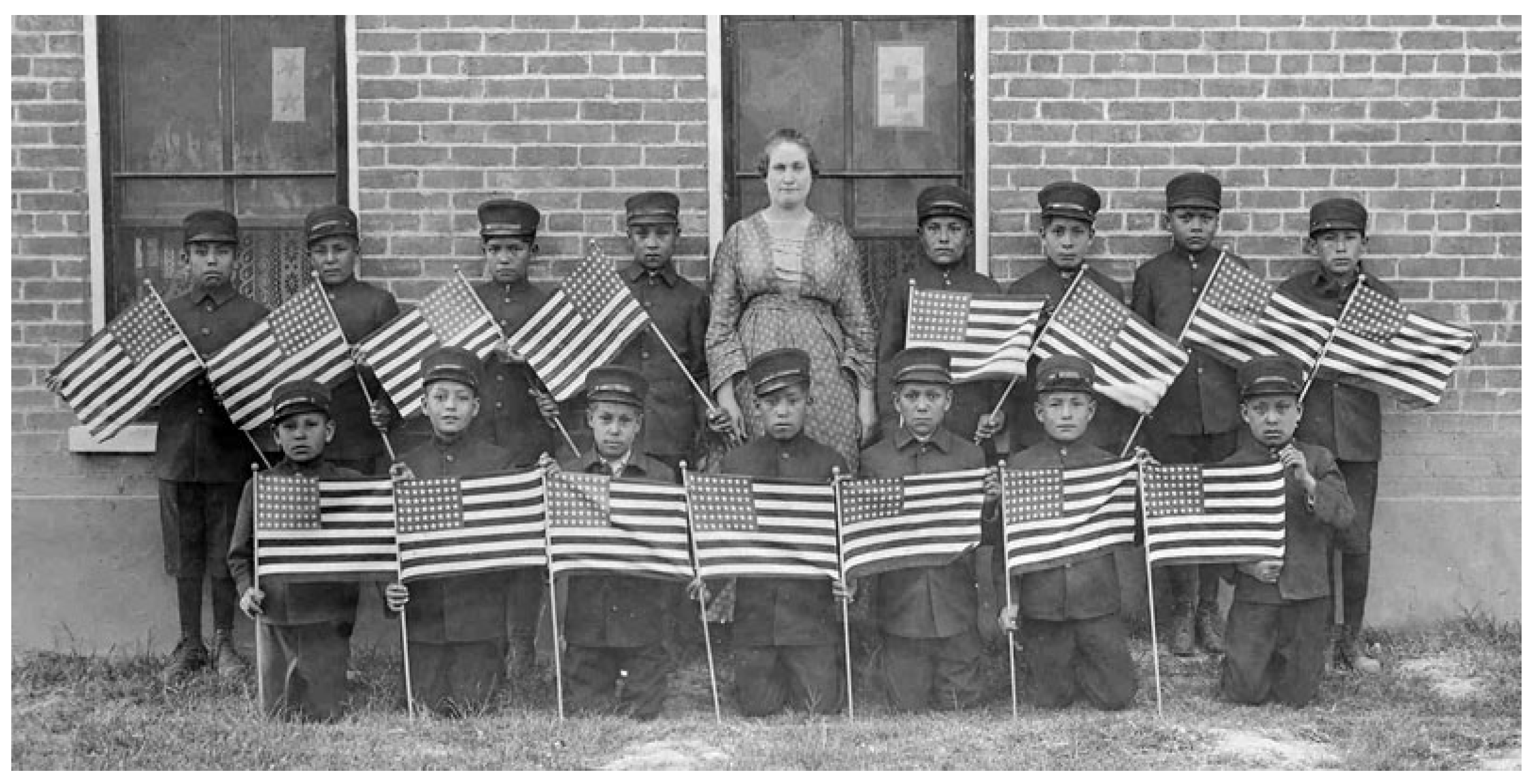
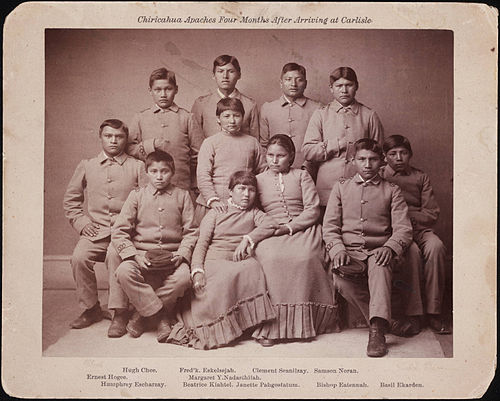
I've been working on the biography of a World War II nurse, a Lakota woman, for some time now, and yesterday, once more, I was going over the time in her life that she spent at a boarding school on the reservation where she lived. She's almost 100-years old, but she remembers the 1930s well, especially those years she and her sister spent at the boarding school. She says she had some teachers who were good and wonderful, but most all of the stories of that time in her life--she was just a child--are not good and wonderful. 
All schools were not alike, but for her and literally thousands of other Native kids, those boarding schools kept them from home and parents and family, not to mention heritage and culture. School years stretched out so long that by the end of the year some little ones didn't remember their mothers. 
I can't help wondering whether we white folks are at it again? 
Image result for indian boarding schools

Monday, June 18, 2018

Small Wonder(s)--Saint Catharine


We don't know much about the boy. Maybe he was everyone else's last choice. Could be. Maybe he wasn't much of a warrior. Maybe his parents set him up with this girl, or there'd never have been a marriage at all. 

Then again not. Maybe the kid was bold and strong. Maybe most the girls in the village would have loved to have him. Maybe he was a real catch. 

Remember, the girl was the daughter of the chief. I mean, she wore some scars from the smallpox plague that rampaged through her village, leaving her orphaned, her Huron father and Mohawk mother (her mom was booty in a raid) both died, as did a host of others. The truth was, the girl, Tekakwitha, was forever sickly thereafter. She couldn't have been a doll, but her adoptive father was important, the village headman. 

Truth is, no one knows much about the boy her adoptive parents wanted her to marry, but lots of people know lots about Tekakwitha, in part because she refused to marry the kid, whoever he was. She flat refused. She was only seventeen, but her age was no big deal because other Mohawk women quite regularly got married at a much younger age. In fact, her parents were almost distraught and more than a little angry when she wouldn't give the kid the corn stew traditionally considered her okay to the marriage. Just flat wouldn't do feed him, said she wasn't going to marry him because she was not going to marry anyone. Period. Full stop.

Gutsy, even a little feminist for a 17th century Native American in the forests of New York. But in refusing the poor kid's hand, she also determined she would become, thereafter, a Roman Catholic, and listen to the teachings of the Black Robes. In truth, her birth mom had been Catholic before her, but within the longhouse where she lived, her conversion didn't go over well. 

No matter. What Tekakwitha lacked in physical strength she made up for in steely resolve, eventually leaving her village for a convent just outside of Montreal, along with other Native women scorned for taking on the faith of white men in black robes. 

She was baptized on Easter Sunday, 1676, and, thereafter, in a typical white man's way, given a far less Native name--Catharine. People claim she was known to sleep on thorns and deliberately taint her food to make it taste horrible, self-mortification rituals as much medieval Catholic as traditionally Mohican. 

She'd been sickly for her entire life, often wore a blanket over her head to cover the scars from the smallpox she suffered as a child. And just four years after her baptism, she died. Those attending her death--and this is important--claimed that as her spirit rose, those thick scars across her face simply vanished as she grew radiant with her spirit rising to eternity.

You might just be wondering what on earth all of this has to do with Siouxland? 

Listen. There are good reasons to go to Marty, South Dakota, the Yankton Reservation. There's the gorgeous Missouri valley stepladder on your way for starters, and the historic town of Greenwood, with its old Presbyterian church. There's a hilltop treaty monument, and, somewhere hovering over the place, the ghost of Struck by the Ree, who a newborn, people say, was held by Lewis and Clark, camping right there along the river, who wrapped him in an American flag. 

By all means stop at St. Paul's Church in Marty--you can't miss it. When you walk around the grounds, stop at the statue of the Indian girl with an unpronounceable name, Tekakwitha. You can call her Catharine, if that's easier. Step inside, where two more of her likenesses grace the gorgeous old cathedral. 

You don't have to be Catholic. Maybe it helps a little, but this young woman is worth noting, the first and only, Vatican-declared Native American woman saint. 

Call it a pilgrimage. Call it a road trip. Call it what you will.  Whether you believe any of her story is up to you. But if you get out to Marty sometime, promise me you'll stand there for a while, inside or out, and look into the girl's face. I might even promise a blessing. 

Sunday, June 17, 2018

Sunday Morning Meds--Splendor and Majesty


“Praise the LORD, O my soul. O LORD my God, you are very great; 
you are clothed with splendor and majesty.” Psalm 104

            So we stumbled through Chicago, via its interstate system. We thought to avoid rush hour traffic by coming through the city mid-morning—and on a weekend. No matter. Those of us not accustomed to spending hours in traffic find being at the mercy of unending traffic snarls infuriating. All the way through—from the Indiana border to the Wisconsin state line—we were locked in.
            Just off those angry highways, people were laughing and singing, watching soccer games and eating fresh, crisp salads.  I know that.  Dogs were chasing frisbees, and park pools were teeming with happy kids.  But on the road, those highways were anything but super. Actually made me want to sing “Home on the Range,” top of my voice, in shameful self-righteousness.
            If Psalm 104 didn’t include so much about the sea, I’d like to think of it as a cowboy tune because in its range and vision Psalm 104 suggests a writer who is sitting beneath a big sky, the kind one can’t see from bottle-necked traffic, nor from city life itself (or so it seems to this country boy).  Which is not to say that all many farmers hum Psalm 104 in their air-conditioned cabs while pulling half-million dollar combines. 
            But I can visualize the splendor and majesty of the God of verse one best in nature. I suppose I could find him on a busy city street too, in the sheer breathlessness of immense human activity. But, like the Psalmist, I prefer the country. Give me a partly cloudy dawn from a chunk of highland prairie, and I’ll show you his splendor and glory.
            I once heard a Lakota healer talk about addiction, particularly alcoholism. He said that the indigenous way of dealing with significant problems was, basically, to honor them, because anything that carries the wallop of alcohol should not be hidden away but given a spiritual existence by acknowledging it, honoring it, even making it a relative. In the words of the healer, “you ask it to be your teacher.” When he did that, he said, alcohol became, in his view, the most important teacher he ever had.
            At that point in his description, it seemed clear that this man’s Lakota ways had morphed into verifiable human truth, his culture had become all cultures. The Chinese character for crisis, I’m told, contains both danger and opportunity. If our curses can become blessings, then it’s completely understandable how the horrors of alcoholism could become, for him and for all of us, not only opportunity but deep and abiding inspiration as well.
            It seems clear to me that the person who is not sorry for the things he or she has done wrong will never understand forgiveness—and thus, more significantly, grace. But this morning, with that Lakota healer’s talk about his alcoholism, I have a different kind of vision of God’s glory and radiance, his splendor and majesty; for in him alone can we find dancing even within our mourning—and that’s majestic. He uses our sin, the very worst of what we are, to teach us his grace. 
            In his splendor, even those loathful traffic jams can morph into emerald landscapes and unending azure skies. 
As the Psalmist says in the opening line of this memorable psalm of praise, you are, Lord, very, very great.