Morning Thanks

Garrison Keillor once said we'd all be better off if we all started the day by giving thanks for just one thing. I'll try.

Monday, August 15, 2016

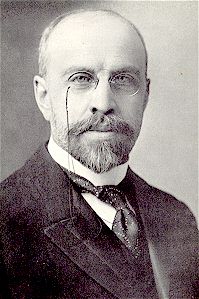
Morning Thanks--Dr. Douglas Ribbens, 1926 - 2016


He was greatly to be feared--to some, at least. Not me. For reasons known only to him he liked me, although like is not a word that slipped easily into our out of his vernacular. If he determined whatever cause you were touting was silly, he was merciless. All others were simply tolerated.

One of my colleagues went to him with some great idea. Dean Ribbens was the boss, the Vice President of Academic Advancement. If some faculty had a dream--and faculty are dreamers--that dream had to be dressed Sunday-best. Neither empathy nor patience was a Ribbens gift. So the prof--good guy, warm personality, well-liked--went to the Dean's office to parley. The Dean would have nothing of it. He simply pretended the prof wasn't there. Never spoke. Didn't even look at him. Even when the prof unloaded, he never looked up. Finally, the guy left. True story.

Stories like that were legion during the years he was my boss. Dr. Douglas Ribbens was blessed with a capacity for icyness that made us wonder whether whatever made its home in his rib cage was frozen solid. 

He was smart and even wise. He determined, on his own one year, that times had changed in higher education, that unlike those profs who came along earlier in his professional career, the war vets, these new ones demanded a warmer touch. So he created a system of management with echelons of subordinate, associate deans, a system so unusual that for a year or two we called the newly appointed leaders "the dean-ie weenies." Whatever power they had, once belonged to him. He gave away spacious chunks of his own rule because he knew it was the right thing to do.

Somewhere inside that beast was a beauty that only rarely showed itself. Late in his years at the college, when his wife was suffering the ravages of diabetes, he started a fall faculty meeting by talking about her deteriorating condition, knowing we wanted to know. He described his role in her afternoon treatments, what exactly she needed him to do when her blood needed cleansing, how he performed that technical function, and how richly all of that had brought the two of them together. He explained so generously and intimately that we were moved by what amounted to a beautiful essay about love.

During those years, he and the college president, B. J. Haan, the man who hired him when he was just 28 years old, evolved into good cop/bad cop duo, Haan the dreamer, Ribbens the realist forced to draw in the bottom line. One year we needed an English prof, went through a search, found and settled on a candidate whose husband was a Ph.D. in religion. When we made our choice, we met with the two of them.

President Haan: Maybe we ought to look at her husband a little too.

Dean Ribbens: We have no need for another theologian. Don't go promising anything, Bernie.

President Haan: I kinda' like the guy.

Dean Ribbens: I don't care. We have no openings.

President Haan: Maybe a course or two. . .

Dean Ribbens: Bernie, I won't have it. You can't say things we can't live with--none of that bullshit. You hear me?

Haan chuckled.

I'd joined the faculty just a couple of years before. If you had warned me ahead of time that the Dean was going to use that language, I wouldn't have believed it. Righteousness was at a premium in those early days. I'd gone to school at Dordt College. I'd been reprimanded for less offense. I loved it.

My father knew Doug Ribbens, gave him his first administrative job as school principal when my father was board president at the Oostburg Christian School. Ribbens was twenty years my senior, but we were born in the same hospital, grew up in the same territory. My parents knew his family. "His father was a saint," my mother used to say in an effort to explain his sometimes odd behavior. "Joe Ribbens visited prisons every week," she'd explain. My dad used to shake his head. "It's never easy to live with a saint," he'd say. 

Once, when I was a Dordt College student and Ribbens was the registrar, I stumbled into his office and told him I'd had enough. All roads home started in the office of the Registrar, so I told him I was quitting. I was leaving Sioux Center. 

He didn't speak right away. Just sat there, and then "Go home," he said. "Go make toilets."

End of conversation. 

Kohler Company is the big employer where we were both reared. Kohler makes toilets. I knew what he meant.

He didn't argue with me, just turned around as if he had more important things to do. 

And I stayed--for forty years.

That's my own personal blue-ribbon Doug Ribbens story.  There are hundreds more.

Dr. Douglas Ribbens died last week, peaceably, in his sleep. His pastor told me in the dozen years that he's been in Doug's church, he's only known Dr. Ribbens as a sweet old man.

It strikes me that's the way it should be, the doctrine of sanctification operating in ways we believe it to. Douglas Ribbens was a leader, not a charismatic leader, but a leader nonetheless, an indispensable one at that. 

Sunday, August 14, 2016

Sunday Morning Meds--The withered grass


“. . .they are like the new grass of the morning—
though in the morning it springs up new, 
by evening it is dry and withered.”

“This is a harsh world,” she told me when I sat down for coffee. “It’s not a particularly nice environment.” She was talking about the place where she’d lived all of her life, south central South Dakota, on the Rosebud Reservation, north and west of Valentine, Nebraska.

Her family had come there by way of a famous government plan, the Dawes Act (1889), created by a man who believed in the near-redemptive power of private property. It was Henry Dawes’s idea that by giving Indian folks each their own chunk of reservation land, two objectives would be accomplished: first, Native people would gain pride from that ownership, despite the fact that the idea of owning land was mystifying, even irreligious, to many indigenous folks; second, Dawes (and others) felt that allotting reservation land to Native people—and giving them the freedom to do with it what they will—would undermine the tribal system, which was anathema to “civilizing” the Indian.

Most historians concede the Dawes Act was a miserable failure for a score of reasons, not the least of which was sheer corruption and graft. White folks took advantage of Native ways and took control of thousands of acres of land originally given to the tribes. Way out there on the dry as dust Great Plains, it’s difficult to know who was the sorriest victims were—the Brule Sioux who lost all that reservation land, or the idealist settlers, who figured all they needed to do was put up a sodhouse and plant some trees and they’d be well on their way to the American Dream.

It’s short-grass prairie country, and if the almost seasonal droughts don’t get you, the hoppers likely will. The woman I was talking to wasn’t at all wrong: the world she lived in was harsh and unforgiving.

One story she told me I’ll never forget. Some grand uncle and his family moved to a vacant farm out there, from Iowa, where he’d farmed before. He planted corn, just as he always had. The spring rains were a blessing, she said, and by July 4, the corn was promisingly close to knee-high. Life on what was then the frontier was promising and sweet.

But one afternoon a blast of hot wind rose from the south. The temperature had already reached 100 degrees, and that scorching wind—you can know its ravages only by having experienced it—flattened the entire crop. No tornado. No hail. Just a long wretched blast of hot wind and the entire crop was gone. That fast. In a flash.

“The very next day,” she told me, “my uncle put his kids and all his belongings in the wagon he’d rode in on, and left Todd County, South Dakota, gave the horses a snicker—and they were gone back east.” In the morning that crop was rich; by evening it was withered. Gone. So was he and the family.

Moses isn’t talking about the prairie here, or the harsh open spaces of the Great Plains. He’s talking about us—and our aspirations, our lives, about time and the cold hard fact of death, of crops, lush and green, flattened by a searing southern wind.

Our lives, he says—when you think about it—they’re like that corn: here today, gone tomorrow.

There’s little that’s sweet about such sentiment. But it’s the undeniable truth he’s admitting, as the psalms often do.


Friday, August 12, 2016

Donald Trump and the American hero


Once John Brown's body was "a'moulderin' in the grave," he became a myth, and mythically he was, for sure, a hero. He had, after all, fought the good fight against the beast of slavery as no one else had. Armed with what he considered, prayerfully, God's own righteousness, he'd looked evil and injustice straight in the eye and done something to end it, as no one had since Nat Turner in 1831. In public, as an example, he was hung until dead for a cause the growing abolitionist movement increasingly saw as worthy, even holy. 

The most famous public intellectual of his time, Emerson, changed his tune once John Brown was dead. He'd been skeptical of violence as a means to a peaceful end, felt Brown too mad to be a saint. But the gallows did more to raise John Brown than put him down, even in the eyes of the Ralph Waldo, transcendentalism's leading theologian. 

Most everything Emerson had ever written had to do with the importance of men and women finding the divinity within them, self-reliance being, really, God-reliance. We all are Christs, he said, or words to that effect. Or we can be if only we listen to the currents of the universal being, the divinity already there within our souls. 

Emerson thought a lot about heroism, about becoming the hero within. In Midnight Rising: John Brown and the Raid that Sparked the Civilo War, Tony Horowitz' fine biography of John Brown, he takes a paragraph to examine Emerson's idea of a hero because after Brown's death the fiery half-crazed warrior became an Emersonian hero, one of "the abolitionist's greatest champions."
Like Thoreau, Emerson trafficked in ideal types. Years before, in an essay titled “Heroism,” he had conjured an “unschooled man” who feels rather than thinks and “finds a quality in him that is negligent of expense, of health, of life, of danger, of hatred, of reproach.” Unafraid of suffering and censure, and heedless of learned authority, Emerson’s hero also had to be persistent: “When you have chosen your part, abide by it, and do not weakly try to reconcile yourself to the world.” Above all, heroism demanded certitude and self-reliance, right to the end. “Its ultimate objects are the last defiance of falsehood and wrong, and the power to bear all that can be inflicted by evil agents.” (215, Kindle edition)
If you truly believe Hillary Clinton is everything Sean Hannity claims she is--a monster, a cheat, a spy, and a cold-blooded killer, then Trump is an Emersonian hero. Yesterday's inflammatory utterance was Obama being "the founder of ISIS," it's MVP. Overstatement? No, Trump said time after time in speeches and television spots because Obama is the enemy, as is Hillary. Trump is fighting twin dragons who stand between us and our chance to return America to the glory it once beamed to the world.  

Some of Emerson's descriptions work beautifully. Trump is certainly "unafraid of suffering and censure" and definitely "heedless of learned authority," even authority figures in his own party (if he has one). And he's persistent as no other: "It's ultimate objects are the last defiance of falsehood and wrong [Obama and Hillary], and the power to bear all that can be inflicted by evil agents [the liberal media]."

Before he weakly supported Paul Ryan in his primary scrap with Paul Nehlen, a man who called Ryan as many names as Trump calls Hillary, Trump praised Nehlen for his strength and courage. "We need strong people," he said, as he has, time and time again. What he means, of course, is strong like he is.

And Trump is strong. He is unlike anything to come along in American politics ever. Nobody quite knows how to understand him.

So yesterday, when I read about Emerson and John Brown and American heroes, I couldn't help think of Trump, a man who "feels rather than thinks" and is "negligent" of almost everything except what he thinks and believes. Without a doubt, Emerson wouldn't agree because Trump is not the prayerful, scripture-quoting John Brown, overflowing with his own ancestral Puritanism. Trump has very little of the Christian faith in him, James Dobson and all those evangelical disciples' praise notwithstanding.

Donald Trump is a perfectly secularist American hero.

Thursday, August 11, 2016

Gardening with the master


We're not meticulous, but all summer we've been driven. We've got weeds out back, and the truth is, I don't even know the names the wild flowers--most of them--in the patch I've been trying to raise. We've not been gardeners all our lives, only really worked at growing things for the last few years.

But retirement rolls out time bountifully, so much of it you can't help but invest in really elemental stuff, like birds and tomatoes and the pumpkins our grandson wanted, not to mention a whole acre of prairie we're trying to revive. We're not Better Homes and Garden-ers, but we are disciplined. Sort of.

About water, for instance. Someone once told me just about every living thing likes a drink on a hot, mid-summer day, especially when those days run continuously. So we water religiously. Yesterday, the trees. They're all young and fragile. A good friend--a able gardener--took one look at the red bud we just planted in the back yard and told us to pray for it every day. He wasn't joking. So, once in a while, I run up the hose beneath it, let out a trickle for a couple hours. 

Last year, we were gone for close to a week. I'd left it on. The water bill soaked us. We're learning.

Still, on scorchers like some we've had, when I tote the hose around some evenings or early mornings and give every living thing a drink, I feel almost biblical. It's an act of mercy, an act of love. I don't think we don't have enough years left to become really good at gardening. Our tomatoes have spots, and our pumpkin vines, so gung-ho for a while, are showing their age. It's only August. How are they going to make it to Halloween? We have tons to learn.

The wind blew me awake early this morning. It's just about always here, but storms create the kind of heavy surf that haunts the house with foreign creaking. Lightning flashed, not close, but close enough to light the bedroom. Then rain. We've not been in a drought, but I now understand why farmers can't stop talking about the weather because the first thing I thought about at four o'clock this morning was that I didn't have to water. Not relieved about it, just blessed.

Go ahead, Lord, I thought. You do it. He's good at it. He's been feeling biblical forever.

It's two hours later now, and it's still raining. A little pop-up from my weather app flashed along the bottom right corner of the my screen warning me that there's a flash flood watch for Sioux County, Iowa. A hundred yards of soybeans separates our garden from the Floyd River our back, but I'm not worried. We're not in danger--and, I'm guessing, no one really is.

Morning's here. The sky is dark, unnaturally so. The sound of rain is a percussion back-up just outside. It's wet all over, and the cars coming up the gravel road still have their lights on. But the goldfinch are already here, singing their blessedness as if there's nothing amiss, hanging like gymnasts from the soaked bag of thistle seed.

All's fine here. No watering today, and we'll stay out of the mud, which only means more weeds. This morning, this couple of retirees will just have to walk to get our exercise. 

Looks to me like it's been a bountiful rain. Today watering is a done deal, a blessing from the Master Gardener.


That needy red bud

Wednesday, August 10, 2016

David Brooks and the Great Affluence Fallacy


There are no cars, so people walk to the doctor's office, and, often as not, his or her office has something akin to a mud floor. Patients get there early, then wait in line for the most primitive methods of health care imaginable, but primitive is a blessing when the alternative is nil. 

A couple of years ago I stood in a room full of patients, the sun just coming up behind all of us, me the only white person, the only American, and one of few Christians anywhere in the neighborhood. I'll admit it--it's a bit off-putting to be suddenly so unique. I'm not accustomed to being an alien.

The impulse--I felt it myself--is to want to take them all home to spotless health care, home to running water, to electric stoves and refrigerators and air-conditioned comfort; home to SRVs, the NFL, and MickeyDs. I found it impossible to stanch the sense that Africa would be better off if they were here, where you can order up a new pair of sunglasses on-line whenever you darn well please.

It's hard not, body and soul, to buy into American Exceptionalism. It comes with the territory, maybe now more than ever with Michael Phelps out-swimming the world and five tiny tumblers on mat and beam performing as if there were no gravity. For Americans, it's difficult not to think we are, for sure, that blessed city on a hill. That we've got it all.

And we do. Most of it anyway.

David Brooks, in yesterday's NY Times, references stories from American history that, even today, seem unimaginable, stories of captured white folks eventually choosing not to return to "civilization," but stay instead with the communal life of the Native band who'd grabbed them from wagon trains and sod houses. We really don't know what to do with those stories. In west Africa, I had to remind myself that all those people looking for medical care weren't dreaming of America. It was almost impossible for me to believe that they could be happy. 

Brooks says that's a manifestation of what he calls "the Great Affluence Fallacy." Wealth creates choice and blesses us with individuality; poverty can not afford to build expensive homes or the walls that surround them, which makes "community" not only easier but necessary. 

It's not a complicated argument. Neither is it new. The gospels are full of it, really--"I'd rather have Jesus than silver or gold." Try that on for size.

Brooks uses it to try to understand the mind of the millennials, a slice of American culture that remains entirely mystifying to boomers like me--and David Brooks. They're marrying late, not buying cars like we did, renting apartment and thereby changing the face of "the American dream." 

In my profession, many--me included--simply don't understand them because they seem firmly committed to their families and far less driven by profession. They have less institutional loyalty and tend to spend more time with their friends (making me wonder, guiltily, if I lived right).

They're not driven, just happy to drive. "They are anti-institutions and anti-system," he says. "Millennials are oriented around neighborhood hospitality, rather than national identity or the borderless digital world." 

For some time, David Brooks has been working at shaping the public American soul, something religionists can't touch and secularists don't recognize.
In this case he may be right--I don't know. Even though what's he's asserting about millennials is only an image in his own crystal ball, it's clear that he thinks our leaving "The Great Affluence Fallacy" behind is a really good thing. "It wouldn’t surprise me if the big change in the coming decades were this: an end to the apotheosis of freedom; more people making the modern equivalent of the Native American leap."

If you read the New Testament, it's hard not to argue that Jesus thinks so too.

Tuesday, August 09, 2016

Part of the story

James Martin Gray

Blasts from the past occur almost weekly at the little church we sometimes attend. The hymnal looks new, but what's inside hearkens from the past, my past at least, which is, year by year, becoming more and more the ancient past. Of course, these days a hymnal itself is old hat. 

Just about every week we're there we sing some creaky old hymn I haven't thought about for a half century. Last week it was "Only a Sinner." 

Naught have I gotten but what I received;
Grace hath bestowed it since I have believed;
Boasting excluded, pride I abase;
I’m only a sinner, saved by grace!

Who writes like that today? Who thinks that way? The lyrics are little more than a standard exposition of traditional Calvinist doctrine--"I've done nothing to get everything." That's the story. Then the chorus. 

Only a sinner, saved by grace!
This is my story, to God be the glory—
I’m only a sinner, saved by grace!

If you're my age and brought up in a church, your mind plays a recording it draws from some back room in your memory. Those words come out only in music, but you think about them maybe for the first time. 

Do people talk that way anymore?--Christians I mean? The temperament of that old hymn is antique, isn't it?--an abject confession of my nothing in the face of God's everything. Is that a story anyone still tells?

Once I was foolish, and sin ruled my heart,
Causing my footsteps from God to depart;
Jesus hath found me, happy my case;
I now am a sinner, saved by grace!

The story is not unique for its time, but you've got to a visit a museum (or a hymnal) to hear it today, maybe because its confession is so absolute: I was human offal until Jesus washed me in his blood. 

It's the language of street temples, of revival, of being dragged through his blood, of His taking us in the nakedness of our sin and clothing us in bathrobes so brilliant they're blinding.

James Martin Gray wrote those words, the president of Moody Bible Institute for thirty years at the dawn of the 20th century; and he wrote it in the language of a sandwich board, downtown Chicago. 

Tears unavailing, no merit had I;
Mercy had saved me, or else I must die;
Sin had alarmed me fearing God’s face;
But now I’m a sinner saved by grace!

The ravages of sin are divinely transformed by Grace totally unmerited. That, President Gray would have said, is the great human story, which really isn't great and isn't human either, but gloriously divine. 

So there I stood last week in that little church, haunted, remembering. 

In Dana Gioia's poem "Cruising with the Beach Boys," yesterday's Writer's Almanac selection, Gioia is haunted by the memory of what some old Beach Boys ditty hauls with it when it plays on his car radio and steps out of his memory. Gioia's fine poem--I'm his age, of course--ends with a few lines that solidly identify the earnestness of the memories that return to him: 

But one old song, a stretch of empty road,
Can open up a door and let [those memories] fall
Tumbling like boxes from a dusty shelf,
Tightening my throat for no reason at all,
Bringing on tears shed only for myself.

The Beach Boys conjure intimations of mortality for Dana Gioia. I suppose there's something of that in those salvation-laden lyrics of "Only a Sinner." But part of what he feels is nostalgia, and I am not similarly taken by the cliff-hanging Christianity that was part of my childhood. I'm not nostalgic. 

But I am amazed, more and more, by the sheer elasticity of the Christian faith--how wide and broad and unmeasured is its expanse, how much bigger it is than the skimpy limits of our own imagination or doctrine. The eternity of God includes sandwich boards and praise bands, rosaries and all kinds of iconography, the doleful measures of Genevan psalms and tub-thumping gospel awakenings. And probably even more--no, certainly more.

"Only a Sinner" is part of all that eternal story, slightly comic today, so woefully out of it. 

But it's no less the truth. It's not wrong. Lord God a'mighty, what President Gray is teaching, the story he's telling in "Only a Sinner" is not somehow wrong. It's just part of the story.

Monday, August 08, 2016

Friends at war


Jane is as precious as anyone I know, a young mom with a cute kid who's got a dog, a special dog, because he's a special little boy. She and my daughter were special friends, are special friends. While she was in college, we would occasionally host her immigrant parents when they came to visit. Today Jane is starting a new job. She'll be working with international students at a college a long day's ride east of here. She's bringing her son some new child care, and she's concerned about too many things that are new in both his life and hers.

Then there's Mary, an ex-student from my very first year of teaching. It's impossible to imagine, but third-grade addition tells me she's 60 years old. To me, she's still 17, loud and brash and something of a tom boy. That's overstating. Let me put it this way, she was never a girl to put on a shelf. Feminine?--yes, but in a bold and delightful way. Just plain fun, a great kid. Not the best student. Not by a long shot, but blessed by the Almighty with a personality so ample and inviting kids wanted her in the center of things. She made life a joy, probably still does. She may well be the only person I know who plays the accordion, a trade she picked up from her own special ethnic heritage.

Finally, there's Grotch, who owns a trucking business. He lost his wife some years ago now. It's hard to imagine him alone--and sad to think of him that way. When, long ago, he married her, the rest of us shook our heads because we thought the choice somehow amazing. He seemed to us to be marrying the law. When he wasn't with her, he was, in some ways, a wild man, who, like many young Calvinists of my era--and me too--was given to what I might call "acting out," breaking away from a religiously serious way of life we found tedious and uninteresting. He knew how to keep the rest of us in stitches, and did. 

All three hail from different passages in my life. They each have a strong personality and a Facebook friend who answers to my name. They've never met each other and almost certainly never will. They all live in the Midwest, but far, far away. They know absolutely nothing of each other. 

No matter. Last week, they got in a fight.

I've been an admirer of  David Brooks for several years now, follow his opinion pieces regularly in the NY Times. His credentials are conservative in a traditional sense, not as in "tea party." He's not a politician or a hot head. He's a rare breed, maybe one of America's leading popular intellectuals. 

Here's the heart of how, last week, David Brooks described Donald Trump:  "He appears to have no ability to experience reverence, which is the foundation for any capacity to admire or serve anything bigger than self, to want to learn about anything beyond self, to want to know and deeply honor the people around you." 

In the last year, a gadzillion words have been tossed around in descriptions of Donald Trump. Single-handedly, Trump has turned this election cycle into a kind of goofy circus it's never been before. This year, all bets are off because no one really understands Donald Trump. We all, lovers and haters, just ride along.

I thought David Brooks really had something when he made the claim that Trump lacks "the ability to experience reverence," so I posted those words on Facebook, along with the url to Brooks' column. 

The gloves came off. Among the pugilists were Jane, Mary, and Grotch. 

Seeing those three--and others--go at it was eerie. Just a few minutes later, it got flat out depressing. Facebook's gift is creating opportunity to keep in touch, but it also offers a bloody battlefield for men and women to hurl invective at enemies they don't even know, enemies they might like if they only knew them as souls and not talking points.

Last week, unwittingly, I instigated a clash between people I know and like, and it hurt, hurt me more than it hurt them, I suppose. In another world altogether, Jane and Mary and Grotch, over a steaming cup of Joe, would probably smile graciously and enjoy each other's company. 

Really.    

Sunday, August 07, 2016

Sunday Morning Meds--Swept Away


“You sweep men away in the sleep of death;. . .” Psalm 90:5

To me this line from Psalm 90 is all about Kenneth Lay, the disgraced CEO of Enron, an energy company that did little more than lay pipeline until Lay turned the company into an immense multi-national conglomerate, over 100 billion in annual revenues and number seven on the Fortune 500 in 2000.  Listen to this:  in 2001 Ken Lay gave away $6.1 million dollars.  That’s wealthy.

But his successes took a tragic turn with the collapse of the huge energy company he’d helped create.  Corruption found its way into the inner sanctum of Enron, and the company staggered and fell, first to its knees, then flat on its face, taking the dreams and financial futures of many thousands with it into oblivion.  

It took several years for investigators to unravel the paths of corruption, but from early on it was clear that Lay’s innocence—he claimed as much—was going to be difficult to prove. His was, after all, the desk where the buck stopped. Eventually a jury convicted Kenneth Lay, friend of Presidents, Houston’s most blessed philanthropist, of fraud and conspiracy for lying to employees and stock holders.

His story is the great American dream. Born dirt poor in Missouri, he rose by his bootstraps to the shining pinnacle of corporate America.  A note he sent to George W. Bush in 1998, on the occasion of Bush’s capturing the Texas Governorship, makes clear his relationship: “Please have your team let me know what Enron can do to be helpful in not only passing electricity restructuring legislation but also in pursuing the rest of your legislative agenda.” And then, penciled in beneath the type: “George—Linda and I are incredibly proud of you and Laura.” And finally, “Ken.” 

Sounds almost like a father.

Few men or women on earth wielded Ken Lay’s power during the glory years at Enron.  Few fell so far, so fast. Today, his name, when it is remembered at all, is synonymous with greed and graft, the quintessential white-collar criminal. When he fell, late-night comedians cut him up nightly. Today, no one remembers.

Amazingly, not long after his sentencing but before any jail time, he died; the autopsy said heart disease. Those who’ve followed the story—me included—felt somehow robbed because there should have been more before the cover closed. We were supposed to have seen him in an orange jumpsuit, trucked off to prison; we needed to hear the mechanical clang of a dead bolt. We needed to feel justice.

But he died, fell over dead on a vacation, of all things, in Aspen, Colorado. It just wasn’t right.

Those of us who are believers would like to see something else come out of this whole sordid tale—a confession of sin, maybe. Ken Lay toted a Bible to church every Sunday of his life, taught Sunday school for many years. A frequently combative and seemingly arrogant defendant during his six-month trial, Lay should have had time to make amends, to make peace, to show us redemption. When he died, I remember feeling as if the story just couldn’t be over. We were nowhere near a denouement.

But dead men tell no tales, and now he’s gone. His family misses him, I’m sure, but also must feel some relief. Conspiracy theorists will never believe “heart disease.” 

Kenneth Lay was “swept away in the sleep of death,” just exactly as the Psalm say.  But this verse is not about Ken Lay. 

It’s much easier for all of us, it seems, to get high-and-mighty than it is to remember to ask not for whom the bell tolls. 

Friday, August 05, 2016

Me and the Hinmans


I didn't find him yesterday. I knew I  wouldn't, but somewhere on-line I'd read that the Rev. Samuel Hinman, missionary to the Dakota Sioux through most of the 19th century, was buried in the cemetery at St. Cornelia's Episcopal Church, Morton, Minnesota, right there at the Lower Sioux Agency, just a bit north of the casino. 

I knew I wouldn't find him, because he died already in 1890; but I wanted to stand there at his grave. Cemeteries only reluctantly give up their stories, but I looked and looked at St. Cornelia's and didn't find him or his stone, so in my soul at least the Reverend Samuel Hinman remains very much at large.

The hunt began years ago when I found his wife's grave so far out of the way hardly anyone other than locals ever see it, and probably few of them pay it any mind. It's a wonderful stone, and it stands in the cemetery of the Church of the Most Merciful Savior, a place the Santees call "our church," even though that little church doesn't rock come Sunday morning. See it up top?--that's where Mary Hinman's stone stands in a tiny cemetery perfectly kept. (In fact, you can almost see the stone in that picture, a picture taken from the top of hill just outside of town. See that big tree right in the middle?--follow its second-tallest branch all the way to the top, and you'll see white speck relatively close to a place most people call, simply, the Santee Mission.

Here's her stone up close.


Just in case you can't read it, it bears a blessed tribute that goes like this: "A TOKEN OF THE AFFECTIONATE REMEMBRANCE OF THE SANTEE WOMEN OF MARY E. HINMAN, WIFE OF S. D. HINMAN--and then references her date of birth and death, as you see.

That stone begged me to look for husband's, a couple hundred miles away, north and east, on another reservation of a tribe very much related. Mary's sweet stone got me to wondering who this woman was--and who her husband was, and that's a tale that still holds mysteries which may well never be revealed. 

He's buried here reportedly, on the Lower Sioux Reservation, just outside of Redwood Falls, Minnesota, in the cemetery of old St. Cecelia's Episcopal Church. At least, that's what I was told.


But I couldn't find him. Someday soon, I've got to go back. I got to stand there.

Mary is in Nebraska because she died just a few hundred feet from the Missouri River in 1876. How did she die? No one knows for sure, but she had good reason. In 1870, the entire mission she and her husband and the Episcopalians had built--home, school, church--was wiped out by a tornado that came in over the hill where I was standing when I took that picture at the top of the page. She and her children had to be pulled from what remained. Some say she never really recovered. 

Some give other reasons. Some sources whisper she died of a "social disease" wreaked upon her by a husband who lost his own mission when he was accused of sexual misconduct with women of both races. Were those charges true? No one knows anymore, but eventually, after a New York City judge claimed him not guilty, he was given charge of yet another church: this one in rural Minnesota. A man known for his graciousness, Henry Whipple, Episcopal Bishop of Minnesota, always stood by Mary Hinman's husband, the Reverend Samuel. 

In 1863, a decade before Mary died and those charges were leveled, Hinman and a few other missionaries daily attended to the spiritual and physical needs of the hundreds of Dakota warriors arrested and locked up at Ft. Snelling after the bloody Dakota War. They ministered to them, prayed with them, sang with them, and argued their cause before political powers determined to get rid of every Indian in the state, even put a bounty on their heads, as if they were varmints. One night the Reverend Hinman, on his way home from Ft. Snelling, was beaten senseless by a crowd of thugs who claimed what Hinman and others were doing was no only treasonous but a despicable profanation of Jesus's holy words. The Dakota, they claimed, weren't good enough for the gospel.

When all those Dakota warriors were finally shipped down the Mississippi to a military fort just outside of Davenport, Iowa, Hinman stayed with them during the years they were imprisoned. When they were packed up again and sent up the Missouri to central South Dakota, he never left. At both places he did more funerals than most pastors his age, many more, hundreds more. 

When they were allowed to return to a place that seemed more like the Minnesota River valley, their home before the war, a place near the confluence of the Missouri and the Niobrara, he stayed with them too. He preached there at the church you see at the top of the page, the place where Mary died.

Yesterday I didn't find him in the cemetery of the St. Cornelia's Church, the place Bishop Whipple assigned him after his wife was gone and the court ruled him innocent, a church named after the good Bishop's own wife.  

I'll have to go back because there's more to the story, much more, and I want to know it, at least as much as I can. 

Thursday, August 04, 2016

Morning Thanks--The moral of the coneflowers


I'm no Thoreau. Besides, I came into this outdoors stuff only at retirement, when for the first time in my life I have time for things I'd never otherwise, like gardening, like trying to create order out of the chaos of our backyard every day. 

Thoreau, as all writers do, tried his best to make sense out of chaos, bring order to things, even some enlightenment to a world he saw hip-deep in "quiet desperation." He looked and touched and tasted of life in the wild, then recorded what he'd experienced in Walden, a memoir that follows the seasons.

Thoreau discovers--and preaches--truth as he sees it in natural phenomenon. Elegantly, too, in a style I wish I could emulate, but simply isn't mine by birth or circumstance. 

What may well have been on my mind when I shot this picture is the death of Ohio Representative Steve Latourette, who told those assembled at his retirement that he'd always considered "the art of being a legislator is finding common ground." It's no wonder he retired early. That thought stayed with me out back because these days it seems so rare.

I planted this coneflower after picking it up as a late-season special, half-off, last summer. I'd like our acre of grass to take on a little colorful diversity. The field grass is nice, and I love it; but native wild flowers would be a blessing. So every once in a while I pick up a special or two and urge it to take root out back in the long grass. 

Last year, I surrounded these coneflowers in chicken wire to keep varmints off; and this year, when it rose from the grasses it was looking decidedly healthy. Trees you can't baby forever, I was once told--eventually, you've got to cut off whatever guy wires you're using to keep them upright. 

Wouldn't the same be true for coneflowers? Get rid of the chicken wire. Unbind 'em. Stop babying this plant. It's time for it to grow up on its own. I've become Republican.

Here's what happened. When the wiry refuge came off, the stalks weren't strong enough to weather the weather. They leaned and swayed as if they'd drunk too much country sunshine. But  now they're flowering, those pink faces rising to the sun just as fully and beautifully as if they were perfectly upright. 

I'm no Thoreau. But my prairie coneflowers offer a moral to consider. For some time that little protective cage I wound around the plant kept off the bunnies and whatever else may have been looking for some variation in his or her diet. They needed that support to get going.

When that welfare disappeared, things looked shaky, wobbly; but today, those flowers are a blessing even though they rise to the heavens on stems that'll never right themselves. 

American legislatures have been fighting about welfare since the Great Depression--no, since 19th century battles over what people called "the Indian problem," as if they were the ones who created it. Does public dole create laziness or is it necessary to help people get on their feet?

Republicans have used welfare queens to prime the base for decades, while Democrats prompt socialist dreaming with sweet talk about equal opportunity. 

My coneflowers are doing well right now. Okay, they're a little out of shape maybe, but they're beautiful. Seems to me the Dems and the GOP are both right. "The art of being a legislator," as Latourette said, "is finding common ground." 

We could use more of that.

My coneflowers are making it this summer. Just for the record, you should know that not every transplant does. But these guys virtually guarantee a dozen more next year. This morning I'm thankful for what all that bent up color suggests. 

And I'm neither quiet nor desperate either, Henry David.

Wednesday, August 03, 2016

Harpers Ferry moment of silence


What was supposed to happen at Harpers Ferry, Virginia, October 16, 1859, was a full-blown slave rebellion. That was the design and purpose. What John Brown and his rag-tag abolitionists had in mind was thousands of slaves rising up out of bondage, throwing off their irons, and declaring their freedom. It was all about freeing human beings.

Sounds righteous--and it was. Brown himself was known among his men for prayers so robust they grew tedious. The man meant very, very well. But the raid, almost immediately, got bloody and messy. People were slain, innocent people, and the whole thing went bust in little more than a day. Ten of his men were killed, including two of John Brown's own sons.

That ill-omened raid may have ended quickly, but Brown's cause. . .well, "Glory, glory, hallelujah; his truth goes marching on."

Brown himself took a slashing blow from a saber to the back of the neck, a blow that left him unconscious. It wasn't until his sentencing, post-trial, that he was able to sit up in the court where he'd been found guilty of treason and murder.

That story is so far behind us that it's difficult to understand, yet perfectly imaginable in a wicked way. What slave-holding Southerners feared more than New England abolitionists was a slave insurrection, outright rebellion. Runaway slaves meant money lost, but what slavers really feared was a slave uprising, precisely what John Brown wanted.

The trials took place in Virginia, a slave state. Some anti-slavery Virginians might have sat there in court the day Brown was sentenced, but it's unlikely. Those who hated him filled the seats. Brown's attempt at a slave revolution had resulted in the death of some perfectly innocent local people, including, ironically and first of all, a freed slave who confronted the abolitionists. It was--it had to be--a seething courtroom hungry and thirsty for bloody revenge.

The indictment made clear that Brown wasn't simply a rebel, he was in league with the devil. He and his treason-ists sought to destroy Virginia itself "not having the fear of God before their eyes, but being moved and seduced by the false and malignant counsel of other evil and traitorous persons and the instigations of the devil."

But when Brown spoke at his sentencing, having walked into court for the first time that morning and not been carried in, the Virginian crowd went into profound silence. He told the judge he hadn't meant for anyone to be killed, a questionable assertion, certainly. 

Then this, standing for the first time: 
Had I interfered in the manner which I admit, and which I admit has been fairly proved, had I so interfered in behalf of the rich, the powerful, the intelligent, the so-called great, or in behalf of any of their friends, either father, mother, brother, sister, wife or children, or any of that class, and suffered and sacrificed what I have in this interference, it would have been all right; every man in this court would have deemed it an act worthy of reward rather than punishment. 
And more. 
This court acknowledges, too, as I suppose, the validity of the law of God. I see a book kissed here, which I suppose to be the bible, or at least the New Testament. That teaches me that all things'whatsoever would men should do to me I should do ever so to them.' It teaches me, further, to 'remember them that are in bonds as abound with them.' I endeavored to act up to these instructions.
And then, finally, this: "I believe that to have interfered as I have done, as I have always freely admitted I have done, in behalf of His despised poor, was no wrong but right."

Finally, the most famous words:
Now, if it is deemed necessary that I should forfeit my life for the furtherance of the ends of justice, and mingle my blood further with the blood of my children and with the blood of millions in this slave country, whose rights are disregarded by wicked, cruel and unjust enactments, I submit. So let it be done! 
Those words and his stony confidence somehow silenced the people in that courthouse, no matter how full of hatred they likely were. Swiftly, the judge gave sentence: "You, John Brown, be hanged by the neck until you are dead." And, "May God have mercy on your soul."

For me at least, what followed is the unforgettable moment. The gallery was full of people who said absolutely nothing, but sat, Tony Horwitz says in Midnight Rising, in "solemnity and silence." 

But for one man who started to clap his hands at the judge's ruling. 

"This indecorum," a reporter observed at the time, "was promptly suppressed and much regret was expressed by citizens at its occurrence."

I don't know why, to me, that moment is so amazing, but it likely has something to do with the sheer noise of politics today and this race especially. That moment of profound silence, that regard, that seeming honor, even to an enemy is something laudatory but almost surely gone, behind us.

There they sat, his sworn enemies, "in solemnity and silence," somehow and for some reason, respectful. 

Maybe that's the word I'm looking for.  

Tuesday, August 02, 2016

Helene Forcier, 1946-2016


The only thing I knew was that she didn't look Jewish, but what did I know? Not much. She was blonde and stunning--not necessarily beautiful, but blessed with a presence that had to be acknowledged, even in a spacious room. She was that strong, that powerful.

The only places I'd ever lived were ethnic hamlets, a Dutch-American enclave, seasoned with a few German Catholics from up the road, and then a Swiss-American burg where cheese was king. If you lived in Wisconsin back then, you were never far from a dairy. Most of the kids in the rural high school where I'd taught lived on family farms tucked into the broad quilt of hills created by the Mississippi River. In my whole life, I don't think I'd ever met a Jew.

Helene was, New York city born and reared. I didn't know how to explain Oostburg to her, so I didn't try. What she knew, what she understood, I'm sure, was that I'd come from a small college--a Christian college--in the Midwest. What she must have recognized in a moment is that I wasn't Jewish and I wasn't born-and-bred NYC. 

One of Donald Trump's heralded children went after teachers when he spoke to the Republican Convention last week, teachers who conventionally lean in the opposite political direction. They're lazy, they're lives are too well-upholstered, they aren't a whole lot more than fat cat babysitters--you know the tune. At Greenway, I was surrounded by really good teachers, one of them Ms. Helene Forcier. 

And she was good. Hurts me to say that because I didn't always think so, but she was. In the mid-1970s, if you could control the masses, if you could create dedicated attention, you were good. Greenway High School was a brand new place on what was then the north end of Phoenix, Arizona, our district extending almost 40 miles north to Black Canyon City. Our kids were suburbanites and cowboys, most of them recent immigrants to the Valley of the Sun. In a high school of 2000 kids and their teachers, only a handful were native or Native. 

The campus was built for innovation, we were told, curtains for walls. The Open Classroom was all the rage, perfect for "team teaching." Happened also to be cheap. Think of it this way--a carpeted steel shed hung with a map of curtains that when pulled away turned the building into a roller rink. If all the freshman teachers wanted to show a film--voila!--instant theater. Sort of.

Helene and I were an unlikely duo--a small-town Dutch Calvinist from the rural Midwest and a flashy blonde Jew from New York City. But in America, you got to get along. For quite some time, we didn't.

Team teaching requires teamwork, something I wasn't good at. Team teaching requires planning, a job I really didn't care to give up. Teach teaching means sharing, a calling I found difficult because I looked at my students at mine, not hers, and not hers as mine either. She didn't. 

It must have taken a couple of months or so, but soon enough I began to resent my teammate because every morning when we'd show up at our broad open classroom, she'd ask me what I was doing. We were sharing a curriculum, but exactly how we went after what had to be taught required a plan I had and she simply copied--or so I thought. I'd tell her what I was going to do, and she'd smile and do the same. 

That got old fast. And when I got sick of it, I turned myself into an Arizona snowman. The only shoulder I gave her was cold. Things got dreary between us, and then worse. Soon we weren't talking. To say the least, we weren't team-teaching. We never came to blows; I simply turned to ice. Still today, when I remember, I can grit my teeth.

My own unshakable silence grew out of anger that rose inside me. In the immensity of that black stubbornness, the daily grind, with just a curtain between us but always between us, was miserable. I loved teaching, but hated her. I did. I'm not proud to say it.

Eventually, an administrator got us together and told us get over it. We were both great teachers, he said, "How come you act like kids?" He was right, and I knew it. That was the end. We never became best of friends, but for the rest of  year we worked together, team taught. 

A year later, forty years ago, I left Greenway for rural Iowa, and just this week I read Helene Forcier's obituary. That she died a teacher doesn't surprise me. She'd left Greenway for some other district high school, but ended up at Phoenix Washington, an inner-city school, where the obit said she'd done great things. 

"Helene changed many lives," the obit says. She created the Interact Club, a group that links high school kids and Arizona's retirement communities in service projects, over 100 a year. For all that work over-and-above the call of duty, she's won awards. Helene was a presence, a doer. 


I haven't seen her for forty years. haven't had occasion to talk to her. She's not among my Greenway Facebook friends; but she taught me things about myself I'm not proud of but happy to have learned. When I see her face and remember her presence, I can't help but wonder how she remembered me so many years ago. 

I wish it had been different. I would have liked to tell her I was sorry.

Monday, August 01, 2016

"The beauty way" in our backyard


Don't be fooled. After months of our persistent, dedicated nursing, there may well be more color in the garden right now than there is at any other time of year, more ripe brilliance. In some corners, it's pure holiday. Out here on the edge of the plains, all that gaudy pigmentation is almost embarrassing.

But then nothing gold can stay, said Frost, the old New Englander, and he was right. The camera lens makes abundantly clear that peak beauty is already somewhere behind. Maybe a week or two ago, we could have caught the abundance all around without the slightest wince, but that glory hasn't lasted and never will. Right now, right there in the middle of all that color, signs of the seasons' imminent demise are all around. Tomorrow it'll be worse. 


Right now, you'll read it only if you look up close. From a distance, even an arm's length, we're in Eden. But put a lens on all that beauty and intimations of mortality sing what'll surely be a dirge. 


They're wildflowers, not the hybrid production of some greenhouse genius; and none of them, really, is anywhere near perfect even during their prime days. In a swirling mass of their peers, a gaggle of black-eyed susans is perfectly darling; but up close you can't help but realize how easy it is to be deceived. "Woe and woe and woe," they say; The voice of Jeremiah in every last one of these aging beauties is too evident: "the end is near."


Look for yourself. 

It could be depressing. Could be enough to make someone leave the garden altogether. Up close and personal, death is already stalking right here amid the profusion of color. It's unmistakable, as sure as solstice.


But amid all these blazing symbols of the fall, here and there some late bloomers appear, including this miracle.  I don't know its name, and its delicate character seems an anomaly. 


It rises on a stem so thin that you can't help but wonder how it holds its head up at all, and there's no other way to describe the pink than "unnatural." But there it is, in the heat and the wind, in the storms that come around in spades. All around, cone-flowers are showing their age, but this pink miracle rises as if out of nowhere, despite the fact that everything moves it. It can't be still unless the world is, and out here on the edge of the plains stillness a rare blessing. This beauty, bare-naked, is as momentary as dawn.

Traditionally, the Navajo call the blessed way of life "the beauty way." I can't say I know the doctrines of that faith with any exactness, but from what little I know I think it means trying to live like this little late-season apparition, trying to bring to the world what this little beauty does in my own backyard, if only for a little while. 

Like everything here, I guess. If not the light of the world, its blessed, beaming color.