Morning Thanks

Garrison Keillor once said we'd all be better off if we all started the day by giving thanks for just one thing. I'll try.

Monday, May 16, 2016

A Rookie and the Darkness (i)


I was a real rookie when I started teaching in the city. I had grown up in the loving security of a Midwestern small town where I had only one friend who ever talked back to his father. I'd never seen my parents fight, if in fact they ever did. I'd seen drunks, but they were all fun-loving kids with their fingers loosely wrapped around shortie Pabsts. I'd read about bad things that happened in life, but my Christian home hadn't really prepared me for the lives some people live, day in and day out.

One day after school a kid named Bob, a gymnast with the kind of shoulders gymnastics require, came up to me and told me that he didn't have a paper finished. He was a nice kid, quiet and unassuming, never bold.

“What’s the deal?” I said. "You need another day or two?"

He looked down at the books he had pinned up against his chest. "I don’t know if I can." He’d already passed a test or two, but he’d never struck me as a kid who couldn’t do the work.

“So when can you get it in?” I asked him.  “Name a day.”
  
He eyes searched the rug as if there were some answer down there folded up in a note. But once I saw the way his mouth tightened, his teeth down over his bottom lip, I knew there was more to the story. The big kid--the kid with the arms and the shoulders, the kid who wore his shirtsleeves rolled up above the swell of his biceps--that kid cried. “I can’t get anything done at home,” he told me.  “I just can’t.”

“What’s the matter?” I said.

He brought his hands up to his eyes. "My parents," he said, "--they’re on each other’s cases all the time, and I just can’t take it.”

In the small Christian college where I'd studied, we’d never talked about anything like this in my English methods class.

“Every night—every night it goes on,” he said, “and if I go away I can’t get my work done.  I don’t know what to do.”

I reached for Kleenex. Even now, forty years later, I don’t remember another guy ever crying like Bob did that afternoon, eyes flaming red and bruised by the way his hands constantly pushed at them, as if to stanch what, it seemed, had to flow.

"It’s okay ," I said. "I understand—I understand.”  That was a lie, but I didn't know what else to say.

“All my classes,” he said, “every one of them—they’re all just falling apart. It’s just crazy—everything’s just crazy.”
  
"Listen," I said, "you get that paper in whenever you can, all right?  I understand.  I put my arm on his shoulder because it seemed so abundantly right.

When Bob walked away that afternoon, I felt as if I had something to write home about--how the world was an awful place, and how I really didn't understand the darkness so well as I did now that I was there, in the city.

A day or two later I met one of the counselors coming up the walk toward the English building, rocking on his toes the way he always did, rolling along that way, as if simply a smile weren't enough to show the need for happiness.

“Schaap,” he said, “this kid—Bob Ranzig—you got him, right?—short guy?—muscular?”

“Sure,” he said. "I ought to talk to you about him. I thought of it, but then I forgot—“

"I know,” he said. "I know it all." He turned his head away and looked down at the cracks in the sidewalk as if what he had to say wasn't going to be easy. "You're a sweetheart—you know that?  All you small-town Midwesterners are such sweethearts.”  Then he giggled, his head snapping back a little. "He pulled one over on you the other day—you know that?”

I had no idea what he was talking about.

"Ranzig,” he said.  “He pulled one on you just like he has on lots of others.”
   
Then I knew. "He said his parents were screaming,” I told him. "He claimed he couldn't study anything done.”
  
"Partially true," he said, “but I’ve got 1200 kids with the same problem—a ton of them much worse.

I felt duped.  

"He’s been pulling that stunt all the years he's been here, and I've been telling him that he can’t do it anymore. It’s a crutch, and he’s got to learn to live with who he is.” 

(continued tomorrow)

Sunday, May 15, 2016

Sunday morning meds--Singing in the Rain


As they pass through the Valley of Baca, 
they make it a place of springs; 
the autumn rains also cover it with pools.  
They go from strength to strength, 
till each appears before God in Zion.
Psalm 84:6

This afternoon, I’ll fly off to British Columbia, where, in the next few days, I’m scheduled to do a number of things, including visit some old folks in an independent living facility named Elim Home, a couple dozen or more seniors who want to hear me read a story.  That’s the plan. 

The word got out.  The good folks at Elim Home got the news of their being visited by a writer, who was going to read something he’d written, the man who’d written things so often in their church magazine.  “You know him, maybe, eh?  He’s from a long ways away—from Iowa, in the States—and he’s coming to Elim Home.  Ja, sure.” 

Lots of Dutch brogues in 'dis place.

One of them phoned the man who arranged my schedule on this visit. 

“’Ve was yust now talking,” he told him, “and ‘ve ‘vere ‘vondering whethder Mr. Schaap might yust come a little early ant’ help us learn to write our own stories.” 

Some requests simply aren’t to be denied. 

It ought to be a kick.  I’m sure I’ll live through it and have plenty of laughs along the way.

I’m not sure why, but that polite request makes me smile.  Maybe it’s because I just finished another couple of semesters of teaching.  Sometimes—not all the time, and I don’t want to overstate—coming into class can be like walking into a wake.  Not a student in the room is really interested in Ralph Waldo Emerson.  But this Vancouver class, this gaggle of seniors, they want more time, not less, and more attention, not less.  They want real teaching.  They want to learn.  I know, I know, I sound really whiny.

But the possibility of assuaging my wounded pride is not the only reason the Elim Home request has made my week.  The other is what it is those old folks are demanding:  they want help writing their stories.  Good night, they’re all seniors, and they’re just now getting started thinking seriously about writing their life stories.  “How can ‘ve do dat best?” they’ll say, I’m sure.  There’s just something so good, so strong, so hearty about a home full of old folks wanting to learn.  Whether they can is a good question; that they want to is unmitigated blessing.

It seems the older I get, the more I have to learn to pay attention to those kinds of blessings or I miss them altogether.  Honestly, the prospect of visiting a couple dozen retired Dutch immigrants who want to write their life stories—it’s sheer joy to consider.  It’s a peppermint in a snoozy sermon.  It’s enough to make you smile.

I don’t know that anyone has a clue about the Valley of Baca, although I’d guess that some biblical scholars will be happy to hazard a theory.  But then, I’m not sure that the relative glories of that place are all that important to understanding the psalm.  What’s at the heart of these verses of Psalm 84 is a tribute to people who pay attention to joy, who let it fill them, who let it carry them over the dark places.  These are people of pilgrimage, who take their strength from God, whose very footsteps make the desert bloom.  These are people who sing in the rain. 

And Thursday I’ll be blest by being among ‘em.  

Friday, May 13, 2016

Book Report--Night at the Fiestas


It will be, I'm sure, among the best books I will read all year--most memorable, most fascinating, most masterful. Kirsten Valdez Quade's Night of the Fiestas is sometimes flat out astonishing in sheer accomplishment. She is, for better or for worse, a writer's writer. Perhaps she'll never make a fortune, but if she continues to write fiction the way she has--she's young!--she'll garner respect and admiration galore.

She has the materials and she knows it. Her family can trace its roots back to 17th century New Mexico, northern New Mexico, where some practices of regional Roman Catholicism can seem quite medieval. That rare world provides settings rich with magic and mystery borne from a kind of spirituality as shocking as it is fascinating. She knows that world and uses it bountifully, beautifully.

Quade is a writer's writer because as a performer she's a master juggler. Really accomplished fiction tosses wholesale items and ideas and actions into the air all at once creating a scrambled mess of bowling pins, torches, or chain saws, each of which have to be caught successfully by story's end. "How on earth is she going to do this?" you ask yourself in every story, but she does. Miraculously--a word that has special meaning in her work--she does.

She's a writer's writer because her characters seem familiar but never are. Crystal, in "Ordinary Sins," gets drunk, then laid when she's pregnant with twins. She's unmarried, and the father of her babies has no presence whatsoever in her life or even in the story. She is faithless and promiscuous, and, oddly enough, a church secretary, and the most important person in her life is a warm-hearted priest who won't let her fall any farther than she already has. We know these characters, have seen them, met them previously in stories and life.

But neither are simply what you think. Great characters drive great stories because great characters are great stories, and that old verity is true in "Ordinary Sins" and in every story in Night of the Fiestas. You may think you recognize types, but beware. People change.

She's a writer's writer because she's not one bit afraid of faith, and faith--for good or ill--may well be the most animating force in the human character, something witness-able in the news every day. Quade is Roman Catholic, and she knows her way around that world because she has been inside it for most of her life. These are not faithless stories; in fact, the opposite is true. Flannery O'Connor, Quade says, is her literary role model, a writer who would not, even could not leave faith alone. It's extraordinary to read stories with Quade's accomplishment that yet hold fast, in extraordinary ways, to faith. Like O'Connor, she's not afraid of mystery, loves it, in fact.

She's a writer's writer because she's gutsy about change. She obviously believes we can, obviously believes we aren't simply passive souls pushed hither and yon by forces so much more powerful than we are. When we discover that the faith of the warm-hearted priest is a is as weak as the secretary's, we're shocked but not unprepared to understand. She does things to her characters that require immense risk, somehow pulls it off, brings those juggled torches in line, makes her characters whole. Doesn't save them, but makes them whole.

There's always hope in her stories, but hope often arrives in ways few of us bargain for. Another character from another story, just as faithless and promiscuous, finds the faith and forgiveness he was looking for when nails are pounded into his hands during a Holy Week processional. That there are no campfire kumbayas in this collection doesn't mean they don't end in hope. 

"I love happy endings," she told me when I asked her about them not long ago. Just a few minutes later, interviewing her in front of a Calvin College Festival of Faith and Writing audience, I repeated that line. Someone in the audience raised her hand and said something to the effect of "You could have fooled me" because Quade's stories are exacting. They make demands of a reader. You need to participate, and they may not be everyone's cup of wine. She is, trust me, a writer's writer.

Writing in the New York Times, reviewer Kyle Minor said this of Night of the Fiestas: 
Quade attempts, page by page, to give up carefully held secrets, to hold them up to the light so we can get at the truth beneath, the existential truth. Perhaps this is as close as we can get to what is sacred in an age in which so many have otherwise rejected the idea of the sacred.
Kirsten Valdez Quade is an amazing writer, an amazing young writer. She's charming, a delight. She starts teaching this year at Princeton.

It's not an easy read--don't think it is. But I don't think I'll find anything as accomplished as Night at the Fiestas, for a long, long time. I loved it.
_________________

Just six weeks ago, Kirsten Valdez Quade won the John Leonard Prize for the best first book in any genre, awarded by the National Book Critics Circle.

Thursday, May 12, 2016

Morning Thanks--the Bible


Years ago, I listened to Phillip Yancey reading from a new book of his, a book titled What's So Amazing about Grace? A couple dozen of us were sitting in a circle in the Great Room of a retreat center as he read a chapter about Mel White, an old friend of his, a ghost writer for several evangelical Christians, who had quite shockingly walked away from his family and come out of the closet, a gay man. 

That was twenty years ago, I'd say--a long time. What that chapter of the book does is tell White's story. Sympathetically. Philip Yancey and Mel White were good friends, remain so, in fact. Several of the writers in that room knew White too. 

When Yancey finished reading, he shut the book to total silence. 

Yancey is a fine reader, but it wasn't his intonation or theatrics that cast a spell; it was the difficulty of talking at all about that subject, especially among Christian evangelicals. I remember Walter Wangerin saying he didn't think the writers in that room, Christians all, could say anything at all about gayness without hurting someone deeply and taking a beating themselves.  

I've been a member of that small group of writers, the Chrysostom Society, for more than a quarter century now, but that moment is one I'll never forget. Writers don't often go speechless. 

If someone in central casting was looking for an Old Testament prophet, they'd could do no better than Eugene Peterson, not simply because Eugene, at 80+, has that sage look, but also because his thoughtful manner lends him a gravity that feels. . . how shall I say it?--almost seraphic. He'd hate me saying that, but it's true. Eugene is not a big talker, but what he says when he says it always, always, always seems wise.

Eugene volunteered that he appreciated the chapter Yancey had read, but he didn't know what to think because he didn't know what to think about the whole issue. Not a week went by, he said, without someone on one side or the other campaigning, writing, calling, begging him to join one side or the other in the battle created by LBGT questions. 

Millions, literally millions of people have been blessed by the work of those men and the other writers in the room that night. Right now, at sunrise, somewhere here and around the world, someone is reading The Message. Just a few days had passed after the heinous murders at Sandy Hook Elementary when someone asked Philip Yancey to come to New Town, Connecticut, and talk about grief and grace with the parents who'd lost kids. 

But this morning's bit of thanks is not about grief and grace and certainly not about gayness. It's about Eugene Peterson and Philip Yancey and Governor Bill Haslam of Tennessee, who claims the two of them to be his favorite authors. And it's about the Bible. 

Not long ago, Gov. Haslam vetoed a bill that would have made the Bible "the official state book" of the state of Tennessee. The sponsors of that bill claim to be attempting an override, but no matter. Haslam, a fellow Republican who claims great admiration for Peterson and Yancey, said no to the bill because he "recognized that when the church and state were combined, it was the church that suffered in long run."

What he said, in essence, is that the Bible is a great deal more than someone's favorite book. 

I know Peterson and Yancey well enough to believe that both of them would smile. If they had anything to do with Gov. Bill Haslam's way of thinking, I know they'd consider themselves blessed. 

Because the Governor is right.

Wednesday, May 11, 2016

Symbols and their meanings


Eleven months or so, that's all. A kid, 21-year-old Dylann Roof, walks into the Emanuel African Episcopal Church in downtown Charleston, South Carolina, where a number of congregants have gathered for prayer. It's a place the people of Charleston call "Mother Church" because so much rich history happened there.

You've not forgotten. Not really.

Mr. Roof sits with those good folks for an hour or so. Must have been strange, really--he is significantly younger than the rest and the only white man or woman in the room. Then, for no apparent reason, he draws a Glock 41, a .45 caliber handgun and begins to carry out the mission he'd come to accomplish. He kills every one of the people who'd been praying, most of the victims not young and certainly not about to fight the young man off. Later, he tells authorities that he'd hoped thereby to start a race war. 

Didn't happen.

When I read about the story again tonight in Jim Wallis's America's Original Sin, I was saddened to realize I'd so completely put the story into the closet. I had to be reminded of that night, of all the resulting fuss about the place and propriety of the Confederate Flag, and of President Obama's touching solo voice on "Amazing Grace" at the pastor's funeral a week later. Some people hate Obama so deeply that it's impossible for them to believe anything he does is blessed, but when I hear his voice on that old hymn, I will forever consider that funeral and that moment a high point of his Presidency.  

I hadn't really forgotten all of that, but I had to read over the story again to bring it back to mind. Amazing, how things simply get lost, even tragedy, even the massive headlines.

You may remember also that the state of South Carolina ordered their flags flown at half-mast to honor the nine men and women murdered there in Mother Church. You may also remember that state law forbad the Confederate flag from being lowered; that act would have required an act of the legislature. What's more, the Confederate flag had no draw string. 

You might remember too that Dylann Roof's website was festooned with Confederate flags that obviously symbolized, at least to him, the white supremacy he carried into the church that night, the white supremacy with which he'd loaded that Glock 41. 

Once again, just as they had dozens of times before, thousands of South Carolinians argued to take that Confederate flag down once and for all from its position of honor and privilege over the State House, to put it away in a museum where it rightfully belonged. Thousands once again refused, adamant about the flag's honor as a symbol of beloved Southern culture. 

What came to mind immediately as I read about that terrible night in Charleston was the immediate reaction of South Carolina's Gov. Nikki Haley, a governor whose conservative credentials were, and are, impeccable. Five days after the carnage, Gov. Haley, flanked by the state's most powerful Republican politicians, ordered the flag be down. She said it is "an integral part of our past, [but] it does not represent the future." What she did was a beautiful and courageous act.

The Confederate flag came down.


The picture up there at the top of the page features a couple of kids having fun with a Confederate flag on Main Street in a town where I lived for decades, flying it. waving it like, well, young rebels. My guess is that they had no idea what they were doing, no memory of the murders in Charleston's Mother Church, probably never heard the name of Dylann Roof--or if they did, they'd forgotten, as I did. 

All that dumb flag-waving, they probably said--it was just them having some fun. But some things will never be just plain fun--things like swastikas, burning crosses, and Confederate flags.

If their being kids and their having fun were the whole story. I hope someone they trust and value teaches them memorably one of the most profound lessons they will ever learn. 

I really hope those kids get schooled in Mother Church.

Tuesday, May 10, 2016

Morning Thanks--Kids


I'd never make it as a grade-school teacher. I couldn't keep my hands off the kids. 

Maybe forty of them had questions yesterday, one after another, some of them goofy ("No, that's not a buffalo, buffaloes aren't that big, are they?") and most of them not ("where did Indians get their guns?"). 

 "Now just look here at these things," I'd say in one corner of the exhibit, and hands would go up immediately, hands I grabbed even though all the kids were doing was asking questions. Earnest questions, too. My goodness, earnest in spades. Forty deadly serious third-graders. In a flash, hands up all over.

They came in flights, maybe ten in a team, visiting each of the sections of the museum, and they simply could not grab information fast enough. They'd probably drive me plain nuts down the road somewhere, but for twenty minutes a flight yesterday afternoon, to them every word I uttered was memorable. Seriously. There were no headaches, no distracted kids, no wanderers. Not one kid was naughty. I didn't see a hand-held screen all afternoon. I'm not making this up. Yesterday, a plain old county museum was, for a few shining moments, a taste of heaven. Not one bored kid all afternoon. It happened, I swear it.

I couldn't help wondering if I'd missed my calling altogether; but then, I know I wouldn't have lasted in a third-grade classroom because I couldn't keep my hands off those towheads. For a few precious moments they were all my grandkids.

Is memorization coming back to grade school classrooms? Three times their teachers chimed in with set responses, a series of theses about Native American life that the whole bunch of them repeated in earnest chorus together. One of the buffalo skins is a story of a battle between the Crow and Sioux, a battle that took life. There's blood and weapons and Indian men fighting on foot and horseback. Someone, way back when illustrated the story on a buffalo hide. 

"It's a history book," I told them when they wondered what on earth covered the whole wall in front of them. "These pictures on this buffalo hide tell the story. It's just like a book." 

I'd no sooner said it than the teacher started chanting a mantra, an explanation of what amounted to oral history, a couple of sentences all those kids knew and repeated with her. "Native Americans passed their stories on by telling. . ." I don't know how it went, but they all did--they had it memorized.

A wigwam right there in the middle is made of canvas, not buffalo hides. It's just now approaching a century old because the museum claims it was used in 1926 at the 50th anniversary commemoration of the Battle of Little Big Horn or Greasy Grass. Along that teepee's seams and around its entrance hang commemorative horsehair wisps, beaded decorations, thin little pony tails, you might say.

Some kids wanted to know what those little accessories were, so I told them. 

But 150 years ago, those little wispy things would likely have been something other than horsehair. I looked up at the teacher. "Do they know about scalps?" I asked.

She shook her head, made it perfectly clear that they didn't and that she'd greatly prefer I didn't go there. I didn't. 

You want to touch those kids, want to hold 'em, want to love 'em, and you probably don't want them to grow up. When you're in the middle of a crowd of happy third-graders, you want them to hold on tight to their innocence, don't you? 

They're a blessing, and this morning I'm thankful for them all.

You couldn't keep your hands off either, I'm sure. There's still so much of life ahead.  

Monday, May 09, 2016

Morning Thanks--On matters of identity


The Most Reverend and Rightly Honorable Justin Welby, the Archbishop of Canterbury, has an impressive resume, both long and distinguished. After taking degrees from Eton College and Trinity College, Cambridge, and before entering the ministry, he spent several years in international business, living in Paris and doing extensive development work in African countries, especially Kenya and Nigeria. 

Although he and his wife Carol are the parents of two sons and three daughters, those who know him claim that a major influence in his life was the tragic death of another of his daughters in a car crash. That terrible event didn't precipitate his determination to become a man of the cloth. He'd been an active lay leader in churches wherever they and their family lived since they were married.

When he left international business for the ministry, he entered St. John's College, Durham, and focused his attention on business ethics, a field he knew from the inside. But since taking religious office he has worked much more extensively as a peace-maker, both at home in England and abroad, especially in those areas of Africa where he has both training and experience. A number of his parishes have become revitalized after his ministry there. He was, it seems, a blessed choice for the office of Archbishop of Canterbury, succeeding Dr. Rowan Williams.

All of that is wonderful, but so is this peculiarly startling discovery, a story that broke just recently.

Rev. Welby's mother suffered significant problems with alcohol, even though she now, blessedly, has been sober for 45 years. Nonetheless, when her son Justin was born, she lived what you might call a profligate life. There are other ways of describing it, but I'm sure the British would appreciate some restraint.

His father, or so he thought, was Gavin Welby, a man who peddled whiskey. "His father’s family," says the pastor's web page, "were German Jewish immigrants who moved to England to escape anti-Semitism in the late 19th century, and integrated quickly."

Well, DNA has proved otherwise. It seems that the Archbishop of Canterbury is the illegitimate son of Anthony Montague Brown, who, in addition to have an eminently British name, was Winston Churchill's personal secretary. His mother acknowledges the affair but had always believed herself that the man she'd married (and divorced not long thereafter), Gavin Welby, was her son's father. Paternity tests indicate that to be not so.

All of that unfaithfulness is no fault of the pastor's own, of course. He had no choice in the matter of his paternity. In a certain sense, the truth here has made everyone free.

You're reading the story right now because of what the Most Reverend and Rightly Honorable Justin Welby told the press once the biological truth was revealed to him and to everyone. "There is no existential crisis, and no resentment against anyone," he said proudly. "My identity is founded in who I am in Christ."
End of great story.

This morning I'm thankful for a man named Justin Welby, child of the King.

Sunday, May 08, 2016

Sunday Morning Meds--Pilgrimage


“Blessed are those whose strength is in you, 
who have set their hearts on pilgrimage.”

What a sweet promise that is, isn't it? Yes, I believe.

Today my wife and I will go to a wedding rehearsal. Two kids I met just yesterday will exchange vows, and I’m conducting the ceremony. I’m not ordained. The couple’s uncle is a judge; he’ll make the bond legal. They wanted someone to “do the wedding.” I’ve never “done a wedding,” but this is family, not close family, but family.

I admire their idealism, what seems even their estimable foolhardiness, simply in tying the knot. Getting married is a good thing, the right thing to do, even if their second cousin (me) is likely to fumble through the ceremony In Protestant tradition marriage not a sacrament; but, Lord knows, it’s a big, big deal.

But I’m of the age when their sweet resolve to plunge into a legal and (somewhat) binding contract, seems, well, dreamy in an adolescent way. The whole thing seems scary. They are so young and they are, really, so dumb. They’ve been dating seven years, which has the sound of something biblical. No matter: to the mind of any oldster, they don’t know squat.

In their mid-80s, my parents suddenly turned into scrappers, even though I don’t remember their ever being particularly cross with each other before, at least in my presence. They got in each others’ hair something awful. At the very end, do we really go it alone, like the medieval play Everyman so fearfully promises? Do even our closest relationships fail us? I don’t know.

What I know is this. Last night my wife and I skipped an end-of year gala and stayed home by ourselves, in part because we’re becoming less social, but also because in our 35-year marriage, right now nothing seems more blessed than being alone, just the two of us. Playing hooky on a gala was low-stakes. Couch potatoes get bad press.
           
I could try to explain all of that to this young couple—I’ve got to give a homily; I could tell them how we stayed home and simply enjoyed each other. I could try, but their being 22 means they wouldn’t begin to understand.

They’ve got their individual pilgrimage(s) ahead of them, just as we did, and my parents before us. Those two kids will be starting out on Sunday, and all the diagrams, the how-tos, all the counseling sessions we can offer will mean little to them because they’ll have to create their own map as they go, just as we did.

Marriages are a big, big deal for all of us really. Every cow-eyed young couple carries all our hopes with them when they recite their vows; because our hope, like theirs, is for nothing more or less than the first word of Psalm 85: 5—to be blessed.

I cannot imagine life without faith. Faith was the soul of our solitary night together, even though we didn’t recite bible verses. The two of us have spent hours and hours in prayer in our lives together, hours of pleading that sometimes seemed fruitless, but wasn’t. Guess what?--we’ll keep praying because faith isn’t something one wears like a tux; and we are blessed—as the psalmist says—by putting our faith in God. I know that’s true. Our pilgrimage, begun so long ago, continues. Our story continues to unfold.

I hope somewhere down the line we don’t start to carp at each other, but then, my mother would roll her eyes if I brought up the subject. “What do you know, really, about pilgrimage, young as you are?” she’d likely say. And she’d probably be right.

What she’d tell me, unequivocally, is that their sixty years of marriage was a great ride, a pilgrimage, begun and lived in faith. She’d say, I’m sure, she was blessed. 

Friday, May 06, 2016

From the museum--To be (cool) or not to be


[From the museum--4/5/10. Occasional old posts from yesteryear. Life has changed, truth endures.]

I'm still suffering, big-time, from a little moonlighting I'm doing. The job's been fun, but it's just about killing me. What I do have is some spare pocket change jangling like sweet Christmas bells; and this weekend, the iPad stepped out from months and months of marketing fanfare. Steve Jobs' newest fandangle. How cool is that--only $500 bucks, too.

Five hundred smackers is not just a few buffalo nickels. But my near-death experience with this other job nudges at me along by insisting that I rather unCalvinisticly deserve a little something for all those hours of work this little extra gig has cost me. I deserve something like an iPad. After all, think of my suffering.

Besides, I'd love to surf technology's cutting edge, love to be out there catching the wave, an old fart out front for a change. We're far more likely Luddites, tucking our thumbs behind the straps of our bib overalls and insisting to our paunchy cohorts that the sky is, in fact, falling. Shoot, my students would think me cool should I march into class with an iPad. I could shed years with a single sweeping grand entrance. A veritable fountain of youth.

And I can afford it.

But it has no usb port, it doesn't support flash, and the silly thing won't multi-task.

But it's cool--good night, it's cool.

But we've already got a mini and my huge old desktop here in the basement. I don't need an iPad.

You don't need two cars either, but you got 'em.

And you've got a laptop at school too, and you can haul it home anytime you want and take it anywhere around the world.

But I don't have a iPhone.

Big frickin' deal.

But I'd love to goof around.

You don't have time to goof around. You're always belly-aching about time.

But wouldn't it be fun?

Listen, Sherlock--you don't have time for fun.

Still--

Still what?

I got an extra $500.

Give it to the poor. All you need around here is another gimmick gadget to collect dust. Look around. Remember what you're granddaughter said not two months ago when she was down here: "What you going to do with all this stuff when you die, Grandpa?"

All right, all right.

Don't "all right" me. You know you don't need some skinny little iPad. It's 500 schmakers, for pity sake.

It's stupid, I guess--just a whim.

Now you're talking sense.

Thus, doth conscience make fools of us all.

But it would be way cool.
_______________________

Upshot? Never got one. Bought an HP pad, used, when I went to Africa five years and a retirement later. That's it up there at the top of the page. Cost me $200. If you're wondering, I'm still regularly haunted by strange voices.

Thursday, May 05, 2016

These many faces


Frank Bruni is gay, openly so. That he would sketch out a column about the Denny Hastert case for the New York Times--Bruni is one of their regular columnists--may well be morally understandable. As he says himself, if what Hastert did with some of the young men he coached grew from his being deeply closeted as a homosexual man, then, at least to Bruni, what he did in the dark was an terrible shame because, as he says, "nothing healthy happens there."

Denny Hastert was, not long ago, third in line for the Presidency, should horror strike. He was not a particular charmer, always seemed just up from a nap in fact, and never stunned anyone with his wit or wisdom or chancy political gamesmanship. But he was "steady as she goes," and a beastly hard worker, greatly beloved by his constituency and the town where he'd once  coached championship high school wrestling.

Not long ago, a judge in Illinois sentenced him to 18 months in prison, not for molesting the young men he coached (the statue of limitations had long since been imposed)  but for "illegally structuring banking withdrawals" to retrieve a couple million dollars he paid out to a victim.

Let the record show that he was and probably still is a devout Christian, a Wheaton College grad, a conservative Republican who would have been happy being associated with "the Moral Majority." All of that was the public face of a man who, at one time in his life, molested boys on their way to becoming young men who looked up to a great coach who'd earned their trust by helping them win on the mat.

Frank Bruni could have written a "I told you so" about Hastert last Sunday, but he didn't. He could have mocked Hastert's frequent Bible studies with Tom DeLay, could have brought up Hastert's testimonies, could have listed the times Hastert publicly voted with conservative Republicans on matters that restricted the rights of gays and lesbians. It's fair to say, as Bruni does, that Hastert is pretty much exactly the kind of pervert who merits the most fevered hatred from Christian conservatives, one of whom he was. 

Could have, but Bruni knows that hypocrisy has no particular politics.

Instead, Bruni opened up the sordid Denny Hastert story to marvel at the capacity we all have for what he called "compartmentalization," Here's the way Bruni says it: 
Of all the abilities that human beings possess, perhaps none is as mysterious as our talent for compartmentalization. Each of us is multiple people, and different ones emerge in different circumstances and relationships. If we can never fully know somebody, it’s not simply because his exterior doesn’t match his interior. It’s because there are so many chambers inside, and a few are more hidden than others, even from the person himself.
Pronoun usage throughout that final paragraph is all plural; the take-away, Bruni says, is not really about Hastert but about us. 

We all have many faces, some of them mostly left unseen but nonetheless there. That, Frank Bruni says, is the moral of the Hastert story. 
_____________________

You can read Bruni's opinion piece here. 

Wednesday, May 04, 2016

Worst-case scenario


Well, he's in. 

Impossible as that is to believe, Donald Trump is the Republican candidate for President, having defeated someone so despised by those who know him that it would have been equally inconceivable that Ted Cruz become the standard-bearer. 

We now have two candidates for President (Bernie's win has only prolonged the agony) who are disliked more than any other candidates in polling history. If Donald hadn't won, Hillary's unfavorables would have set a record, but she comes in second, handily, to Trump.

At this point, imagining Trump as President of these United States and leader of the free world is next to impossible; but then who would have ever guessed a man who triumphs over others by spitting, a gambling tycoon with a trophy wife--his third--a man someone who with impunity alienates millions of voters, that man would have ever won over the fifteen or so other one-time candidates? No one could have. No one did.

After the Republican landslides of 2014 and the apparent ascension of hated Hillary to become the presumptive Democratic candidate, everybody wanted in. They're all gone. He's the only one in the ring. Give him one of those frying-pan sized WWF belts.

Yesterday, he pinned Ted Cruz, then buried him. Right now, polls show him trailing Hillary, who is herself greatly despised, by double digits. But miracles happen. They did yesterday.

And they may tomorrow. Want worst-case scenario? Try this on. 

Donald doesn't pivot. Why should he? His remarkable emergence as the choice of the people was accomplished by his acting like a middle-school bully, saying things his admirers claim everybody's thinking but no one dares to. Let's assume the rascal doesn't give a rat's butt about "being Presidential." Let's assume he continues to play the bully that got him where he is, doesn't become, suddenly, a thoughtful, endearing Presidential candidate. Let's just assume he continues to spit the way only he has been able to.

Every campaign stop will be besieged by those he's so publicly bad-mouthed, those who hate him as much as he apparently hates them. Flurries of violence will continue to erupt, not unlike the skirmishes he's already earned at campaign stops around the nation. More protesters will take to the streets, identifiable protesters--African-Americans, Hispanics, gays. There'll be more pushing and shoving, more police cars in flames, maybe even some looting, more street violence, more anger, more hate, more horror, more fuel to the flame that is Donald Trump, who will shake his head, look down on all of the anger and smile as he watches his forces multiply.

The air starts to feel like 1968. Cracks open where old seams--kindness, forgiveness, tolerance, respect--had been holding people together. Cracks widen into fissures. Fissures become an abyss. 

Inside that abyss, fires burn. Streets get ugly, and Donald Trump garners more and more and more votes because good, upstanding, law-abiding people, good Christian people, he insists, would be so much better off without the scum that threatens the common good, without them, the ones we all know poison the dream that is America. God bless America. 

When he says those things, more of those he hates will take to the streets. It's us against them. We'll know who's righteous because Donald will continue to make clear who our enemies are. Yesterday it was Lyin' Ted--did you hear that his father was in on Kennedy's assassination? Nobody knows that, but you never know really, do you? Used to be Obama--nobody really knows if he wasn't born in Kenya.

By mid-summer Trump promises people outraged by rioting and lawlessness that he'll make America great again, pull a Putin and strong arm the nation until we can understand what the hell is going on. 

The November election will be held in a nation split in two like nothing since the Civil War.

He'll pour his hate out all over, and millions more will think him the savior. And he'll win. Trump will win because he's the biggest, toughest hombre in OK Corral--packs the biggest guns, owns his own jet, is beholden to nobody, and besides look what he's done--he's a billionaire. He's a star. He's a celebrity who doesn't take shit from anyone, and, good Lord! that's what this country needs. No more damned political correctness because as everyone knows all Hillary has going for her is she's a woman. That's it. She's a criminal, for heaven's sake.

That's the message Trump will take to the bank. And he'll win. That's what'll happen.

Tuesday, May 03, 2016

Morning Thanks--"Pigeon Feathers"


He's not sure. The burden of his life--he's just a kid--is that he is deeply religious but simply not sure, not totally with the program, even though he wants to be, he really really wants to be. He wants to have faith.

In most ways, his preacher is no help because when David talks to him the preacher says that having to believe all that mystery stuff--that there was a Jesus who actually rolled the stone away and walked out of the grave--isn't necessary to faith. The preacher is willing to buy so much unbelief that the boy isn't sure that either of them is right--his torture or his preacher's free spirit. 

David Kern is just a kid, a boy growing up, 13 years old, and he and his family have just recently moved to a new home when he reads H. G. Wells' interpretation of the life of Christ. Wells quite off-handedly claims Jesus was a Jewish aesthete who martyred himself and was resurrected only in fables created by his disciples' inability to go on without believing in him.

It's David's first crisis of faith, and John Updike catches his very tenuous belief memorably in a story titled "Pigeon Fathers."

David's mother asks him to get rid of some of the pigeons in the barn, so David takes the .22 rifle and does. Then, in the very last paragraph of the story, David buries the birds he just shot and finds what he's looking for.

He dug the hole, in a spot where there were no strawberry plants, before he studied the pigeons. He had never seen a bird this close before. The feathers were more wonderful than dog's hair, for each filament was shaped within the shape of the feather, and the feathers in turn were trimmed to fit a pattern that flowed without error across the bird's body. He lost himself in the geometrical tides as the feathers now broadened and stiffened to make an edge for flight, now softened and constricted to cup warmth around the mute flesh. And across the surface of the infinitely adjusted yet somehow effortless mechanics of the feathers played idle designs of color, no two alike, designs executed, it seemed, in a controlled rapture, with a joy that hung level in the air above and behind him. Yet these birds bred in the millions and were exterminated as pests. Into the fragrant open earth he dropped one broadly banded in slate shades of blue, and on top of it another, mottled all over in rhythms of lilac and gray. The next was almost wholly white, but for a salmon glaze at its throat. As he fitted the last two, still pliant, on the top, and stood up, crusty coverings were lifted from him, and with a feminine, slipping sensation along his nerves that seemed to give the air hands, he was robed in this certainty: that the God who had lavished such craft upon these worthless birds would not destroy His whole Creation by refusing to let David live forever.

In Updike's inimitable prose, David finds sublime assurance in pigeon feathers.


I know the doves just outside my window are only cousins of the pigeons in David's barn, but they are related, and their colorings are just as magnificent really, just as much a blessing, a vision of God's own glory. 

This morning I'm thankful for a John Updike story and the feathers on the doves just outside.


Monday, May 02, 2016

Morning Thanks--Bright morning light


There are surprises today, but not that many. Where weather comes from, what makes it change, and why we should expect something foul is all quite deftly prophesied by sophisticated instruments, dedicated computers, and the folks who read them. Much of the guess work about weather is just about gone.

A week ago this morning, the Weather Channel didn't mince words, nor did it sympathize. What we were about to face wasn't dangerous but dour--an entire week of windy cold and daily rain, sourpuss weather. Those dedicated computers weren't a bit dingy. All week long the wind blew hard, from whichever corner of the landscape it drew itself. All week long rain fell. The river is a foot from out of its banks. Nobody went outside.

I know, I know--nice families from down south have no more homes. They lost everything last week when giant twisters rampaged. I should not have been complaining.

Still, all week long was just a bit too much to take, "April showers and May flowers" notwithstanding. I was sick of that thick, oppressive sky, and I wasn't alone. Sunday morning held nothing of its namesake, who'd been absent-without-leave all week long.

Last night, the last clouds drifted east peaceably, thank goodness, and the sun who'd been too long out of town, set right there where it's supposed to before our very eyes. So rare was that event that I stepped out back to document the phenomenon. See that shot up top--that's last evening. Color like we hadn't seen in a week.

Some folks in the Pacific Northwest grow gills, I'm told, because rain--or at least an overcast sky--is a way of life. I once had a student from Seattle who reminisced almost rhapsodically about umbrellas, lamented not feeling one in his hands out here on the edge of the sunny Great Plains.

All fine and dandy, but give me the sun. Give me a rich, golden dawn. Give me a sky full of stars and a morning so rich with color that life seems cartoonish.

Here's this morning's "dawn's early light." I'm not about to enter it in in some photo contest, but this a.m., after a week of gloom, believe me, it was a glory to behold.


Now I can repeat ye olde adage as the blessing it's meant to be:  "April showers bring May flowers."

This morning I'm thankful for a perfectly clear dawn full of promise.

Sunday, May 01, 2016

Sunday Morning Meds--Ever praising


“Blessed are those who dwell in your house; 
they are ever praising you.”  Psalm 84:3

My mother thought the world of the college where I spent most of my professional life. All three of her children went there and many of her grandchildren. Her son taught there for thirty years. She believed in Dordt College. But let’s be clear: she lived 500 miles away.

My wife worked in financial aid, my daughter still does work there, same office as her mother, in fact. My wife and daughter are as human as anyone else on this terra firma, as am I. When the three of us talked about the college where we all worked, we generally didn’t speak romantically as my mother did. Of course, she’s 500 miles away, or did I say that already?

Absence can make the heart grow fonder--for institutions as well as sweethearts. And—not to empty the cliché bin—familiarity has been known to breed some feisty contempt.

Benedictine monasteries are trendy places these days, in part because fine writers like Kathleen Norris make them seem a bromide to the desperation of our lives. But her own work makes clear that people don’t check their sin at the door when they walk into the abbey. I know churches where preachers on staff can barely speak to each other. The average term of office for a youth pastor today is little more than a fortnight, I’m told, in part because so many of them can’t get along with their often less cool superiors. Churches are not heaven.

Distance is sometimes delightful, comfortable. Landscapes can be beautiful; close-ups can be brutal. I’m not all that sure the Psalmist is talking about a building—that’s what I’m saying. 

What about Eli, the priest at the door of the temple? He was a fine man, but he couldn’t control his boys, who dallied with the women who worked right there. Neither Hophni and Phinehas, nor their paramours, despite the immediacy of their temple tasks, were “ever praising” God, as the Psalmist so dreamily envisions.

Psalm 84 is an exile psalm, and its exaltation of the temple is, in a way, and the psalmist is certainly not where he wants to be. He longs to return to a place far away, a place where he can’t go, where everything is perfect, where the pious are all praising God.

Is there such a place? Only in your dreams. He wants badly what isn't there.

That desire is in us too, even though there’s no sacred temple locked up in my memory. We want blessedness. 

Three women we know well are doing poorly right now, trying to fight the cancer that not only threatens but already cripples. They’re not just skirmishing with the beast. It's all-out, take-no-prisoners war.

A man who sat here not twenty feet from this chair not long ago took a nap last week and never woke up. Sixty killed yesterday when a suicide bomber did his thing in Baghdad. Hundreds of Cubans are in Panama, trying to hike all the way through Central America to the U.S., whole families, darling little kids. Millions are fleeing Syria.

Sometimes it feels altogether too much as if this world is not our home. Sometimes we're happy we're just passing through. Sometimes we feel horribly exiled. Sometimes we wish so badly to dwell in the House of the Lord.

“Blessed are those who dwell in your house; they are ever praising you.”


Lord Jesus, come quickly. 

Friday, April 29, 2016

Love and (sigh!) death


Sir, I love you more than words can wield the matter,
Dearer than eyesight, space and liberty.
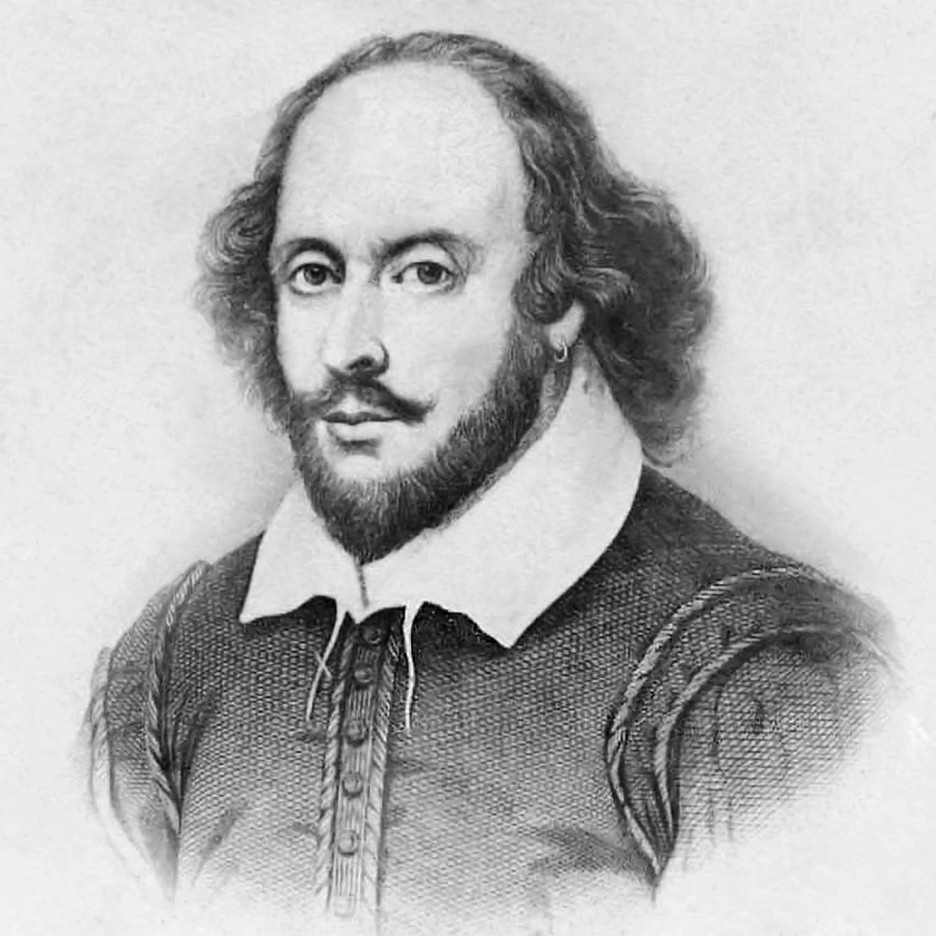
She doesn't. It's all made up. Don't believe her. They're beautiful words, an unforgettable tribute, but it's plain old stinking bull. The speaker is Goneril, King Lear's eldest daughter, and the stakes at the moment are very high. The old man--think of Donald Trump at 90 or so--is divvying up his kingdom. Not a smart thing to do, by Shakespeare's standards. He's putting his three daughters to the test--"which of you love me more?" he's asked with a smirk on his face. Goneril's answer is simply gorgeous.

But not much else. It's a whopper, an ugly one too, so gaudily rendered. What's more, it's even more than a little prophetic since Lear will lose all three--eyesight, space, and liberty-- by tragedy's end.

Still, have no doubt, Shakespeare could lay it on: three words--Romeo and Julie. Those two characters have come to embody love in Western tradition. West Side Story backdrops the story with a New York tenement and peoples it with flashy Puerto Rican immigrants, but right there at the heart of things is human love, plain and (un)simple. 

At love, Shakespeare is the master, right? 

Shall I compare thee to a summer’s day? 
Thou art more lovely and more temperate. 
Rough winds do shake the darling buds of May, 
And summer’s lease hath all too short a date. 

That famous sonnet is the first poem my heart ever heard.

Sometime too hot the eye of heaven shines, 
And often is his gold complexion dimmed; 
And every fair from fair sometime declines, 
By chance, or nature’s changing course, untrimmed; 

Not one thing, it still says, can possibly compare with you, my love. I was in a high school English class, otherwise totally forgettable; and he had me--Shakespeare made love as gloriously fleshy and yet eternal as I ever dreamed it could be.

But thy eternal summer shall not fade, 
Nor lose possession of that fair thou ow’st, 
Nor shall death brag thou wand’rest in his shade, 
When in eternal lines to Time thou grow’st. 

Be still, my heart--that is drop-dead wooing. Shakespeare didn't make me want to write, but he brought me into a starry heaven of words I didn't want to leave that morning.

So long as men can breathe, or eyes can see, 
So long lives this, and this gives life to thee.

He's right. It's exactly 400 years since the Shakespeare's death, and I just typed out the very words he scratched out long, long ago, words that still pay tribute to his love, to their love, exactly as the love prophet in him claimed those words would. Incredible.

Then there's this. No one knows how the bard met his end. We know the date and the place of internment. We know he hadn't yet reached his 60th birthday, and we can guess where he finally laid his head--or where his head was laid. But nothing else.

It would be so nice to think of him beside his Juliet somewhere, the two having aged beautifully and residing these days in Downton Abbey, maybe? She's a Julie Christie, and he's a Richard Gere, the two of them still a feast of beauty.

But nobody knows. Chances are, he drew his last breath in a (un)holy different world altogether. Speculation has it that he might have died like Poe, in a stupor; that he was a bad drinker has never been proven, but his characters are hammered just about as often as they are love-smitten. Some claim syphilis could well have done him in, profligate as he might have been with all those pretty words. 

Nobody honestly knows how he died, a mystery it would be a joy to unravel. We care, finally, don't we? One's last words were, for a time in human history, something of a fetish, scrupulously recorded as if to testify, I'd guess, to many theories about living and dying. The bard himself shared that fascination; great characters rarely die without grabbing one last soliloquy. 

But no one knows exactly how William Shakespeare died. That's a tragedy of its own, really, isn't it? I'll leave the judgments up to God. They're not mine to make.

Still, it would be nice to know that the man who could pen such perfectly divine protestations of love died in the arms of someone he spent them upon. I'd like that.

But we'll never know.